It landed on November 14 with almost no warning, a six-episode Spanish miniseries that looked quiet and elegant in the thumbnail, and within four days it was sitting at number one in 47 countries, including the United States, with viewers messaging each other at 3 a.m. in all caps: “Have you seen Episode 4 yet? I can’t breathe.”
The Crystal Cuckoo is not loud. It does not rely on jump scares or gore. It is the kind of slow, suffocating dread that creeps in through the cracks and settles behind your ribs like a second heartbeat you never asked for.
The story begins in Madrid, 2023. Clara Merlo, a brilliant young cardiology resident played with devastating precision by Catalina Sopelana, collapses during rounds and wakes up weeks later with someone else’s heart beating inside her chest. The donor is anonymous, listed only as Carlos Ferrer, 28, deceased, from a remote mountain village called Vallefrío. Doctors tell her the strange dreams, the sudden cravings for pine air, the overwhelming urge to drive north, are normal side effects. They call it cellular memory. Clara calls it something else. She quits her job, gets in her car, and drives straight into the mountains, following a pull she cannot explain.
When she arrives in Vallefrío, a baby has just disappeared from the village square in broad daylight. No screams. No witnesses. Just an empty pram and a single white feather on the ground.
That is the moment the series stops being about a heart transplant and starts being about something much older and much darker.
Vallefrío is not a normal town. Every year the villagers celebrate the Festival of the Cuckoo, dressing in elaborate bird masks and performing ancient dances that supposedly honor fertility and renewal. The cuckoo, in Spanish folklore, is the bird that lays its eggs in another bird’s nest and lets the stranger raise its young. The symbolism is not subtle, and the series never lets you forget it.
As Clara digs into Carlos’s life, she discovers he was not the first person in Vallefrío to die under mysterious circumstances. There was a fire in 1979 that killed an entire family. A girl named Magda who vanished in 2001. A string of missing children stretching back decades. And every single case was closed too quickly, every file sealed, every family told to move on.
The deeper Clara goes, the more the town closes ranks. The local priest smiles too widely. The retired detective who investigated the 1979 fire now lives alone in a house full of cuckoo clocks that all strike at different times. The mayor’s wife keeps a nursery that has never held a child. And Juan Ferrer, Carlos’s older brother, a police officer with eyes that never quite meet yours, seems to know exactly why Clara’s new heart is beating faster every time someone says the word “cuckoo.”

The dual timeline is masterful. We flash back to 1979, where a young Miguel Ferrer (played in the past by Tomás del Estal and in the present by Iván Massagué) watches his village burn and makes a promise he will spend the rest of his life keeping. We see the early 2000s, where Carlos himself, as a child, witnesses something in the woods that changes him forever. And in the present, Clara begins to experience Carlos’s memories as her own: the smell of smoke, the sound of wings, the feeling of being watched by something that wears a human face but is not human at all.
By Episode 4, the series has completely abandoned any pretense of being a standard missing-child mystery. It has become something closer to folk horror wrapped in the skin of a psychological thriller. The cuckoo festival is not a celebration. It is a ritual. The missing children are not accidents. They are offerings. And the heart beating inside Clara’s chest knows exactly where the latest baby has been taken.
The final two episodes are relentless. There is a scene in Episode 5, shot in a single twelve-minute take inside an abandoned church, where Clara confronts the entire village wearing their bird masks, and the sound design is so precise that you can hear individual feathers rustling. The finale delivers a twist so perfectly foreshadowed that when it lands, half the audience screams and the other half simply nods and whispers, “Of course.”
Critics are calling it the best Spanish series Netflix has released since The Snow Girl. Viewers are calling it the show that ruined sleep. The IMDb page is flooded with reviews that all say the same thing in different languages: “I finished it at 4 a.m. and had to leave the lights on.” “The cuckoo sound is still in my head three days later.” “I will never look at a bird the same way again.”
The cast is extraordinary. Catalina Sopelana carries the entire series on her back and never stumbles. Álex García as Juan Ferrer is magnetic in his quiet menace. Itziar Ituño as Luisa Ferrer, the matriarch who knows more than she will ever say, delivers a performance that will be studied in acting classes for years.
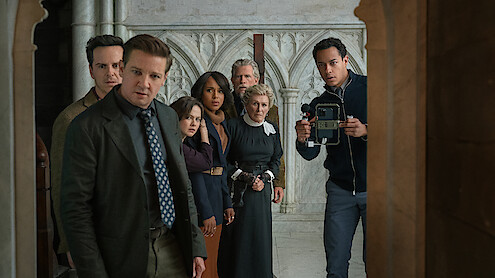
But it is the atmosphere that stays with you. The mountains feel alive. The fog feels like it’s watching. And that cuckoo call, soft, sweet, and wrong, follows you long after the credits roll.
Netflix has not announced a second season, and honestly, it doesn’t need one. The Crystal Cuckoo is complete. It is perfect. It is the kind of series you finish once, sit in silence for ten minutes, and then immediately start texting everyone you know with the same four words:
You have to watch this.
Now streaming. Six episodes. Bring headphones. And maybe don’t watch it alone.