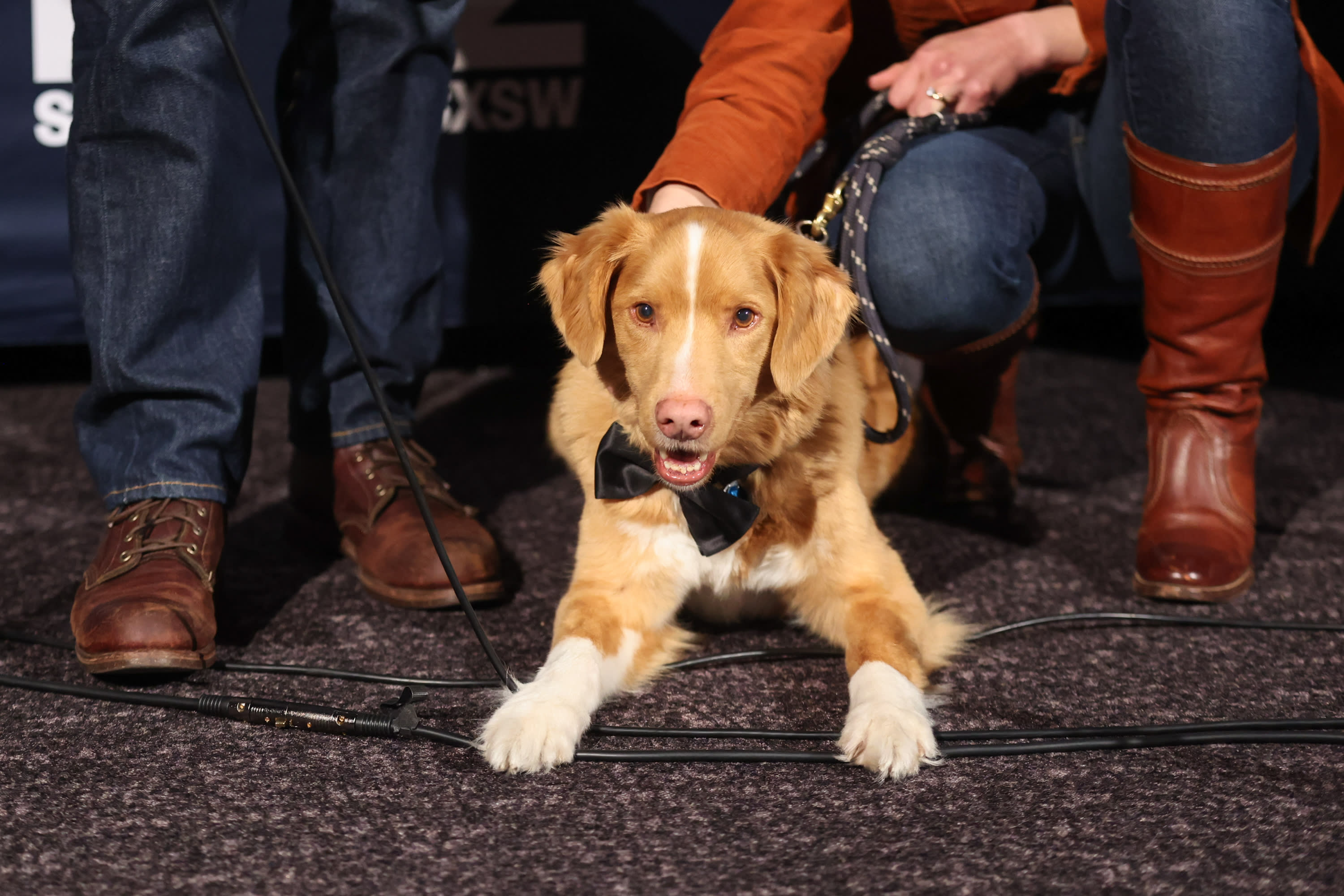
In a year where Hollywood’s awards season has been dominated by blockbuster vampires, zombie apocalypses, and psychological mind-benders, one unlikely contender is stealing the spotlight—and it’s not a brooding anti-hero or a scream queen with a haunted backstory. It’s Indy, the fluffy Nova Scotia Duck Tolling Retriever from the indie supernatural chiller Good Boy, who has clawed his way into the 2025 Astra Film Awards with a groundbreaking nomination for Best Performance in a Horror or Thriller. Announced on November 25, 2025, by the Hollywood Creative Alliance, Indy’s nod places him alongside heavyweights like Ethan Hawke’s grizzled return in Black Phone 2, Alison Brie’s domestic descent in Together, and Sally Hawkins’s spectral turn in Bring Her Back. At just three years old, this four-legged phenom has become the first dog ever to snag such a prestigious acting accolade in a major film awards body, turning heads from Sundance to the Shudder streaming faithful. Critics and canine lovers alike are howling with approval: “Indy’s unblinking stare and floppy-eared terror are the stuff of nightmares—and pure Oscar bait,” one reviewer quipped. With Good Boy itself nabbing a Best First Feature nomination, this isn’t just a feel-good furball moment; it’s a seismic shake-up for the genre, proving that sometimes the best scares come with a wagging tail. As the January 9, 2026, ceremony looms in Los Angeles, all eyes—and paws—are on Indy to see if he’ll fetch the win. In a town that loves its underdogs, this pup’s performance isn’t just deserving; it’s downright revolutionary.
The journey to this jaw-dropping nomination began in the unlikeliest of places: a New Jersey backyard, where first-time director Ben Leonberg, a 32-year-old former commercial editor with a lifelong obsession for haunted house tropes, decided to flip the script on horror’s most reliable sidekick—the loyal family dog. Inspired by classics like Poltergeist (1982), where the family pooch is the first to sniff out spectral squatters, and The Shining (1980), with its ambiguous slide into madness, Leonberg envisioned a tale told entirely from a canine’s point of view. No dialogue, no human hubris—just raw instinct, muffled growls, and the primal pulse of a protector sensing what we can’t. “Dogs have always been the unsung heroes of horror,” Leonberg told festival crowds at SXSW in March 2025. “They bark at the shadows we ignore. What if we saw through their eyes?” Teaming up with co-writer Alex Cannon in 2017, he crafted a lean, 73-minute nightmare that ditches jump scares for something subtler: the creeping dread of isolation, filtered through floppy ears and a wet nose. Funding came serendipitously from Leonberg’s viral short in The Rode Reel competition, where a clip starring his real-life pup Indy snagged the Judges’ Prize—and a cash infusion to greenlight the feature. No CGI tricks, no animal doubles: just one devoted director, his wife and producer Kari Fischer (a veteran dog trainer), and their golden-red retriever, spending three grueling years coaxing naturalistic terror from treats and trust. The result? A micro-budget marvel that premiered to standing ovations at SXSW’s Midnighter section, earning Indy the festival’s inaugural Howl of Fame Award for Best Canine Performance. “He’s not acting,” Fischer beamed post-premiere. “He’s feeling. And that’s what makes him terrifying.”
At its heart, Good Boy is a love letter to loyalty wrapped in a wolf’s clothing—a supernatural slow-burn where Indy’s titular role isn’t comic relief, but the emotional engine driving the dread. The plot unfolds in a ramshackle woodland cabin inherited by Todd (Shane Jensen), a gaunt twentysomething battling chronic lung disease, who relocates from the city with Indy in tow for a fresh start. Larry Fessenden, the grizzled godfather of indie horror, haunts the edges as Todd’s spectral grandfather, his gravelly warnings echoing like wind through warped floorboards. Arielle Friedman rounds out the sparse cast as Todd’s estranged sister, popping in for tense family FaceTimes that crackle with unspoken grief. But the real star is Indy: a vigilant guardian whose world tilts when the house reveals its rot. From the opening montage—home videos of Indy’s puppyhood tumbling into adulthood, set to a warped lullaby of creaking doors—viewers are plunged into his sensory overload. Colors bloom in hyper-saturated hues: the copper flicker of autumn leaves outside, the sickly green glow of mold creeping up walls inside. Sounds warp into a dog’s symphony—distant thunder rumbling like a growl, the tick of a grandfather clock pulsing like a predator’s heartbeat, ethereal whispers distorted into infrasonic whines that set your teeth on edge. Leonberg’s cinematography, all inky shadows and fish-eye flares, mimics a retriever’s wide peripheral vision, turning mundane corners into lurking lairs. As Todd coughs up blood and hallucinates hooded figures in the fog, Indy becomes our proxy: hackles rising at empty hallways, paws scrabbling at locked attics, his barks a futile alarm no one heeds. It’s a masterclass in minimalism—no exorcisms or ectoplasm, just the house’s malevolence manifesting as flickering lights, slamming shutters, and a ghostly predecessor pooch whose milky-eyed apparition urges Indy to fight back. By the midpoint, when Todd chains Indy outside during a fevered rant—”You’re imagining it all, boy!”—the pup’s vulnerability peaks, his howls piercing the night like a siren’s wail. It’s heart-wrenching horror: the terror not of monsters, but of failing the one soul who needs you most.
What elevates Indy’s performance from charming gimmick to genre-game-changer is its unfiltered authenticity—a feat of direction that borders on dog whisperer wizardry. Leonberg and Fischer, drawing from positive reinforcement techniques honed over years of agility training, spent countless takes building trust: toys for curiosity, peanut butter for patience, quiet cues for calm amid chaos. “We never yelled or scared him,” Fischer explained in a post-festival Q&A. “Everything was play—until the house ‘played back.'” The result is a cascade of micro-expressions that human actors could only envy: Indy’s ears pinning flat in fear, his tail thumping tentative hope during rare belly-rub respites, those soulful brown eyes widening in unblinking alarm as shadows coalesce. Reviewers have swooned over the nuance—Mick LaSalle of the San Francisco Chronicle called it “a marvel of sensitivity, alertness, and nuance,” likening Indy’s gaze to a silent scream that “pierces deeper than any slasher’s knife.” IndieWire’s Rafael Motamayor dubbed him “one of the most emotive actors of his generation,” praising how his confusion—real or staged—mirrors our own existential unease: What if the afterlife is just another leash, yanking us into the unknown? Even skeptics who eyed the premise as a Cujo cash-grab conceded its power; The Hollywood Reporter noted, “Indy’s convinced terror would make him frontrunner for a PATSY if that prize still existed.” On Rotten Tomatoes, Good Boy boasts a stellar 90% critics score and 82% audience approval, with fans flooding forums: “Indy’s the MVP—his final stare-down had me ugly-crying into my popcorn.” PETA bestowed a Great Filmmaking Award for ethical on-set treatment, while festival wins piled up: Best International Feature at Strasbourg’s European Fantastic Film Festival, a Fresh Blood nod at Fantasy Filmfest. At Overlook, it contended for Scariest Feature, but Indy’s spotlight performance stole the show. Box office? Modest at $4.2 million domestically via IFC Films and Shudder’s VOD push, but culturally? It’s a cult classic in the making, with TikTok edits of Indy’s “hero moments” racking up 50 million views.
This Astra nomination—Indy’s first in a field stacked with Oscar whispers—feels like poetic justice for a film that dared to humanize the inhuman. The Hollywood Creative Alliance, fresh off rebranding from the scandal-scarred HCA, introduced the Best Performance in a Horror or Thriller category to spotlight genre gems amid awards-season snubs. Indy rubs fur with child actor Alfie Williams’s wide-eyed survival in 28 Years Later, Hawke’s haunted hangman in Black Phone 2, and Hawkins’s otherworldly unraveling in Bring Her Back. “It’s a bold stroke for inclusivity,” gushed Alliance rep Sarah Johnson at the announcement. “Indy reminds us performance transcends paws and pedigrees.” Leonberg, beaming via Zoom from his Jersey porch (Indy snoozing at his feet), called it “surreal—and so Indy.” The pup’s “handlers” have launched a cheeky Oscars campaign: an open letter from Indy himself, penned by IFC’s PR team, pleading, “How many great performances must go overlooked before the Academy throws us a bone?” Referencing icons from Babe‘s barnyard breakout to Messi’s courtroom charisma in Anatomy of a Fall, it argues for a four-legged lane in the acting lanes. Variety quipped it’s “humorous yet heartfelt,” potentially sparking a broader convo on animal equity in an industry built on Air Bud dreams. Reddit’s r/oscarrace erupted: “Indy over Hawke? Paw-sible,” one thread joked, while dog forums debate if Tolling Retrievers are the new Jack Russells of cinema.
Beyond the barks and ballots, Good Boy taps a deeper vein: the unbreakable bond that blurs species lines, especially in our fractured times. Todd’s decline—mirroring Leonberg’s own brushes with illness during scripting—becomes a meditation on mortality, Indy’s frantic fetches a frantic fight against fate. “It’s about seeing the world as purely as a dog does,” Leonberg reflected. “No pretense, just presence—and terror when that presence falters.” The film’s finale, a wordless whirlwind of woodland frenzy and whispered farewells, leaves audiences gutted: not with gore, but the quiet horror of loss, the kind that lingers like a cold nose on your hand at dawn. Sound design wizardry—basso rumbles for ghostly growls, amplified heartbeats syncing with Indy’s pants—amplifies the ache, while Jóhann Jóhannsson’s sparse, swelling score (his final unfinished work, completed by Hildur Guðnadóttir) weeps without weeping. At 73 minutes, it’s a brisk bite that doesn’t overstay its kibble, packing emotional wallops into every wag. For animal aficionados, it’s a balm: Indy survives, his heroism a howl against the void. For horror hounds, it’s a fresh fetch—subverting tropes by centering the creature we root for most.
As the Astra ceremony approaches, streamed live on KNEKT.tv and YouTube, Indy’s underdog arc embodies cinema’s chaotic charm: a pup from Jersey pines, padding into pantheons with nothing but instinct and infinite loyalty. Whether he nabs the trophy (fetch it in a bow tie?) or not, his nomination cements Good Boy as 2025’s sleeper snarl—a reminder that the scariest stories aren’t about demons in the dark, but devotion in the face of them. Leonberg teases sequels: “Indy’s got sequels in him—maybe a city sequel, urban haunts?” For now, celebrate the goodest boy who’s taught us to trust our gut (and our gaze). Stream Good Boy on Shudder, grab the tissues, and here’s to Indy: may your star rise, one unblinking stare at a time. Who let the dogs out? Awards season did—and they’re here to stay.