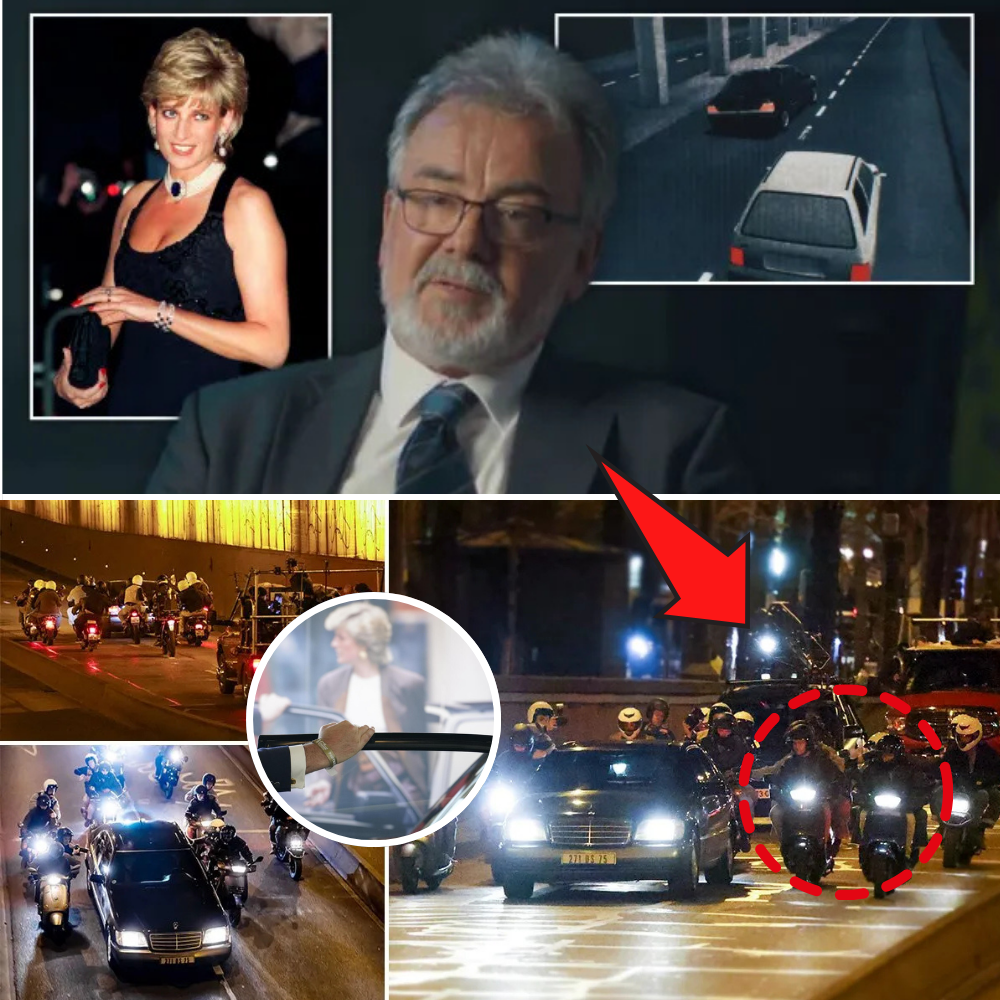
Nearly three decades after the tragic death of Princess Diana in a Paris tunnel, a sensational new allegation has emerged from a retired police officer. The former cop claims to have witnessed two unidentified cars – one silver and one black – deliberately “boxing in” Diana’s Mercedes moments before it crashed, forcing the vehicle into a deadly spin. These mystery vehicles allegedly sped away in seconds, leaving no trace. The officer, who has remained silent until now, questions why this critical detail was supposedly suppressed for 28 years, reigniting debates over one of the most scrutinized accidents in history.
On August 31, 1997, Diana, Princess of Wales, her companion Dodi Fayed, and driver Henri Paul died when their Mercedes slammed into a pillar in the Pont de l’Alma tunnel. The only survivor was bodyguard Trevor Rees-Jones. Official investigations, including a lengthy French probe and the British Operation Paget report, concluded the crash resulted from high speed, Paul’s impaired driving (he was over the alcohol limit and on medication), and pursuit by paparazzi photographers. No evidence of mechanical failure or deliberate sabotage was found, and the jury at the 2008 UK inquest ruled it an “unlawful killing” due to gross negligence by Paul and the pursuing vehicles.
However, persistent mysteries have fueled speculation. Eyewitness accounts described erratic driving and possible contact with other cars. Most notably, forensic evidence showed the Mercedes had grazed a slow-moving vehicle, leaving traces of white paint and broken taillight fragments. Investigators focused on a white Fiat Uno, which some witnesses saw exiting the tunnel swerving unpredictably, with a driver glancing nervously in mirrors. Despite examining thousands of similar cars, the Fiat and its driver were never definitively identified, though suspects like photographer James Andanson and security guard Le Van Thanh were investigated and cleared.
The new claim of two vehicles – silver and black – “boxing in” the Mercedes adds a dramatic twist, suggesting intentional maneuvering to cause loss of control. “Boxing in” refers to surrounding a target vehicle to restrict escape or force errors, a tactic sometimes linked to high-stakes pursuits. If true, this could imply coordinated interference, but no official records from the exhaustive inquiries support multiple blocking cars in this manner.
Over the years, various witnesses have reported seeing unidentified dark or mysterious cars near the scene. For instance, an American couple on honeymoon claimed to have spotted two dark vehicles acting suspiciously at the tunnel exit shortly after the crash. These sightings were explored but dismissed as unrelated or misidentified paparazzi vehicles.
Conspiracy theories have long surrounded Diana’s death, often alleging involvement by intelligence agencies or the establishment to prevent her relationship with Fayed. Yet, both French and British probes found no credible evidence of foul play. The Fiat Uno remains the primary “mystery car,” a frustration for investigators who believed its driver could clarify the Mercedes’ final movements.
This latest allegation from a retired officer demands scrutiny but aligns more with enduring speculation than verified facts. As the world reflects on Diana’s legacy – her humanitarian work, charisma, and tragic end – such claims remind us why the crash captivates: a beloved icon lost in chaotic circumstances, with lingering questions that official conclusions have not fully quelled. Until substantiated, it remains a provocative echo in a case closed as accidental tragedy.