Netflix has done it again—dropped an unassuming eight-episode mystery thriller that starts off deceptively calm and ends up hijacking living rooms, wrecking sleep schedules, and leaving viewers emotionally wrecked. “Run Away,” the latest adaptation from bestselling author Harlan Coben, arrived with minimal fanfare on New Year’s Day, yet it has swiftly become one of the platform’s most addictive slow-burn successes. Featuring a beloved veteran from Midsomer Murders alongside a stellar British ensemble, this series masterfully redefines how gripping understated suspense can be, pulling audiences into a web of family secrets, hidden traumas, and unrelenting dread.
Adapted from Coben’s 2019 novel, “Run Away” centers on Simon Greene, a successful suburban father whose seemingly perfect life—loving wife, thriving career, beautiful home—shatters when his eldest daughter, Paige, vanishes into a world of addiction and danger. What begins as a desperate parental search evolves into a labyrinth of murders, cults, buried family lies, and shocking revelations that threaten to destroy everything Simon holds dear. The story weaves parallel investigations: Simon’s frantic quest to save Paige intersects with that of Elena Ravenscroft, a tough ex-police officer turned private investigator, who’s probing the disappearance of another young man. As their paths converge, layers of deception peel away, exposing dark undercurrents in ordinary lives.
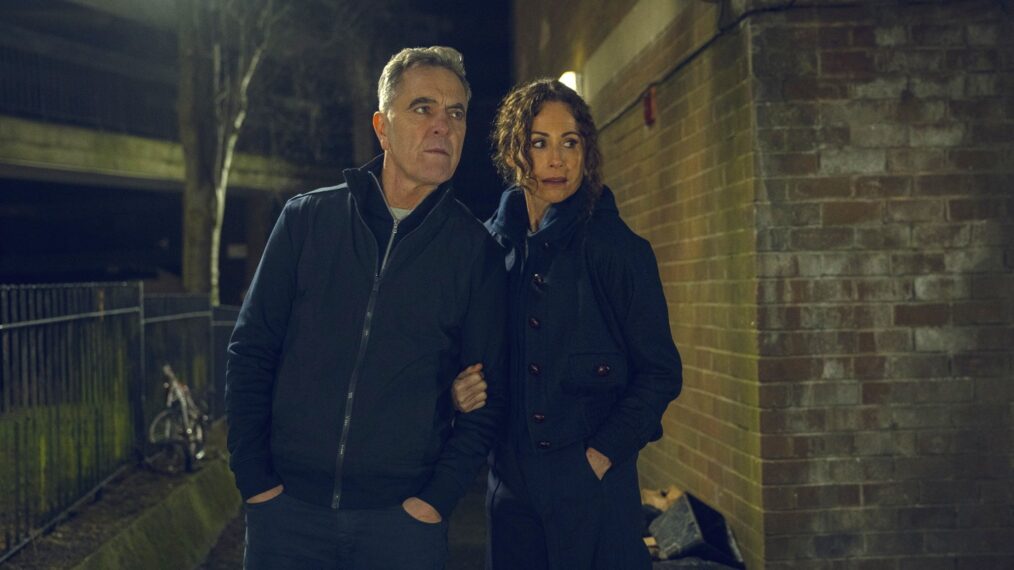
James Nesbitt leads with a heartbreaking intensity as Simon Greene, portraying a man unraveling under the weight of guilt, rage, and helplessness. Nesbitt, a Coben veteran known for his raw emotional depth, delivers a performance that’s both visceral and nuanced—his quiet breakdowns and explosive moments of desperation make Simon feel achingly real. Viewers can’t help but root for him, even as his choices grow increasingly reckless. Opposite him, Ruth Jones brings gravitas and warmth to Elena Ravenscroft, the no-nonsense PI whose own guarded past adds intriguing shades to her character. Jones, beloved for her comedic roles, proves equally compelling in drama, crafting Elena as a sharp, empathetic force who becomes Simon’s unlikely ally.
Minnie Driver is mesmerizing as Ingrid Greene, Simon’s wife, whose poised exterior hides profound secrets tied to the family’s unraveling. Driver’s subtle expressions and restrained turmoil elevate every scene she’s in, hinting at depths that unfold devastatingly over the episodes. Alfred Enoch shines as Detective Isaac Fagbenle, a principled investigator whose probe into a related murder brings official scrutiny to Simon’s actions. Enoch’s steady presence grounds the chaos, forming a compelling dynamic with his partner, played with wit and edge by Amy Gledhill. Lucian Msamati adds enigmatic menace as Cornelius Faber, a figure from Paige’s shadowy world, while supporting players like Annette Badland— the cherished Midsomer Murders favorite—bring quirky reliability as Lou, Elena’s tech-savvy assistant. Badland’s familiar warmth provides brief respites amid the tension, reminding viewers why she’s a British TV treasure.
The ensemble is rounded out by rising talents like Ellie de Lange as the troubled Paige, whose vulnerability lingers even in absence, and Adrian Greensmith as Simon’s son Sam, navigating teenage angst amid family collapse. Tracy-Ann Oberman, Ingrid Oliver, and others flesh out a world where no one is entirely trustworthy, amplifying the paranoia that Coben excels at crafting.
What truly sets “Run Away” apart is its masterful slow-burn pacing—a deliberate, controlled build that starts comfortably domestic and gradually tightens into psychological suffocation. Unlike flashier thrillers loaded with jump scares or rapid-fire action, this series thrives on silence, suggestion, and simmering unease. Early episodes lull you into the Greenes’ idyllic life, making the cracks—all-nighters turned to dawn binges, that nagging sense of wrongness—hit harder as truths emerge. The tension accumulates in quiet conversations, lingering glances, and unspoken accusations, creating an emotional attachment to characters you suspect from the start.
Coben’s signature twists are here in abundance, but they feel earned rather than gimmicky, rooted in themes of family loyalty, the cost of secrets, and the monsters hiding in plain sight. The narrative explores how far parents will go to protect their children, and how buried traumas can poison generations. Parallel storylines—Simon’s personal hunt and Elena’s professional case—converge organically, revealing connections that shock without feeling contrived. By the finale, the unease doesn’t fade with the credits; it lingers, prompting late-night reflections on trust and forgiveness.
Visually, the series embraces a muted British aesthetic—rain-slicked streets, cozy yet claustrophobic homes, shadowy parks—that enhances the creeping dread. Direction keeps things intimate, focusing on faces and fraught silences rather than overt spectacle. The score is understated, swelling subtly to underscore emotional peaks, while sharp editing mirrors the characters’ fractured realities.
Since its quiet drop, “Run Away” has exploded in popularity, trending worldwide as viewers share their all-night marathons and theories online. Fans describe it as “quietly devastating,” praising the way it invades your thoughts long after watching. Many report starting with “just one more episode” only to emerge bleary-eyed at sunrise, unable to stop despite the heavy emotional toll. It’s being hailed as one of Coben’s strongest Netflix adaptations yet—more intimate and harrowing than some of his bigger hits, with character depth that elevates the twists.
In a streaming landscape crowded with loud blockbusters, “Run Away” proves the power of patience. It’s not a scream-out-loud thriller; it’s the kind that whispers horrors into your ear, building a grip that deepens inexorably. For those who crave mysteries that burrow under the skin—exploring fractured families, moral gray areas, and the terror of everyday secrets—this is essential viewing. With standout performances from Nesbitt, Jones, Driver, and the ever-reliable Badland, it’s a masterclass in restrained suspense.
If you’re looking for your next obsession, something that starts gently and ends with you questioning everything, dive into “Run Away.” Just don’t blame us when it refuses to let go, turning planned casual watches into unstoppable binges. This slow-burn gem is redefining addictive TV—one uneasy episode at a time.