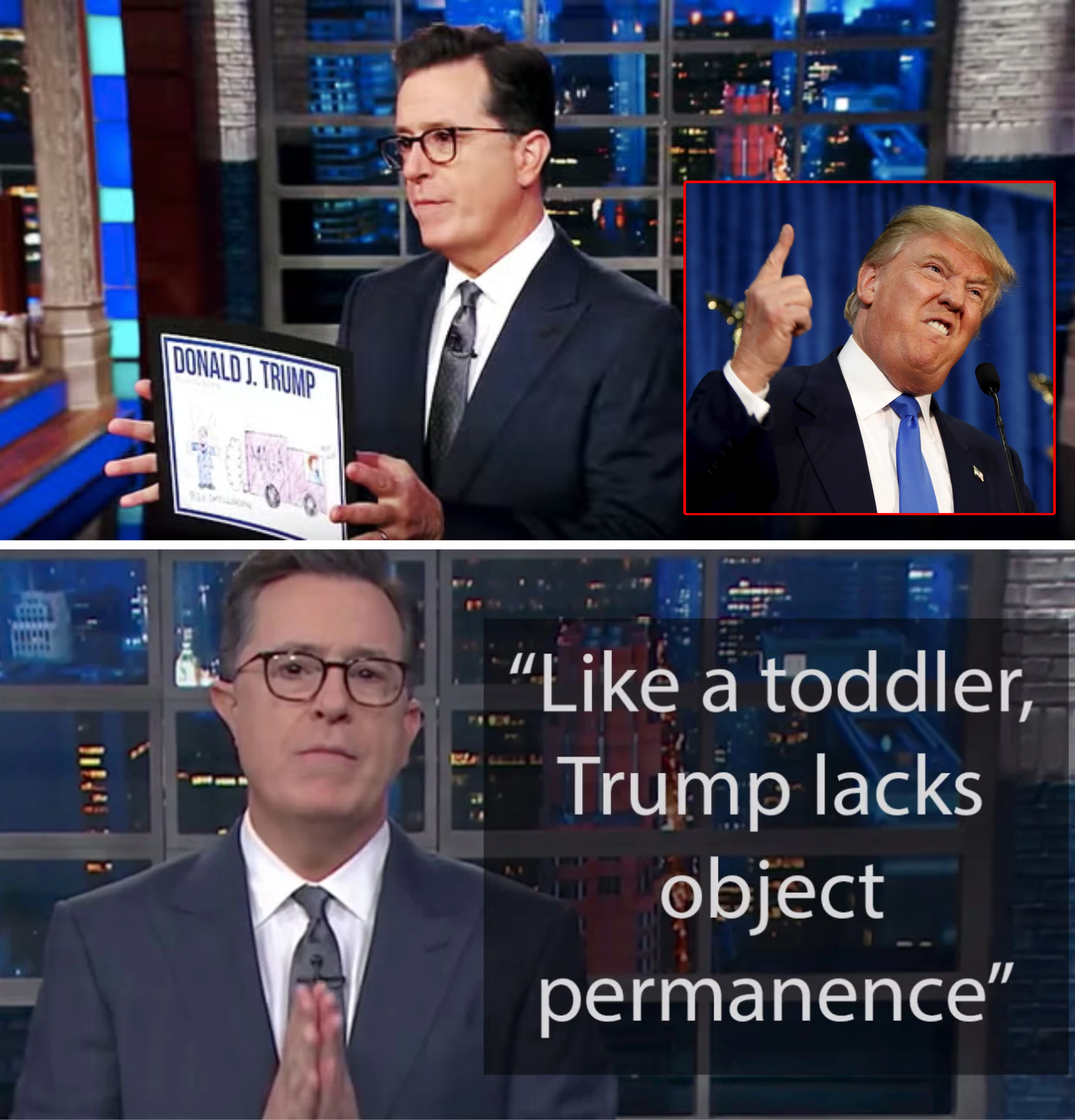
Stephen Colbert, host of The Late Show on CBS, addressed former President Donald Trump’s recent statements about undergoing medical examinations during a monologue on December 11, 2025. The segment focused on Trump’s discussion of a cognitive test and an MRI scan, which he mentioned during a public appearance with Finnish President Alexander Stubb. Colbert used humor to highlight the distinction between such tests and measures of intelligence, incorporating visual elements to illustrate his points.
The exchange stemmed from Trump’s comments at a joint press conference where he referenced passing a cognitive exam and receiving positive MRI results. Trump stated, “I also took a cognitive test, and I aced it,” emphasizing his mental acuity. This came amid ongoing public discussions about health and fitness for office, topics that have followed Trump since his first term.
Colbert opened the bit by recapping the interaction, noting the setting with the Finnish leader. He quipped about the timing and context, suggesting it added an international flavor to domestic political chatter. The host then transitioned to a satirical breakdown, reminding viewers that the Montreal Cognitive Assessment (MoCA), the test Trump referenced, evaluates basic functions like memory and orientation rather than overall intelligence. “As a reminder, the cognitive test Trump took is not designed as a measure of intelligence or IQ,” Colbert stated, echoing sentiments from medical experts.
To drive the point home, Colbert employed a prop—a sheet of paper representing a mock test result. He slid it across his desk during the monologue, pausing for effect as the audience reacted with laughter and applause. The paper featured exaggerated elements, such as simplistic drawings or questions, to underscore the test’s nature. This visual aid, a staple in Colbert’s comedic style, aimed to clarify misconceptions while entertaining the live crowd and home viewers.
Audience response was immediate, with the studio filling with chuckles before settling into attentive quiet during the reveal. Social media clips of the moment circulated widely, amassing millions of views across platforms like TikTok and Facebook within days. Fans praised Colbert’s delivery for its blend of wit and education, with comments highlighting how the prop effectively communicated the key distinction.
Trump’s history with cognitive testing dates back to 2018, when he first publicly discussed acing the MoCA during his presidency. He has since referenced it multiple times, often in response to questions about age or mental sharpness. In recent interviews, including one with Forbes, Trump has tied these results to broader claims of capability, contrasting them with political opponents. The 2025 mention alongside the MRI scan reignited media interest, prompting late-night hosts like Colbert to revisit the topic.
Colbert’s show has a longstanding tradition of political satire, often using props and visuals to dissect public figures’ statements. Past segments include similar reveals, such as a 2017 bit where he humorously “uncovered” IQ results amid Trump’s feud with then-Secretary of State Rex Tillerson. In that instance, Colbert presented fictional scores, portraying Trump’s as a rudimentary drawing to satirize the boasts. The 2025 segment echoed this approach, updating it for current events.
Medical professionals have weighed in on the MoCA, describing it as a screening tool for conditions like dementia, not a comprehensive IQ evaluation. Scores range from 0 to 30, with 26 or above considered normal. Trump’s reported perfect score aligns with typical outcomes for healthy individuals, but experts caution against equating it with genius-level intellect.
The MRI reference added another layer to Colbert’s commentary. Trump described the scan as “perfect,” using it to affirm his physical health. Colbert questioned the context, joking about what the exam might have been seeking, and tied it back to broader health transparency discussions in politics. This resonated amid 2025’s political climate, where candidate health remains a focal point.
Public figures and commentators responded variably. Supporters of Trump viewed the original comments as confident assertions, while critics saw opportunities for humor. Late-night television, including shows like The Tonight Show and Saturday Night Live, have similarly addressed the topic, contributing to a cultural dialogue on leadership qualifications.
Colbert’s monologue extended beyond the prop, incorporating impressions and audience interaction. He mimicked Trump’s delivery for comedic effect, drawing cheers, and invited viewers to consider the implications of conflating medical tests with intelligence metrics. The segment concluded with a call for informed discourse, a recurring theme in his programming.
Viewership for the episode spiked, with Nielsen ratings showing an uptick compared to average nights. Online engagement surged, with the clip shared by official accounts on Facebook and Threads, garnering over 822,000 views and 40,000 reactions in the first few days. This viral spread underscores late-night TV’s role in shaping public perception of political narratives.
Trump’s team has not issued a direct response to the segment, consistent with past approaches to satirical coverage. However, the former president’s social media activity often addresses media portrayals, potentially setting the stage for future exchanges.
The intersection of health, politics, and entertainment highlighted here reflects broader trends. As the 2028 election cycle looms, discussions on candidate fitness intensify. Trump’s active public schedule, including international meetings like the one with Stubb, keeps such topics relevant.
Colbert, a veteran host since 2015, continues to blend news analysis with comedy. His background in improv and political commentary, from The Colbert Report, informs his style. Segments like this one balance levity with factual reminders, appealing to a diverse audience.
Experts in media studies note how such moments influence voter awareness. By using simple props, hosts like Colbert make complex issues accessible, encouraging viewers to seek more information.
The prop itself—a single sheet—became a talking point. Online recreations and memes proliferated, with users sharing their own “test results” in jest. This user-generated content amplified the segment’s reach, demonstrating digital media’s amplification effect.
In context, Trump’s comments with Stubb covered trade, security, and bilateral relations, but the health aside drew headlines. The Finnish president’s composed demeanor during the exchange added to the clip’s shareability.
Colbert’s team prepares monologues based on daily news cycles, allowing for timely responses. This agility keeps the show current, competing with streaming and social platforms.
Audience demographics for The Late Show skew younger than traditional network TV, attracted by Colbert’s sharp takes. The segment’s educational undertone aligns with this, providing context amid misinformation risks.
Political satire’s history includes icons like Jon Stewart and Johnny Carson, who similarly used props for emphasis. Colbert’s method builds on this legacy, adapting to modern sensibilities.
As the year ends, holiday-themed episodes may incorporate lighter fare, but political segments persist given ongoing events. Trump’s post-presidency activities ensure continued fodder.
Viewer feedback via social media influences content, with positive responses to the prop likely encouraging similar formats.
The moment encapsulates entertainment’s role in democracy—informing through humor. Whether sliding a paper or delivering a punchline, Colbert’s approach fosters engagement.
Trump’s health disclosures, voluntary during campaigns, spark debates on mandatory standards. Colbert’s reminder serves this conversation.
International audiences, via YouTube and clips, access the content, broadening impact.
The studio’s silence during the reveal, followed by laughter, captured the build-up and release typical of live TV.
Colbert often follows such bits with transitions to guests or music, maintaining flow.
The episode featured additional segments on current affairs, balancing the political focus.
Ratings success ties to relatable content, with health a universal concern.
Trump’s advocates argue tests demonstrate vitality, countering age narratives.
Critics appreciate Colbert’s fact-checking element.
The prop’s simplicity—paper and text—contrasts elaborate sets, emphasizing message over spectacle.
Social platforms host discussions, from agreement to debate.
Colbert’s writers craft these for precision, avoiding overstatement.
The segment’s brevity, under five minutes, suits short-attention spans.
Archival footage of Trump’s original comments integrated seamlessly.
Audience members, selected via tickets, add live energy.
Post-show, Colbert interacts online, extending reach.
This instance joins memorable TV moments, recalled in compilations.
As media evolves, such interactions remain staples.
The exchange highlights clarity’s importance in public discourse.
Viewers left informed and entertained, the goal of quality late-night programming.
Trump’s narrative continues, with Colbert likely to revisit as needed.
The paper slide, a small action, sparked big conversations.
Late-night TV thrives on these dynamics.
Colbert’s poise during delivery enhances effectiveness.
The room’s reaction mirrored online sentiment.
Segments like this define the show’s identity.
Political figures provide endless material.
Humor bridges divides, fostering understanding.
The moment passed, but resonance lingers.
TV’s power in shaping views evident.
Colbert prepares for future episodes.
Trump engages publicly onward.
Discourse benefits from varied perspectives.
The prop moment, neutral yet pointed, exemplifies satire.
Audience appreciation sustains the format.
As 2025 closes, reflections on health in leadership grow.
Colbert’s contribution noted in year-end reviews.
The segment stands as a highlight.