TRAPPED BELOW ALCATRAZ: Search teams confirm two passengers remain missing inside a cabin cruiser resting 130 feet underwater.
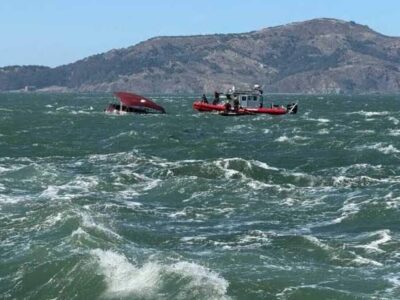
While 16 survivors managed to escape the sinking vessel, a chilling reality confronts rescue divers west of Alcatraz Island. The 49-foot private cabin cruiser, the Volare, now rests completely submerged between 120 and 130 feet below the surface. Two passengers are still missing and are heavily feared to be trapped inside the sunken hull itself. The extreme depth and treacherous currents of the San Francisco Bay are creating a highly dangerous environment for the recovery units, pushing local emergency maritime infrastructure to its absolute limits as federal and local agencies scramble to navigate a profound domestic nightmare.
The Sinking and the Overwhelming Swells
The unmitigated maritime tragedy officially unsealed on the afternoon of Tuesday, July 14, 2026, at approximately 3:37 p.m., when the Volare, a three-deck cabin cruiser homeported in Stockton, ran into severe, uncoordinated stability issues. A close-knit group of 20 extended family members and close friends had boarded the vessel to execute what was intended to be a deeply solemn and meaningful family heritage gathering. According to automatic tracking data from VesselFinder, the pleasure craft had cleared a San Francisco marina, passed under the Golden Gate Bridge twice, and visited Angel Island State Park before navigating its return loop across the central bay channel.
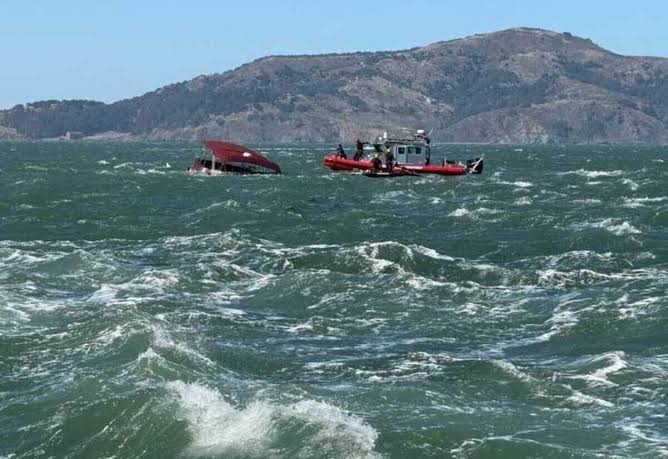
The peaceful excursion took a catastrophic turn when meteorological and bay conditions shifted violently. Local weather log arrays at Fort Point clocked sustained winds whipping between 20 to 22 mph, with sudden localized gusts peaking up to 30 mph. The incoming tides pulled in the exact opposite direction of the wind, generating massive, volatile five-foot swells that pounded the hull. Without warning, a massive wave crashed over the side of the Volare, instantly compromising its architectural stability. The vessel listed heavily to one side and rapidly rolled over onto its starboard side near Alcatraz Island, throwing many passengers into the freezing, fast-moving currents while trapping others below deck as the cruiser quickly downflooded and sank.
The Original Mission and the Cruel Reality
The true purpose behind the ill-fated voyage of the Volare makes the disaster exponentially more heartbreaking for the surrounding region. The group had gathered specifically to scatter the ashes of Maria Boisa, a Fremont nurse who tragically died 10 years ago at the age of 32. What was supposed to be a final act of closure and love transformed within minutes into a fresh, multi-generational family nightmare.
Instead of completing their memorial tribute, the family was hit by a double fatal catastrophe:
-
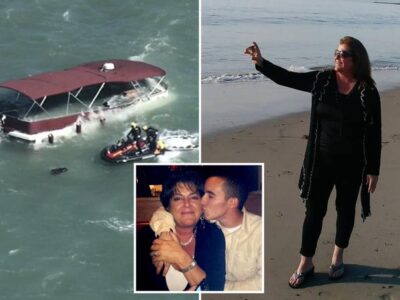
Clifford Joseph Boisa: The 79-year-old resident of rural Sutter County and retired reserve deputy was pulled from the water in severe physical distress. First responders executed continuous CPR protocols as they rushed him to Gashouse Cove, but the elderly veteran was tragically pronounced dead at the dock. His beloved family dog also perished in the capsizing.
-
Tondra Miller: The 58-year-old Sacramento County resident (also known as Tondra Madruga) was a close family friend who joined the cruise to honor the late nurse. Her body was recovered days later by police commands following an exhaustive active search sweep.
The Dramatic Broad-Daylight Rescue
Onlookers along the San Francisco shoreline initially observed columns of steam rising from the water, which led to early, frantic reports to dispatchers that the vessel was on fire. The San Francisco Police Department Marine Unit and San Francisco Fire Department emergency assets deployed to the coordinates immediately, but the first critical lines of defense were local civilian boaters. Two local fishermen, Justin Marceline and Michael Montoya, immediately abandoned their halibut trip and steered their small craft directly into the debris field, joining forces with the Base-Tub (incorrectly logged as Bass-Tub in early field notes), a 56-foot commercial sportfishing charter boat that hurried over from Fort Mason.
Good Samaritans and first responders encountered a scene of absolute chaos at the water’s edge. Rescuers executed high-velocity maneuvers to yank freezing victims from the bay, where some clung desperately to floating debris and a windsurfer’s board, while others bobbed without life jackets. Through the windows of the rapidly submerged cabin cruiser, civilian boaters could see horrified family members pounding frantically on the glass as the vessel listed and slipped beneath the surface. A total of 16 survivors—including the boat’s captain and co-owner, 62-year-old John Boisa—were successfully pulled from the water and transported to a makeshift triage center at a Fort Mason warehouse. Three survivors sustained severe leg and head injuries from the water impact, requiring immediate ambulance transport to regional hospitals.
The Recovery of Tondra Miller
Following the suspension of the U.S. Coast Guard’s massive 29-hour active search grid, which scoured over 950 square nautical miles, local police recovery units took exclusive control of the operation. On Thursday, July 16, 2026, at approximately 1:02 p.m., the SFPD Marine Unit was conducting systematic sonar scanning of the bay floor when a passing civilian vessel suddenly alerted officers to a body floating in the water west of Treasure Island, near the midpoint of the San Francisco-Oakland Bay Bridge. Officers immediately recovered the body, and the Office of the Chief Medical Examiner formally confirmed the identity as Tondra Miller.
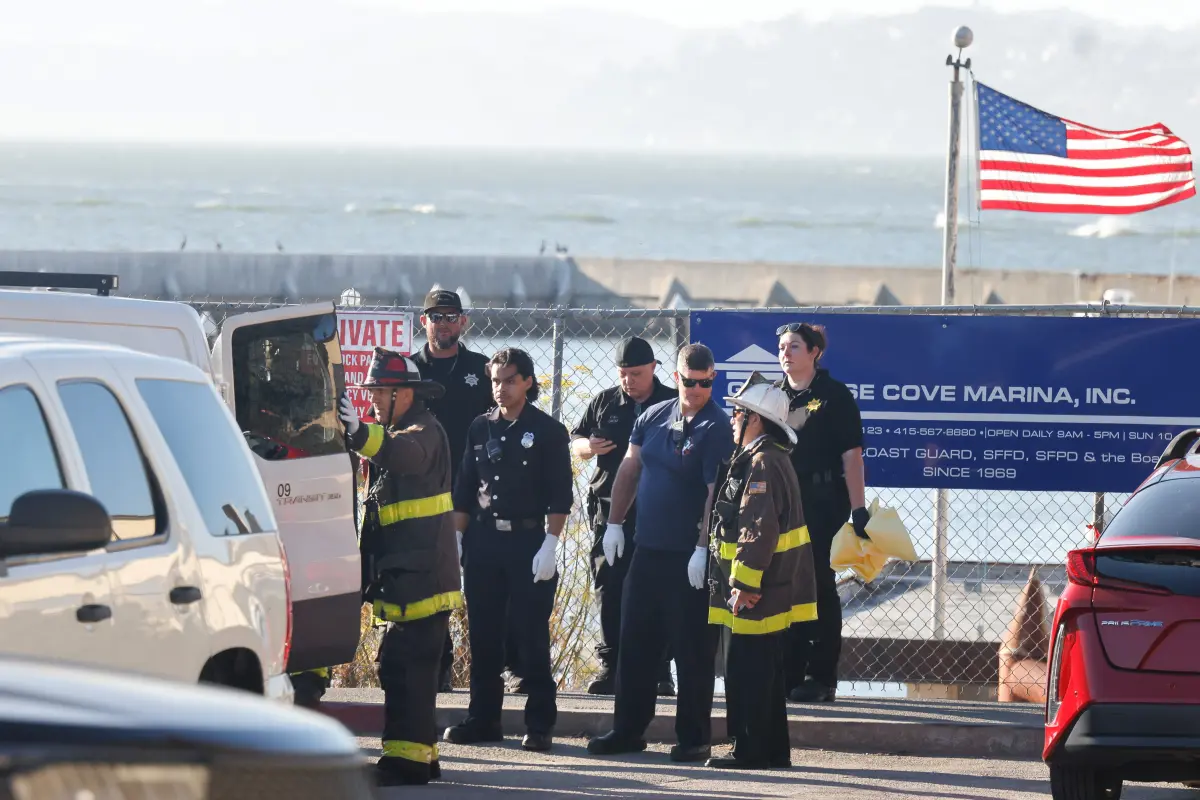
Her sudden recovery has left two passengers still officially unaccounted for in the freezing bay: Carol Boisa, the 74-year-old sister of the captain, and Jackie Boisa, the wife of the late Clifford Boisa. Coast Guard Captain Jared S. Toczko and police administrators heavily fear that these remaining missing individuals were completely trapped inside the enclosed main or lower cabins when the vessel inverted and sank. Following the medical examiner’s formal notification, Quin Madruga broke the family’s agonizing silence to share a deeply moving public tribute, expressing profound gratitude to the first responders and civilian boaters who pulled survivors from the water.
The High-Risk Deep Water Recovery Matrix
The parallel technical investigation into the ultimate cause of the capsizing continues to intensify as specialized salvage commands map out the underwater layout. SFPD Marine Unit divers, coordinated by Police Commander Brien Hoo, have successfully used high-resolution sonar profiles to pinpoint the exact resting place of the Volare. The three-deck cabin cruiser currently rests completely submerged on a rocky, dark seabed at least 120 to 130 feet below sea level within a deep commercial shipping channel routinely traversed by heavy container ships heading to the Port of Oakland.
Statistical and Logistical Matrix of the Volare Disaster
| Operational Registry Category | Verified Incident Data & Parameters |
| Vessel Specifications | Volare, a 49-to-50-foot Marine Trader cabin cruiser built in 1981, homeported in Stockton. |
| Original Excursion Mission | Family heritage gathering to scatter the ashes of late Fremont nurse Maria Boisa. |
| Total Passengers Aboard | 20 souls (comprising aunts, uncles, siblings, cousins, and close friends). |
| Rescued Metrics | 16 individuals extracted alive; 3 hospitalized with severe impact and exposure trauma. |
| Confirmed Deceased | 2 victims: Clifford Joseph Boisa (79) and Tondra Miller / Madruga (58). |
| Remaining Missing | 2 victims: Carol Boisa (74) and Jackie Boisa. |
| Wreckage Coordinates | Resting 120 to 130 feet deep in the Port of Oakland commercial shipping channel. |
Because the extreme depth and strong, treacherous currents make it highly dangerous for standard local fire divers to attempt a direct internal search, authorities are strictly prohibiting manual extraction maneuvers for the safety of personnel. Instead, Commander Hoo’s tactical teams are preparing to deploy advanced underwater drones and remote-operated vehicles (ROVs) to explore the inverted hull. These specialized tools will capture interior visual sweeps and structural data trails to determine if Carol and Jackie Boisa are trapped inside the cabin spaces. Only after these digital scans are archived will federal investigators decide if a massive, multi-million-dollar structural salvage operation to raise the sunken ship is legally, financially, and logistically feasible.