Separated in the Darkness: Investigators Question Why the Maldives Dive Instructor Was Found Alone
The catastrophic cave diving tragedy in the Maldives has taken another deeply unsettling turn after investigators confirmed a chilling detail about where the victims were ultimately found inside the infamous underwater “Shark Cave.”
According to reports connected to the recovery operation near Vaavu Atoll, four Italian tourists were discovered grouped together deep inside the submerged cave’s third chamber after becoming trapped nearly 200 feet below the surface.
But their diving instructor, Gianluca Benedetti, was reportedly recovered alone in a completely separate section much closer to the cave entrance.
That haunting separation is now becoming one of the most heavily scrutinized aspects of the entire investigation.
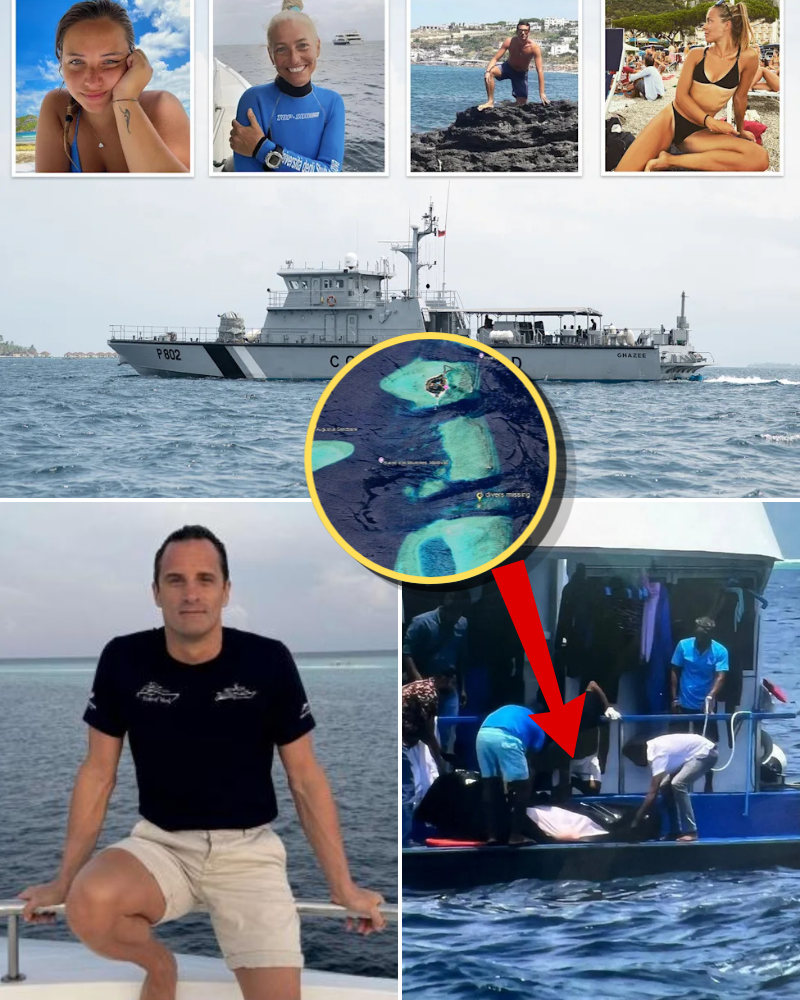
Authorities are urgently attempting to reconstruct the divers’ final moments to determine what catastrophic event may have forced the instructor away from the group before all five ultimately perished in the darkness beneath the sea.
Investigators have not publicly reached conclusions regarding the separation, but maritime experts say such positioning patterns inside underwater caves can sometimes reveal critical clues about panic, navigation failure, emergency response attempts, or sudden environmental changes.
The tragedy unfolded during a deep cave diving expedition near the Maldives tourist hotspot of Alimatha, where the group descended into one of the region’s most technically dangerous underwater environments.
The cave system — known among experienced divers for extreme depth, confined passages, darkness, and unpredictable underwater conditions — became the scene of one of the deadliest diving disasters in Maldives history.
Recovery teams later described the operation itself as extraordinarily dangerous.
Specialized European divers from DAN Europe were ultimately required to locate the victims after earlier recovery attempts were repeatedly halted by dangerous conditions and poor underwater visibility.
Maritime specialists explain that underwater cave emergencies can spiral out of control within seconds.
At depths approaching 200 feet, divers face severe physiological threats including nitrogen narcosis, oxygen toxicity, decompression complications, panic disorientation, and catastrophic equipment malfunction.
Inside underwater caves, even minor visibility collapse or navigation errors can instantly separate dive teams in total darkness.
Experts note that lead instructors sometimes move independently during emergencies in attempts to locate exits, stabilize guide lines, retrieve backup equipment, or search for trapped divers.
However, investigators have not publicly confirmed whether any such emergency maneuver occurred during the Maldives expedition.
The disaster became even more devastating after a rescue diver participating in recovery operations reportedly also lost his life inside the same underwater environment.
Meanwhile, scrutiny surrounding the original expedition continues intensifying.
Investigators are reviewing dive computer data, gas systems, navigation routes, authorization paperwork, environmental conditions, and communication records linked to the doomed excursion.
Particular attention has focused on reports that the dive may have exceeded operational depth limits associated with the Duke of York used during the trip.
Meanwhile, Albatros Top Boat previously stated it did not authorize a dive reaching such extreme depths.
The tragedy has generated widespread international attention partly because several victims were reportedly highly experienced divers connected to scientific and technical fields.
Carlo Sommacal, who lost both his wife and daughter during the expedition, publicly insisted that “something happened down there,” arguing that his wife would never recklessly endanger herself or others.
Mental health experts explain that people often become intensely focused on victims’ final positions during disaster investigations because physical separation can appear to offer emotional clues about survival attempts, fear, leadership decisions, or final acts of protection.
Authorities continue urging the public not to spread unsupported conspiracy theories while the official investigation remains ongoing.
As investigators continue reconstructing the final movements inside the Maldives abyss, one deeply haunting question now dominates the tragedy: why was the instructor found alone near the exit while the others remained trapped together far deeper in the darkness below?