My son died in a crash that everyone first blamed on snow, darkness, and bad luck.
My son died in a crash that everyone first blamed on snow, darkness, and bad luck. I survived because I happened to be sitting on the left side of his car instead of the right—a tiny, meaningless decision I never thought about until a detective showed me what the passenger side looked like after impact. It had been crushed inward so violently that he told me, very carefully, that if I had been sitting where I normally sat, I probably would not have lived.
That was the moment I understood something far worse than grief: whoever wanted William dead may have expected me to die beside him.
The night of the crash had started quietly. William and I were driving home from the quarterly shareholders meeting of Sterling Construction, the company his father had built from a single pickup truck and that William was preparing to lead fully. He had spent the meeting whispering jokes to keep me from falling asleep through financial slides, and for a few hours he felt like the same boy I had raised, only older, steadier, carrying responsibilities his father once carried.
But once we were alone on the snow-slicked highway, his mood changed.
He told me his wife, Victoria, had been pushing him to fast-track the ownership transfer before the holidays. She wanted control settled quickly, and she had also started asking questions about a protected retirement account I had transferred to William years earlier. That account was family money, completely separate from the company, and Victoria had no reason or legal right to control it.
When I asked William what he told her, he looked at me and said, “No, Mom. That stays between me and you.”
I asked whether Victoria was angry. William stared through the windshield into the swirling snow and said she had been angry about a lot of things lately, then told me there were matters he needed to “straighten out” after the holidays. I wanted to press him, because something in his voice frightened me, but the road curved sharply before I could speak.
Bright headlights appeared ahead, while another vehicle suddenly accelerated directly behind us.
The car behind struck William’s rear quarter panel hard enough to send us sliding sideways across the icy road. William fought the steering wheel as the oncoming headlights filled the entire windshield, and I remember him shouting my name just before metal screamed and glass exploded around us.
When I woke again, I was in a hospital bed with IV tubes in my arm and agonizing pain running through every part of my body. I kept asking where William was until a uniformed officer walked in carrying my son’s broken wristwatch inside a plastic evidence bag.
He did not need to say much. I knew before the words came. My son was dead.
The funeral passed like something happening to another woman. People hugged me, spoke softly, brought casseroles I could not taste, and told me William had been a good man as though I needed reminding. Victoria cried dramatically in front of everyone, but even through my grief I noticed how quickly her expression became cool and composed the moment people stopped looking. I hated myself for noticing it, because at that point I still wanted to believe the crash had simply taken my son and left the rest of us equally broken.
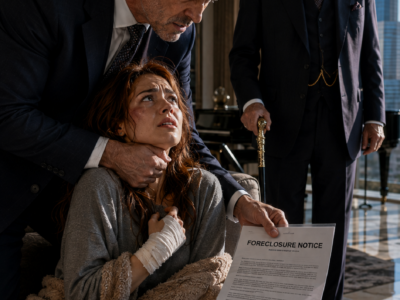
Three days after the funeral, Victoria came into my house without knocking. She walked right past William’s photograph on the mantel, placed a thick manila envelope on my kitchen island, and told me it contained the paperwork for the estate transition. According to her, the board had already reviewed everything, she and William had been planning the transfer for months, and all I needed to do was sign so the company could move forward.
My son had been buried for seventy-two hours, and his widow was already putting sticky notes beside my signature lines.
I told her I wanted time. Victoria smiled, but there was no warmth in her eyes, and before leaving she said, “Just don’t wait too long, Evelyn. Some things lose value if you sit on them too long.”
That sentence bothered me enough that I opened the envelope later that night, expecting ordinary corporate documents. Instead, I found a power of attorney dated two weeks before William’s death.
It gave Victoria sweeping, absolute control over William’s business interests and our old family trust. At first I could barely process the legal language, but then I saw William’s signature at the bottom of the page. It looked almost right, and that was the problem. My son always made the first letter of Sterling with an exaggerated, looping flourish, while the signature in front of me looked careful, copied, and strangely flat.
I found an old birthday card from William and placed the two signatures side by side. They were similar enough to fool a bank teller who did not know him, but I had watched that boy learn to write his own name. I knew what his hand looked like.
By morning, I was sitting in the office of our longtime family attorney, Arthur Va\nce, asking him whether William had recently changed his will.
Arthur became quiet, opened a locked desk drawer, and removed a sealed envelope with William’s handwriting on the front. William had brought it to him ten days before the crash and asked him to hold it while he gathered more evidence. Inside was a draft amendment to his will that did the exact opposite of what Victoria’s paperwork claimed. If William died, Victoria would not control the company, the trust, or the protected account.
Arthur then told me something that turned my grief into ice-cold fear. William had said he believed someone was moving company money without authorization, and he wanted to revise his estate before confronting the problem. On one of his hand-written notes, he had written: “Do not sign Victoria’s revised POA.”
My son had known something was wrong before he died.
Before I could ask Arthur what he thought it meant, my phone rang. A quiet man introduced himself as Detective Marcus Va\nce and asked me to come to the police station regarding William’s crash. I asked whether something had been found wrong with the car, but he refused to explain over the phone. He only said it would be best if I did not wait.
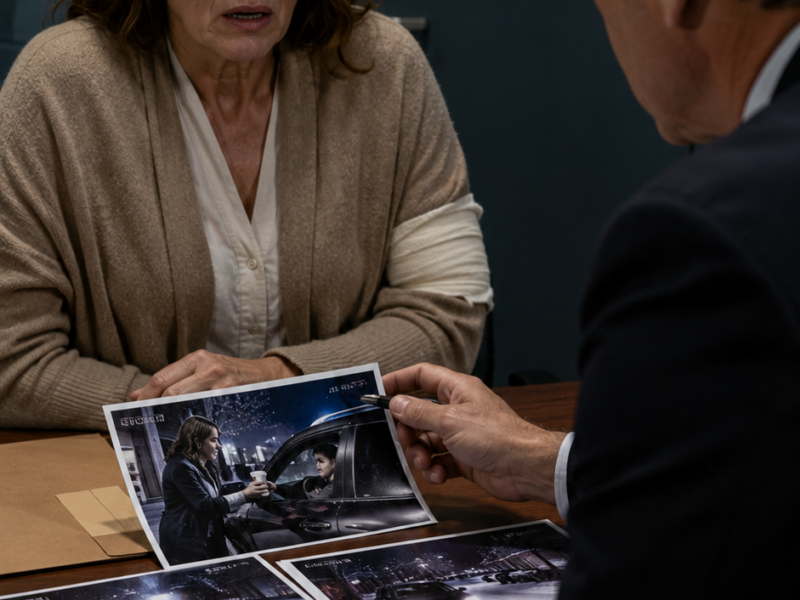
At the station, Detective Van\ce placed several security-camera photographs face-up on the desk. The first showed William at a gas station on the night he died. The next showed Victoria arriving five minutes later, even though she had told me and the police she was at home all that evening.
Then came the photograph that made every sound in the room seem to vanish into a cold void.
Victoria was standing beside William’s driver-side window, holding out a paper coffee cup to him.
And Detective Van\ce looked at me and asked whether I remembered seeing my son drink it.
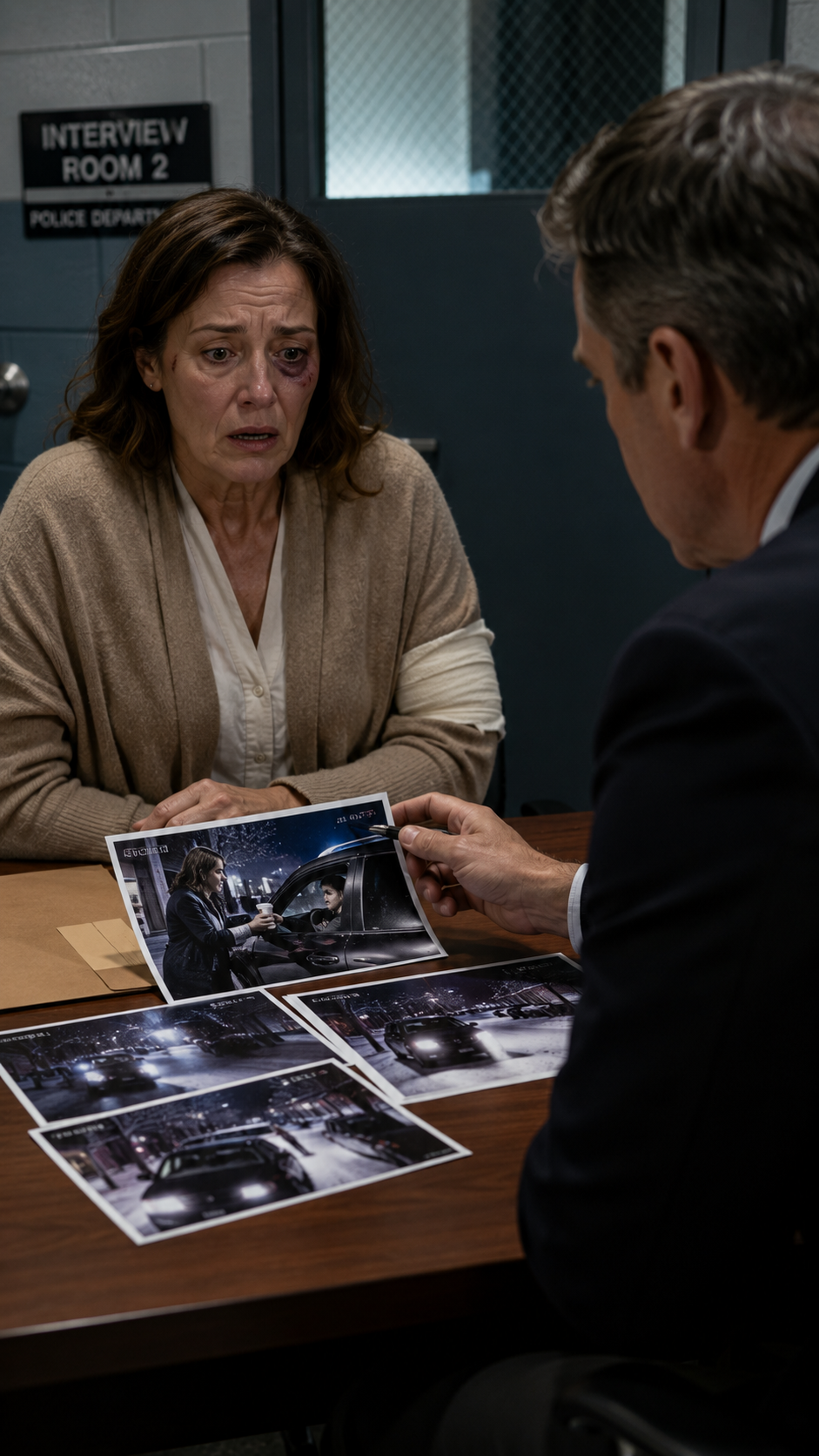
The room went dead silent, save for the faint hum of fluorescent lights overhead.
“I… I don’t remember him drinking anything from her,” I whispered, my voice trembling as I stared at the photo. “William didn’t mention meeting Victoria at the gas station. He just bought a bottle of water inside and came back out.”
Detective Va\nce nodded slowly, pulling a second file from his drawer. “The toxicology report from the medical examiner arrived two hours ago, Evelyn. Your son didn’t die from the physical impact of the crash alone. He had a lethal dose of a prescription nerve blocker in his bloodstream—a drug that causes sudden disorientation, delayed reflexes, and loss of consciousness within twenty minutes of ingestion.”
My breath caught in my throat. The puzzle pieces crashed together in my mind with terrifying clarity.
“She drugged him,” I gasped, tears burning my eyes. “She knew he was driving us home on an icy highway. She knew the drug would kick in while he was behind the wheel!”
“And if you had been sitting in your usual passenger seat,” Detective Van\ce added, his voice grim, “the impact from that truck would have killed you instantly. Victoria wouldn’t just have inherited William’s estate—she would have inherited your share of Sterling Construction without a single person left to question her.”
A cold, unyielding rage replaced my sorrow. My son hadn’t just been murdered; I was meant to be collateral damage. Victoria had tried to wipe out our entire family line for a corporate balance sheet.
“What do we do now?” I asked, my hands clenching into fists on the officer’s desk.
“We let her think she won,” Detective Van\ce said, leaning forward. “She thinks you’re a grieving, broken mother who is about to sign those documents. If you go to the board meeting tomorrow and play along, we can catch her in the middle of executing the fraudulent transfer.”
By 9:00 AM the following morning, the executive boardroom of Sterling Construction was filled with board members, attorneys, and senior shareholders. Victoria sat at the head of the conference table, wearing a sleek black designer dress, holding her manila envelope with supreme confidence.
“Thank you all for coming,” Victoria announced, wiping away a theatrical tear. “As you know, William’s sudden passing has left a tragic void in our company. But as his sole beneficiary, I am prepared to step in as President and sign the final asset consolidation.”
“Wait,” I said, pushing open the heavy glass doors of the boardroom.
The entire room turned. Victoria’s eyes narrowed slightly, but she quickly forced a sad, comforting smile. “Evelyn, dear, you shouldn’t be here. You need to rest—”
“I’m here to sign the papers, Victoria,” I interrupted, walking calmly to the table and setting my purse down. “Just like you asked.”
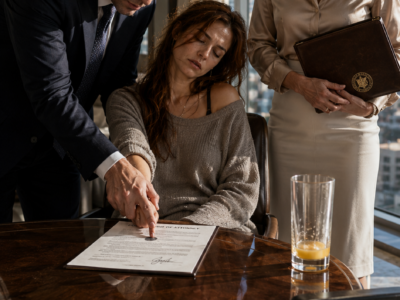
Victoria’s smile broadened slightly with hidden triumph. She slid the forged power of attorney across the polished mahogany table, handing me a pen. “Sign at the bottom of page four, Evelyn. Then everything will be taken care of.”
I picked up the pen, hovered it over the paper, and then looked directly into her eyes.
“Before I sign,” I said, my voice echoing across the silent room, “I have one question. Did William drink all of the coffee you brought him at the gas station, or did he leave a little in the cup?”
Victoria froze. The color drained from her face so fast she looked like a ghost under the bright boardroom lights.
“What… what are you talking about?” Victoria stammered, her voice cracking. “I wasn’t at any gas station. I was home!”
I reached into my bag, pulled out a portable tablet, and placed it on the center of the table. I tapped the screen, playing the security video Detective Van\ce had given me.
The video showed Victoria standing beside William’s car, handing him the cup, and watching him drive off into the snowy night.
The board members gasped, leaning in to look at the screen.
“That’s a lie! That video is edited!” Victoria shrieked, slamming her hands onto the table and standing up. “Security! Get this crazy old woman out of here!”
“Nobody is touching her, Mrs. Sterling,” Detective Van\ce’s voice rang out from the doorway.
The heavy doors opened wider, and four uniformed police officers stepped into the room. Beside them was Arthur Van\ce, holding the original copy of William’s draft will and the forensic handwriting report proving the power of attorney was a forgery.
“Victoria Sterling,” Detective Van\ce announced, pulling out a pair of steel handcuffs, “you are under arrest for the first-degree murder of William Sterling, attempted murder of Evelyn Sterling, grand corporate fraud, and forgery.”
Victoria backed away toward the floor-to-ceiling windows, her eyes wild with panic. “No! You can’t prove anything! The crash was an accident!”
“We searched your home computer an hour ago under a federal warrant, Victoria,” Detective Van\ce replied coolly. “We found your search history for prescription nerve blockers, your correspondence with the driver of the truck who struck William’s car, and the offshore account where you transferred two million dollars of stolen company funds.”
Victoria looked around the room, but every single board member looked away from her in absolute disgust. The trap she had so carefully constructed had closed around her own neck.
The officers stepped forward, roughly pulling her arms behind her back and clicking the handcuffs around her wrists. Victoria began to scream and curse my name, but her cries faded as she was dragged down the carpeted hallway toward the elevators.
The boardroom fell into a profound, quiet stillness.
Arthur Van\ce walked over to me, placing a gentle hand on my shoulder. “Your son was a smart man, Evelyn. He made sure the truth would come out, no matter what.”
I looked down at the forged documents on the table, then picked up the small birthday card I had carried in my coat pocket—the card where my son had signed his name with his characteristic, looping flourish.
I took a deep, steady breath, feeling the heavy fog of grief finally lift, replaced by a deep sense of justice and peace. My son was gone, but his legacy, his company, and his memory were safe.
I turned to the board members, stood tall at the head of the table, and said softly, “Let’s get back to work.”