Kyle Busch’s Final 11 Days: The Warning Signs NASCAR Fans Never Saw Coming
At 41 years old, Kyle Busch remained one of the most successful — and polarizing — figures in modern NASCAR history.
With 234 national-series victories, multiple championships, and a reputation for competing through pain that would sideline most athletes, Busch built his legacy on resilience. He raced through injuries. He embraced pressure. He earned a reputation as one of the toughest competitors motorsports had ever seen.
That is why the circumstances surrounding his final days have left so many fans struggling to understand what happened.
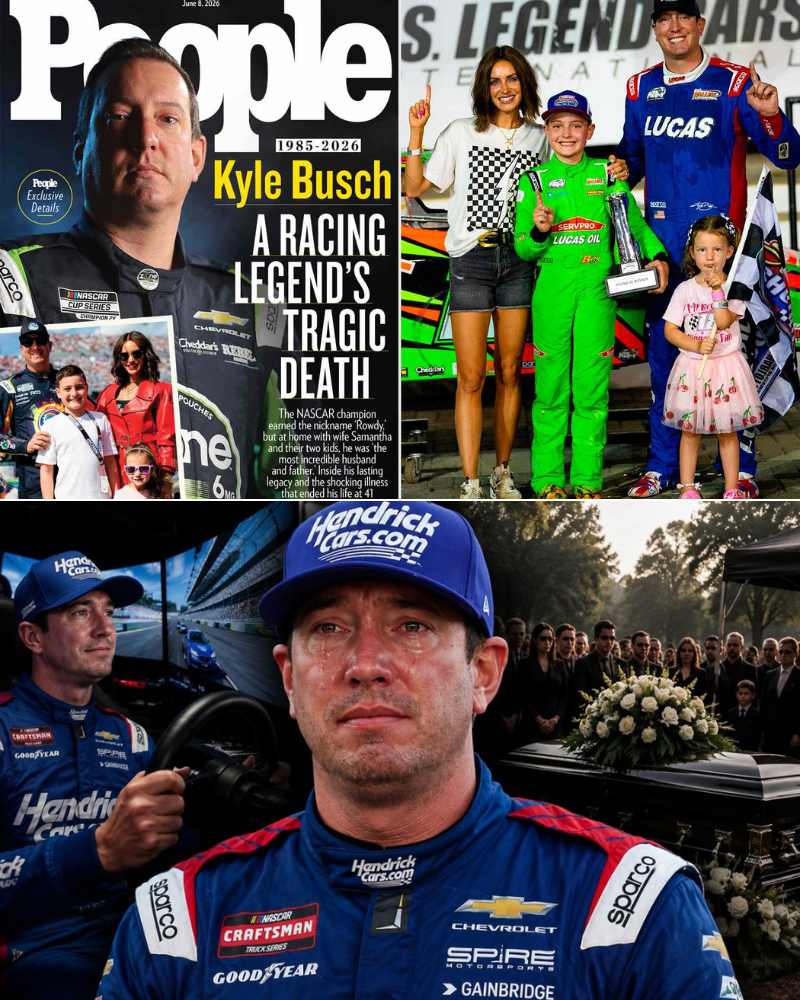
According to reports that surfaced following his death, Busch had reportedly been battling bacterial pneumonia for days or even weeks before his condition suddenly deteriorated. What initially appeared to be an illness eventually escalated into sepsis, triggering a catastrophic medical emergency that proved fatal.
Looking back, many fans now believe there were warning signs.
During one of his final NASCAR appearances, Busch reportedly radioed his crew requesting a doctor and asking for a “shot” after the race. At the time, the comment drew little attention. Drivers often race through pain, dehydration, illness, and exhaustion.
For Busch, pushing through discomfort was practically part of his identity.
Friends, competitors, and fans had watched him continue competing through injuries throughout his career. In 2015, he famously returned from a devastating leg injury to win a championship later that same season.
Because of that history, few people thought anything unusual when Busch continued racing despite appearing under the weather.
Reports later suggested he was dealing with persistent coughing and respiratory symptoms during the days leading up to his death.
Yet even then, Busch remained focused on racing, family, and future plans.
Perhaps the most shocking detail is that he reportedly won a race just six days before his death.
To fans, that victory now feels almost surreal.
The image of Busch celebrating in victory lane while unknowingly battling a serious medical condition has become one of the most discussed aspects of the tragedy.
Then came the medical emergency.
Emergency dispatch audio reportedly described Busch suffering severe breathing difficulties, overheating, and coughing up blood before paramedics were called.
Medical experts note that bacterial pneumonia can become extraordinarily dangerous when complications develop. Once sepsis enters the picture, the body can deteriorate rapidly as infection spreads through the bloodstream and begins affecting major organs.
In many cases, the transition from illness to life-threatening emergency can occur within hours.
For NASCAR supporters, that timeline remains one of the most difficult parts of the story to process.
Busch spent decades surviving some of the most dangerous conditions imaginable inside race cars traveling nearly 200 miles per hour.
Yet the battle that ultimately claimed his life unfolded far away from the racetrack.
The tragedy also renewed conversations about athlete health and the culture of competing through pain.
Many fans now wonder whether Busch’s relentless competitive mentality may have caused him to underestimate the seriousness of his symptoms.
No official findings have suggested wrongdoing by Busch or anyone around him.
Still, the discussion highlights a reality often overlooked in professional sports: elite athletes are not immune to ordinary illnesses that can become deadly if complications arise.
In the aftermath of his death, the NASCAR community responded with overwhelming emotion.
Drivers, teams, executives, and fans paid tribute to one of the sport’s defining figures.
At Charlotte Motor Speedway, thousands honored Busch during emotional memorial ceremonies.
Meanwhile, tributes from his wife Samantha Busch and son Brexton Busch touched fans across the racing world.
One of the most meaningful gestures came when Richard Childress Racing announced that the iconic No. 8 would be set aside in Busch’s honor, preserving the number for a future many hope will someday include Brexton continuing the family legacy.
For many supporters, that decision transformed the number from a racing symbol into something much more personal.
Today, conversations about Kyle Busch are no longer focused solely on wins, championships, or rivalries.
Instead, they increasingly center on perseverance, family, and the fragile reality that even the strongest competitors can face battles invisible to everyone around them.
The story of Kyle Busch’s final days continues to resonate because it feels so unexpected.
A driver who survived crashes, injuries, and decades of elite competition was ultimately lost to a medical crisis that few recognized in time.
And for many fans, that remains the most haunting part of all:
the last warning signs were there, but nobody knew they were watching the final laps of a NASCAR legend’s life.