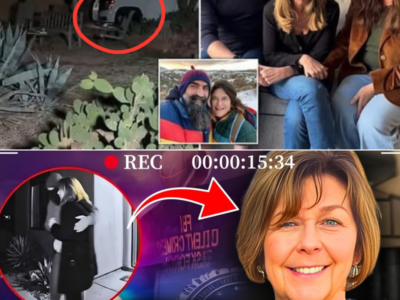

The investigation into the disappearance of 84-year-old Nancy Guthrie has entered a new phase following the examination of previously collected forensic material from the home. Authorities have confirmed that specialized teams are conducting a detailed analysis of evidence recovered near a doorway area—an element now considered significant in reconstructing the sequence of events. While officials have not characterized the finding as definitive, they acknowledge that it may provide additional insight into what occurred inside the residence.

According to investigators, the material in question was identified during a secondary review of the scene using advanced forensic techniques. In many cases, substances that are not immediately visible can later be detected through methods such as chemical enhancement or alternate light sources. These processes are commonly used to reveal traces that may have been overlooked or obscured during initial examinations, particularly in complex or time-sensitive investigations.

Officials have emphasized that the presence of a substance alone does not determine its origin or meaning. Forensic analysis is required to establish whether it is biological, how it was deposited, and whether it can be linked to a specific individual. Samples are typically processed in controlled laboratory environments, where analysts compare them against known profiles and databases. The results of these tests can take time and are subject to strict verification protocols.

The location of the evidence—near a threshold or entry point—has drawn attention because such areas often play a key role in understanding movement within a property. Investigators are examining whether the material is consistent with activity entering or exiting the home, and whether it aligns with other elements of the case, including previously reported details about access points. This analysis may help clarify whether the event involved forced entry, voluntary access, or another scenario.

Law enforcement has not confirmed the involvement of any specific agency beyond standard investigative cooperation, and they caution against assumptions based on unofficial descriptions of the evidence. In high-profile cases, terminology used in public discussions can sometimes exaggerate or misrepresent the nature of forensic findings. Authorities stress that conclusions will be based solely on verified laboratory results and corroborated evidence.

The case has remained active, with investigators continuing to review physical evidence, interview individuals connected to the situation, and reassess timelines as new information becomes available. The introduction of additional forensic analysis reflects a broader effort to ensure that all possible leads are thoroughly explored, particularly in cases where initial findings may be incomplete or inconclusive.

Experts note that advancements in forensic science have significantly improved the ability to detect and interpret trace evidence. Techniques that were not available or widely used in earlier stages of an investigation can sometimes yield new information when applied later. However, they also emphasize that such findings must be interpreted within the full context of the case, rather than in isolation.

As the analysis continues, authorities have not announced any definitive conclusions regarding the significance of the material or its impact on the investigation. The focus remains on determining how the evidence fits into the broader timeline and whether it can help identify or exclude individuals of interest.

For now, the case remains under active review, with investigators working methodically to piece together the available information. While the new forensic examination represents a potential step forward, officials reiterate that any conclusions will depend on the outcome of detailed testing and careful evaluation of all evidence involved.