The investigation into the death of 7-year-old Athena Strand reached a devastating turning point when authorities revealed disturbing evidence recovered from the property of Tanner Horner. What began as a missing child case in rural Texas quickly escalated into one of the most shocking criminal investigations in recent memory. Federal and local investigators searching Horner’s property uncovered items that prosecutors later described as critical pieces of evidence—objects that tied directly to the final moments before Athena’s death. The discovery, made behind a shed on the suspect’s property, intensified public outrage and raised haunting questions about motive, intent, and the actions taken after the crime.
According to investigative findings, law enforcement agents combed through a large pile of debris and discarded materials located near the back of the property. It was there that they discovered clothing believed to belong to Athena, including items she had reportedly been wearing on the day she disappeared. The condition and placement of these items immediately drew attention from forensic teams, who worked to document and preserve the scene. Authorities indicated that the clothing had been deliberately separated from the body, suggesting a sequence of actions taken after the initial crime. While officials have not publicly detailed every forensic conclusion, the presence of these items in such a location became a central component of the case against Horner.
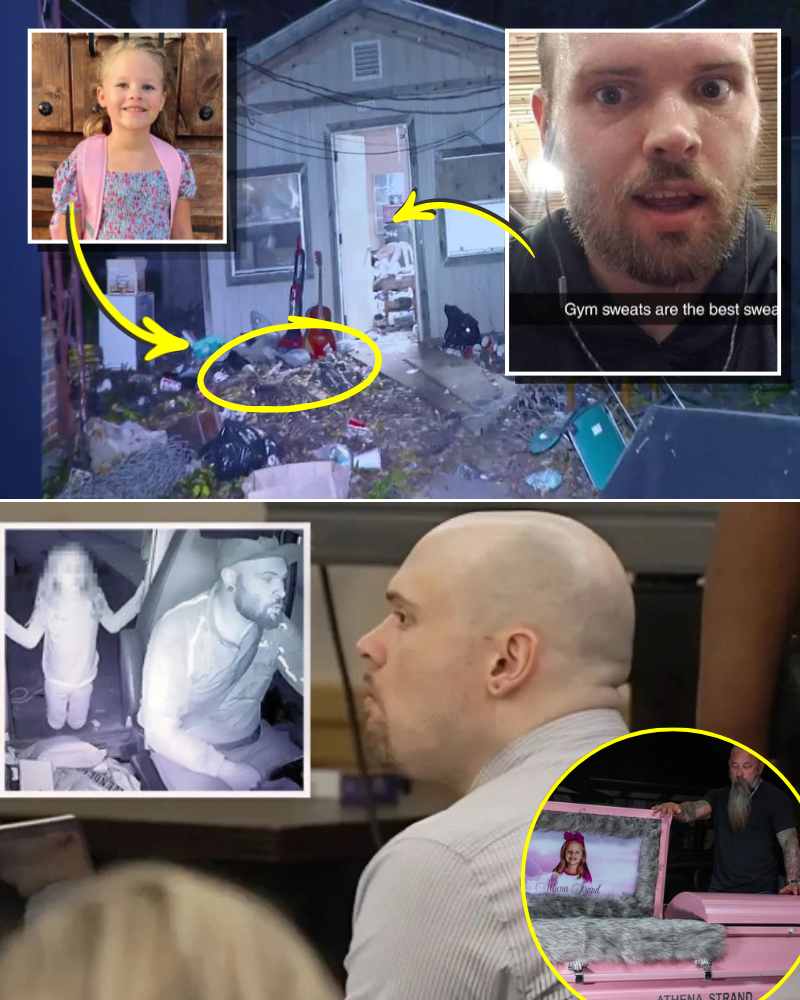
The timeline of events leading up to the discovery has been pieced together through a combination of witness statements, digital evidence, and the suspect’s own admissions. Investigators believe Athena was abducted shortly after returning home from school, setting off a desperate search effort that spanned multiple agencies and drew national attention. Within days, authorities identified Horner, a delivery driver who had been in the area, as a person of interest. His subsequent arrest marked a critical breakthrough, but it was the search of his property that ultimately provided the most chilling insights into what had occurred.
Prosecutors later outlined how the recovered items helped establish a clearer narrative of the crime. The clothing, found discarded behind the shed, was presented as evidence of an attempt to conceal or distance key elements of the incident. Investigators also examined the surrounding area for additional trace evidence, including fibers, biological material, and signs of movement that could indicate how the items were transported and disposed of. While many details remain sealed or restricted due to ongoing legal proceedings, officials have emphasized that the evidence collected at the property played a significant role in building the case.
The emotional weight of the discovery has been felt far beyond the courtroom. The case of Athena Strand quickly captured national attention, with communities across the country following developments closely. For many, the revelation that personal belongings of a young child were found discarded in such a manner added a deeply disturbing dimension to an already tragic story. Advocacy groups and community leaders have pointed to the case as a reminder of the vulnerabilities faced by children and the importance of rapid response efforts in missing persons investigations.
Legal experts note that physical evidence of this nature can be particularly impactful in court proceedings. Items directly connected to a victim, especially when recovered from a suspect’s property, often carry significant evidentiary weight. In this case, prosecutors are expected to rely heavily on forensic analysis, chain-of-custody documentation, and expert testimony to demonstrate how the items link the suspect to the crime. Defense strategies, meanwhile, may focus on challenging the interpretation of the evidence or the circumstances under which it was discovered. As the case progresses, these competing narratives will likely play a central role in determining the outcome.
The broader implications of the investigation also extend to law enforcement practices and public awareness. The rapid identification of a suspect and the subsequent recovery of key evidence highlight the role of coordinated investigative efforts, including the use of surveillance data, digital tracking, and community reporting. At the same time, the case has prompted renewed discussions about safety measures, particularly in residential areas where children may be at risk. Officials have reiterated the importance of vigilance, communication, and community engagement in preventing similar tragedies.
As the legal process continues, the focus remains on seeking justice for Athena Strand and providing answers to a grieving family. The evidence recovered behind the shed stands as one of the most haunting aspects of the case, symbolizing both the brutality of the crime and the determination of investigators to uncover the truth. While many questions have been answered, others persist, ensuring that the case will remain a subject of national attention as it moves through the courts.