In the shadowy underbelly of Netflix’s ever-expanding library of psychological thrillers, few series have clawed their way into the collective psyche quite like The Beast in Me. Premiering on November 13, 2025, this eight-episode limited series—starring the luminous Claire Danes as a grief-stricken writer teetering on the brink of obsession and the magnetic Matthew Rhys as her enigmatic, potentially murderous neighbor—has spent the last three weeks dominating the streamer’s Top 10 charts, amassing over 45 million viewing hours in its first month alone. It’s the kind of show that doesn’t just entertain; it infiltrates. It lingers in your mind long after the credits roll, whispering questions about guilt, desire, and the monsters we invite into our lives. And now, as the dust settles on a finale that ties up one harrowing chapter while cracking open a dozen more, the burning question on every binge-watcher’s lips is finally getting a pulse-check: Will The Beast in Me return for Season 2?
The answer, as of December 5, 2025, is a tantalizing “not yet—but don’t count it out.” Netflix has neither officially renewed nor canceled the series, leaving fans in a delicious limbo that’s equal parts agony and anticipation. Billed initially as a limited series—a self-contained beast meant to devour and depart—The Beast in Me has defied those tidy boundaries, surging to No. 1 on the global charts and sparking a social media frenzy that’s seen #BeastInMeSeason2 trend in over 50 countries. Showrunner Howard Gordon, the Emmy-winning mastermind behind Homeland and 24, has fanned the flames of hope with cryptic yet encouraging comments, hinting that if there’s a story worth telling, the door to Aggie Wiggs’ fractured world remains cracked open. “We’ll see how the show does,” Gordon told People magazine in a November 18 interview. “I would say if there’s a story, we would be open to it.” In a separate chat with TV Insider, he elaborated, “As long as Aggie is still roaming the planet and is a writer, I think there probably is a story there.” It’s the kind of non-committal tease that Netflix loves to deploy, buying time to crunch viewership data while keeping subscribers scrolling, theorizing, and desperately hitting refresh on their apps.
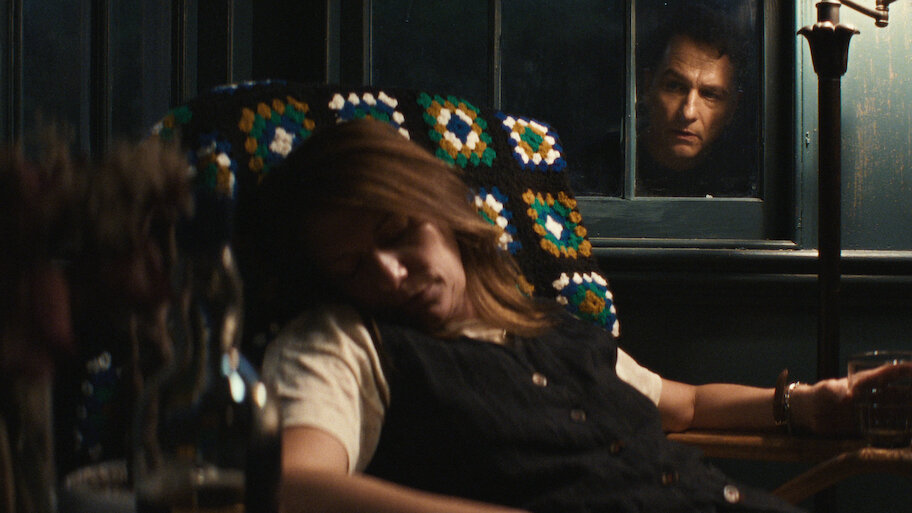
To understand why The Beast in Me has clawed its way into renewal conversations so quickly, you have to step back into the fog-shrouded world it so masterfully constructs. Created by Gordon and his Homeland collaborator Alex Gansa, the series is a slow-burn symphony of suspense that opens with Aggie Wiggs (Danes), a once-celebrated true-crime author whose life has unraveled in the wake of her young son’s tragic drowning. Holed up in a crumbling coastal estate in the fictional town of Blackwater Bay, Aggie is a ghost of her former self—haunted by grief, drowning in bourbon, and churning out half-finished manuscripts that her publisher politely rejects. Enter Nile Jarvis (Rhys), the charming yet inscrutable tech billionaire who moves into the neighboring mansion with his poised second wife, Nina (Brittany Snow). Nile’s arrival isn’t just a plot convenience; it’s a seismic shift. Whispers swirl about his first wife’s unsolved disappearance five years prior—a case that Aggie, in her pre-grief glory days, once dissected in a bestselling book that painted him as a monster in human skin.
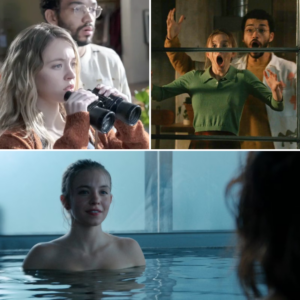
 What begins as cautious curiosity—Aggie spying through binoculars, scribbling notes like a deranged detective—escalates into a toxic tango of obsession. As Aggie digs deeper, unearthing Nile’s web of alibis, offshore accounts, and cryptic emails, the line between hunter and hunted blurs. Is Nile the beast she seeks, a cold-blooded predator hiding behind philanthropy and perfect smiles? Or has Aggie’s unraveling psyche conjured shadows where there are only regrets? The series masterfully toys with perspective, doling out revelations in jagged shards: a submerged car in the bay’s depths, a child’s toy washed ashore, a late-night confrontation where Rhys’ Nile delivers a monologue so laced with menace and melancholy that it rivals his Emmy-nominated turn in The Americans. Danes, returning to prestige TV after a four-year hiatus since Fleishman Is in Trouble, is nothing short of revelatory—her signature lip-quiver amplified into full-body tremors of suppressed rage, her eyes darting like cornered prey even as she sharpens her claws.
Supporting the leads is an ensemble that elevates every scene into a powder keg. Brittany Snow, fresh off her directorial debut with Parachute, brings a steely fragility to Nina, a woman whose polished facade cracks just enough to hint at buried horrors. Natalie Morales (Dead to Me) shines as Aggie’s estranged sister, a no-nonsense therapist whose interventions swing from compassionate to confrontational, forcing Aggie (and us) to question if the real beast isn’t lurking in familial fractures. Aimee Carrero (The Magicians) rounds out the core as Aggie’s loyal but increasingly skeptical editor, while guest spots from heavy-hitters like Mark Duplass (as a sleazy PI with his own agenda) and Zosia Mamet (as Nile’s brittle ex-colleague) add layers of duplicity that keep viewers guessing until the final frame.
From the jump, The Beast in Me hooked viewers with its atmospheric dread, a cocktail of coastal noir and domestic psychological horror that evokes Big Little Lies smashed into Gone Girl with a dash of Sharp Objects‘ Southern Gothic rot. The pilot episode, directed by Gordon himself, sets the tone with a rain-lashed funeral scene where Aggie’s eulogy devolves into a whispered accusation—directed not at the grave, but at the horizon where Nile’s silhouette looms. Cinematographer David Mullen (The Morning Show) bathes Blackwater Bay in perpetual twilight, shadows pooling like spilled ink, while composer Bear McCreary (The Walking Dead) underscores the tension with a score that pulses like a migraine—low cello drones building to staccato violin stabs that mimic a racing heart. It’s immersive world-building at its finest, turning a sleepy seaside town into a character as treacherous as its inhabitants.
Critics have been largely rapturous, praising the series for its intellectual rigor and emotional gut-punches. The New York Times called it “a labyrinthine triumph that dissects the anatomy of accusation with surgical precision,” awarding it an A- for its “unflinching exploration of how grief weaponizes doubt.” Variety lauded Danes’ performance as “a career-best return to form, her Aggie a powder keg of quiet devastation that explodes without warning,” while The Hollywood Reporter hailed Rhys as “the chameleon king, slipping between charm and chill with the ease of a serpent shedding skin.” On Rotten Tomatoes, the series boasts a pristine 92% from critics and a 87% audience score, with viewers raving about its “twisty brilliance” and “can’t-look-away tension.” Even skeptics who quibble over the finale’s ambiguity (more on that later) concede it’s “the most addictive Netflix drop since The Night Agent.”
But it’s the fandom that’s truly turned The Beast in Me into a cultural juggernaut. Since its premiere, the series has spawned a torrent of online discourse: Reddit’s r/TheBeastInMe subreddit ballooned to 150,000 members in weeks, buzzing with theory threads like “Nile’s Alibi: Hole or Red Herring?” and “Aggie’s Visions—Grief or Gaslighting?” TikTok is awash in fan edits syncing the finale’s confrontation to Hozier’s brooding ballads, while X (formerly Twitter) has birthed the hashtag #WhoIsTheBeast, where users debate if the true monster is Nile, Aggie, or the voyeuristic society that devours true-crime tales for breakfast. One viral thread, amassing 2.5 million views, posits a Season 2 arc where Aggie, now a bestseller chronicling her Nile obsession, attracts a copycat killer—echoing Gordon’s own teases about untapped stories. Even non-viewers are tuning in, lured by the cast’s star power: Danes’ Homeland stans flooding comment sections with “Carrie Mathison who? Aggie’s the new queen of paranoia,” and Rhys’ Perry Mason devotees dubbing him “the thinking person’s sociopath.”
The finale, without spoiling its razor-edged revelations, lands like a gut-punch wrapped in velvet—resolving the central mystery while scattering shrapnel into Aggie’s future. Nile’s fate hangs in a moral gray zone that invites endless dissection, Nina’s loyalty reveals fractures that beg for further probing, and Aggie’s “victory” feels more like a pyrrhic truce with her demons. It’s this open-ended elegance that has fueled Season 2 speculation. “It was meant to be a limited series,” Gordon admitted to Deadline on November 12. “It certainly is possible, because whoever is left standing at the end of this is still around, and I think if there’s a story, we’d be up for it; I do think that there’s certainly room for another chapter.” In The Wrap, he mused about delving into Aggie’s grifter father, a shadowy figure hinted at in flashbacks, potentially spinning the series into anthology territory where each season hunts a new beast. “I am tempted by the character of her grifter father in some way,” Gordon said. “We’ll see how the show does and if an idea comes. But I think they’d be open to more.”
Netflix’s silence isn’t surprising—the streamer is notorious for data-driven decisions, often waiting 30-60 days post-premiere to gauge sustained buzz. The Beast in Me has the metrics in its corner: it unseated Squid Game Season 2 from the Top 10 throne on November 15 and held No. 1 for two straight weeks, per Nielsen reports. Global completion rates hover at 78%, a stellar figure for a prestige drama, and merchandise tie-ins—like Aggie’s fictional memoir Chasing Shadows hitting bestseller lists as a mock paperback—signal merchandising potential. Comparable limited series like Your Honor and The Undoing spawned sequels when viewership exploded; even Netflix’s own Clickbait eyed expansion before fizzling. With Gordon’s track record (seven Homeland Emmys) and the cast’s availability—Danes is wrapping a Fleishman spinoff, Rhys eyes Perry Mason Season 3—logistics align for a swift greenlight.
Yet the thrill of uncertainty is what keeps the hunt alive. Imagine Season 2: Aggie, now a reluctant celebrity author, lured into investigating a Silicon Valley mogul whose “disappeared” rival mirrors Nile’s sins. Or a prequel flashing back to Nile’s first marriage, unearthing the beast’s origin. The possibilities are as intoxicating as the series itself—more coastal fog, more whispered confessions, more moments where Danes’ eyes betray a soul on the verge of shattering. Fans aren’t just hoping; they’re demanding, with petitions on Change.org surpassing 50,000 signatures and a fan-art explosion turning Blackwater Bay into a Pinterest fever dream.
As December deepens and holiday binges loom, The Beast in Me stands as a reminder of Netflix’s golden formula: stories that don’t just end, but echo. The hunt isn’t over—it’s evolving, lurking in the shadows of renewal boardrooms and viewer forums alike. Will Aggie face another monster, or has the beast within her finally won? Only time—and Netflix’s algorithms—will tell. For now, pour another glass of bourbon, dim the lights, and let the obsession begin anew. Because in the world of The Beast in Me, the real terror is knowing you can’t look away.