In the fog-shrouded streets of York, where ancient minsters loom like silent guardians over cobblestone alleys, a new kind of hero emerged earlier this year. Patience, the Channel 4 crime drama that quietly captivated audiences with its blend of intellectual puzzles and emotional nuance, is gearing up for a second season that promises to unsettle the familiar while honoring what made the first so profoundly affecting. Confirmed for renewal in May 2025, with production already humming along, the series—starring the breakout talent Ella Maisy Purvis as the titular Patience Evans—returns in 2026 with eight expanded episodes. It’s a testament to the show’s subtle power: in an era of bombastic thrillers and twist-heavy procedurals, Patience dares to whisper its stories, letting the weight of human connection and quiet revelation carry the narrative.
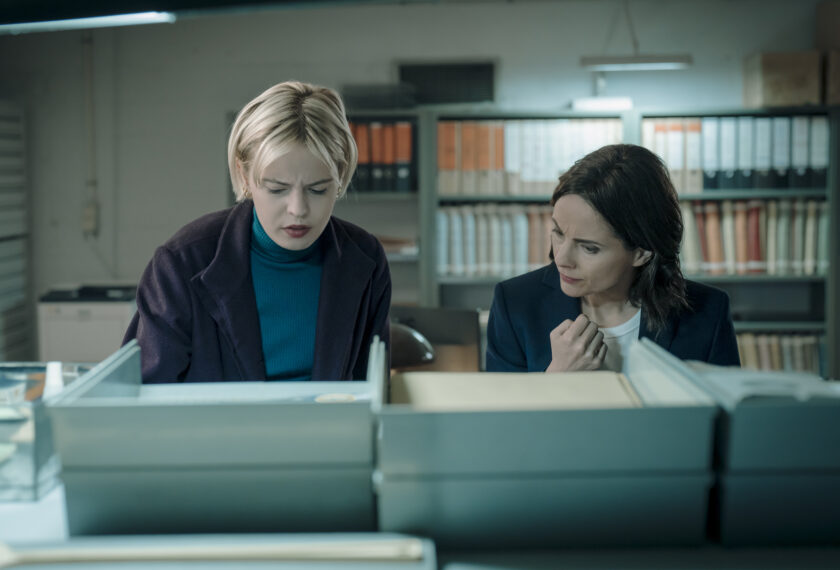
For those who missed the debut, or who simply crave a refresher before diving back in, Season 1 remains a masterclass in restrained storytelling. Premiering on January 8, 2025, the six-episode run introduced us to Patience Evans, a meticulous archivist in the City of York Police’s Criminal Records Office. Played with an authenticity that borders on revelatory by Purvis—who herself navigates the autism spectrum—Patience is a woman whose mind operates like a living archive. She doesn’t just file away dusty case files; she sees the invisible threads weaving through them, spotting anomalies and patterns that elude even the sharpest detectives. Her autism isn’t a plot device or a shorthand for eccentricity; it’s the lens through which the world refracts, both a gift that unlocks mysteries and a barrier that complicates the messier realms of social interaction and vulnerability.
The series opens with “Paper Mountain Girl,” a two-part tale that hooks viewers immediately. A man plummets from a high-rise in what appears to be a straightforward suicide, but Patience, sifting through the paperwork in her dimly lit basement office, notices a discrepancy—a forgotten detail in an old file that hints at foul play. Her discovery draws the attention of DI Bea Metcalf, portrayed with steely warmth by Laura Fraser. Bea, a no-nonsense investigator haunted by personal losses, recognizes Patience’s potential and pulls her into the fray. What follows is a partnership born of necessity, evolving into something resembling mutual respect amid the chaos of active cases.
From there, the season unfolds like a series of intricate tapestries, each episode peeling back layers of York’s underbelly while mirroring the characters’ inner worlds. In “The Missing Link,” a young woman’s body is discovered amid a dinosaur exhibit at the Yorkshire Museum, her death a baffling puzzle of misdirection and hidden motives. Patience’s encyclopedic knowledge of historical crimes proves invaluable, but it’s her struggle to articulate her insights—filtered through a mind that processes emotions in delayed waves—that adds the real tension. “The Locked Room” traps the team in a classic conundrum: a reclusive crime novelist found dead in a sealed study, with no apparent entry or exit. Here, Bea’s intuition clashes with Patience’s logic, forcing both women to confront their blind spots.
As the series progresses, Patience weaves in personal stakes that elevate it beyond mere whodunits. “My Brother’s Keeper” sees a corpse vanish from the morgue, thrusting Patience into a frantic chase that tests her aversion to unpredictability. The finale, “Pandora’s Box,” escalates to a public health crisis when a bus passenger succumbs to what seems like a routine illness but unravels into a bioterror plot tied to eco-activists and a corrupt insider. Bea’s dogged pursuit leads to her suspension, leaving Patience and her reluctant ally, DS Jake Hunter (Nathan Welsh, bringing a grounded everyman charm), to tie up the loose ends. Throughout, the show balances high-stakes intrigue with intimate moments: Patience’s tentative overtures toward friendship, her father’s quiet pride in her abilities, and the subtle grief that lingers in Bea’s eyes when she speaks of her estranged son.
What sets Patience apart in the crowded field of British crime dramas—think the procedural grind of Line of Duty or the gothic shadows of Vera—is its unapologetic focus on neurodivergence. Created by Matt Baker and adapted from the acclaimed French-Belgian series Astrid et Raphaëlle, the show doesn’t shy away from the realities of autism: the sensory overload of a bustling incident room, the exhaustion of masking social cues, or the profound joy of a perfectly organized filing system. Purvis’s performance is a standout, capturing Patience’s literal-minded brilliance without veering into caricature. In one poignant scene, she methodically reconstructs a crime scene using paper cutouts, her face alight with focus, only to falter when a colleague’s offhand joke sails over her head. It’s these “delicate human moments,” as fans often describe them, that linger long after the credits roll.
The ensemble around her provides sturdy emotional scaffolding. Nathan Welsh’s Jake Hunter starts as the skeptical sidekick, his banter with Patience evolving from awkward deflections to genuine protectiveness. Mark Benton’s Calvin Baxter, the gruff station sergeant with a heart of tarnished gold, offers comic relief laced with pathos—his late-night chats with Patience over vending-machine tea reveal a man who’s seen too much but still believes in second chances. Ali Ariaie’s DC Will Akbari brings youthful energy and cultural nuance, while Adrian Rawlins as the enigmatic Douglas Gilmour adds layers of quiet menace. Recurring players like Tom Lewis as Elliot Scott, Patience’s kind-hearted colleague, hint at romantic possibilities that simmer rather than boil, respecting the slow rhythm of trust-building for someone like her.
Reception for Season 1 was a slow burn in itself, mirroring the show’s pace. Critics praised its fresh take on the genre, with many hailing Purvis as a discovery who infuses the role with lived-in truth. Viewership averaged over four million per episode in the UK, a strong showing for Channel 4, and it quickly found a devoted following on PBS in the US, where it’s streamed alongside other Masterpiece imports. Some reviewers quibbled over the plotting—calling certain twists predictable or the dialogue occasionally stiff—but even detractors conceded the emotional authenticity. As one observer put it, Patience isn’t about shocking reveals; it’s about the quiet thrill of seeing someone like Patience claim space in a world that often overlooks her.
Now, as production ramps up for Season 2, the series is poised to expand its world without losing its soul. The jump to eight episodes allows for richer character arcs and more sprawling investigations, set against York’s iconic landmarks that double as atmospheric backdrops. Filming kicked off in May 2025, capturing the city’s medieval charm—from the towering spires of York Minster to the serene cloisters of secluded monasteries and the lush enclosures of the Botanical Gardens. These locations aren’t mere scenery; they’re integral to the crimes, turning historic sites into stages for modern malice.
The biggest shift comes in the precinct’s leadership. Laura Fraser’s DI Bea Metcalf, whose arc in Season 1 ended on a note of professional reckoning, steps back entirely for this run. Her absence creates a vacuum filled by Jessica Hynes as Detective Inspector Frankie Monroe, a formidable newcomer whose arrival signals a seismic change in the team’s dynamics. Hynes, best known for her comedic turns in Spaced and Twenty Twelve, as well as dramatic depth in Miss Austen, brings a sharp, no-frills edge to Frankie. Described as a “different breed of boss,” she’s all about efficiency and PR polish, introducing a sleek consultant to modernize the outdated station. Where Bea was intuitive and empathetic, Frankie is pragmatic to the point of abrasiveness, her management style clashing spectacularly with Patience’s need for routine and honesty.
This friction promises fireworks. Early teasers reveal Patience and Frankie forming an uneasy alliance, much like Patience and Bea’s did, but with higher walls to scale. Patience’s discomfort with change manifests in small, heartbreaking ways—fidgeting with her lanyard during tense briefings, or retreating to her archives when Frankie’s blunt feedback stings. Yet, as they tackle a trio of “twisted and mysterious” cases—a killer stalking the shadows of York Minster, a monastic murder shrouded in ritual, and a body unearthed in the Botanical Gardens’ undergrowth—their differences become strengths. Patience’s pattern-spotting genius cuts through Frankie’s data-driven approach, while Frankie’s street-smart instincts push Patience out of her comfort zone.
Continuity anchors the evolution, with core cast members returning to provide that “sense of familiarity and warmth.” Nathan Welsh reprises Jake, now navigating his own ambitions amid the shake-up, while Mark Benton’s Calvin offers wry commentary on the new regime. Ali Ariaie’s Will and Adrian Rawlins’s Douglas return, their loyalties tested by Frankie’s reforms. Connor Curren’s Billy Thompson and Liza Sadovy’s Dr. Loretta Parsons add procedural grit, and crucially, Tom Lewis’s Elliot Scott steps into sharper focus. The “slow-burn romance” teased in Season 1 ignites here, with Patience tentatively exploring connection. Their dates—awkward walks through York’s Shambles, shared silences over coffee—capture the tentative beauty of vulnerability, emphasizing consent and pacing over rom-com tropes.
Thematically, Season 2 doubles down on neurodivergence, delving deeper into Patience’s inner life. Flashbacks to her childhood, glimpsed briefly in Season 1, expand to explore how her autism shaped her family dynamics and self-perception. Her parents, played by Jamie Maclachlan and Lotte Lauren, return with stories of advocacy and quiet triumphs. Broader arcs touch on workplace inclusion, the ethics of policing in a digital age, and the personal toll of genius. Amid the murders, subplots probe Elliot’s patience (pun intended) with Patience’s boundaries, and Jake’s mentorship of younger officers, underscoring the show’s belief that true detection starts with understanding people, not just evidence.
Production-wise, Patience maintains its indie ethos, a co-production between Eagle Eye Drama, Happy Duck Films, and Beta Film, with Belgian tax support lending a cross-European polish. Director Maarten Moerkerke returns, his steady hand ensuring York’s medieval maze feels alive yet intimate. The score by Hannes De Maeyer and Ruben De Gheselle—haunting strings underscoring moments of insight—remains a character in itself, amplifying the emotional undercurrents.
As fans revisit Season 1 on Channel 4’s streaming service or PBS platforms, the anticipation builds. Patience arrived as a gentle disruptor, proving that crime drama doesn’t need gore or gadgets to grip; it thrives on empathy and intellect. Season 2, with its bolder conflicts and heartfelt expansions, feels like a natural progression—a reminder that growth, like solving a case, requires patience. In a genre often dominated by lone wolves and moral ambiguities, this series champions collaboration and kindness, one archived clue at a time. When it airs in 2026, expect it to remind us why we tune in: not just for the mysteries, but for the quiet revolution of seeing ourselves reflected, flaws and brilliance intact.