Without fanfare or massive marketing buzz, Netflix quietly added all three seasons of the acclaimed British historical drama Victoria to its library in early December 2025, and the streamer has struck gold. The series, originally produced by ITV and aired from 2016 to 2019, has surged in popularity, landing in the platform’s Top 10 in the U.S. and drawing comparisons to beloved classics like Downton Abbey and The Crown. Viewers who loved the opulent upstairs-downstairs intrigue of Downton or the regal intensity of Wolf Hall are declaring this the closest thing to period drama heaven they’ve seen in years. Word is spreading fast: once you start, you’re done—clear your schedule, cancel your plans, and prepare to lose an entire weekend to this captivating royal saga.
At the center of Victoria is Jenna Coleman in what many consider her career-defining role as the young Queen Victoria. The actress, previously known for her time as Clara Oswald in Doctor Who, transforms into the teenage monarch with remarkable poise and depth. Coleman brings a modern sensibility to the historical figure—portraying Victoria as fiercely independent, emotionally vulnerable, and determined to rule on her own terms in a male-dominated world that constantly underestimates her. From the very first scene, where 18-year-old Alexandrina Victoria awakens to the news that her uncle King William IV has died and she is now queen, the series pulls you in with quiet intensity. Coleman’s performance—nuanced, expressive, and grounded in the real diaries she was allowed to read—has been hailed as superb, conveying a young woman who is both seemingly fragile and possessed of an unbreakable inner strength.
The drama begins in 1837, capturing the first few years of Victoria’s reign. Thrust onto the throne at the tender age of 18, she immediately asserts her authority, resisting manipulation from those who see her youth and gender as weaknesses. Her domineering mother, the Duchess of Kent (Catherine Flemming), and the scheming comptroller Sir John Conroy (Paul Rhys) plot to declare a regency, but Victoria refuses to live in their shadow. She finds an unlikely ally and mentor in Prime Minister Lord Melbourne (Rufus Sewell), whose paternal guidance and subtle flirtation add layers of emotional complexity. The early episodes masterfully balance political intrigue—parliamentary crises, assassination attempts, and tense relations with France—with personal growth, as Victoria learns what kind of leader she wants to be.

The series’ true emotional core emerges with the arrival of Prince Albert (Tom Hughes), Victoria’s German cousin. Their courtship and marriage in 1840 form the heart of the narrative—a passionate, tender romance that evolves into a powerful partnership. Hughes portrays Albert as principled, intellectual, and deeply devoted, creating palpable chemistry with Coleman (the actors even dated in real life from 2016 to 2020 after meeting on set). The show excels at showing the couple’s private moments amid public duties: whispered conversations in dark hallways, stolen glances during court ceremonies, and the quiet power struggles that feel dangerously personal. Victoria’s determination to maintain her independence clashes with Albert’s desire to share in her rule, leading to heartfelt conflicts and reconciliations that feel authentically human.
Seasons two and three expand the scope, covering the next decade of Victoria’s life up to 1851. The narrative follows the couple’s growing family (they eventually had nine children), political upheavals including revolutions in Europe, and Albert’s efforts to modernize the monarchy through initiatives like the Great Exhibition of 1851. Subplots introduce forbidden romances among the palace staff, family tensions, and the arrival of Victoria’s estranged half-sister Princess Feodora. The production values are exquisite: lavish costumes, opulent sets recreating Buckingham Palace (then newly expanded as the monarch’s residence), and sweeping cinematography that captures the grandeur and intimacy of Victorian England.
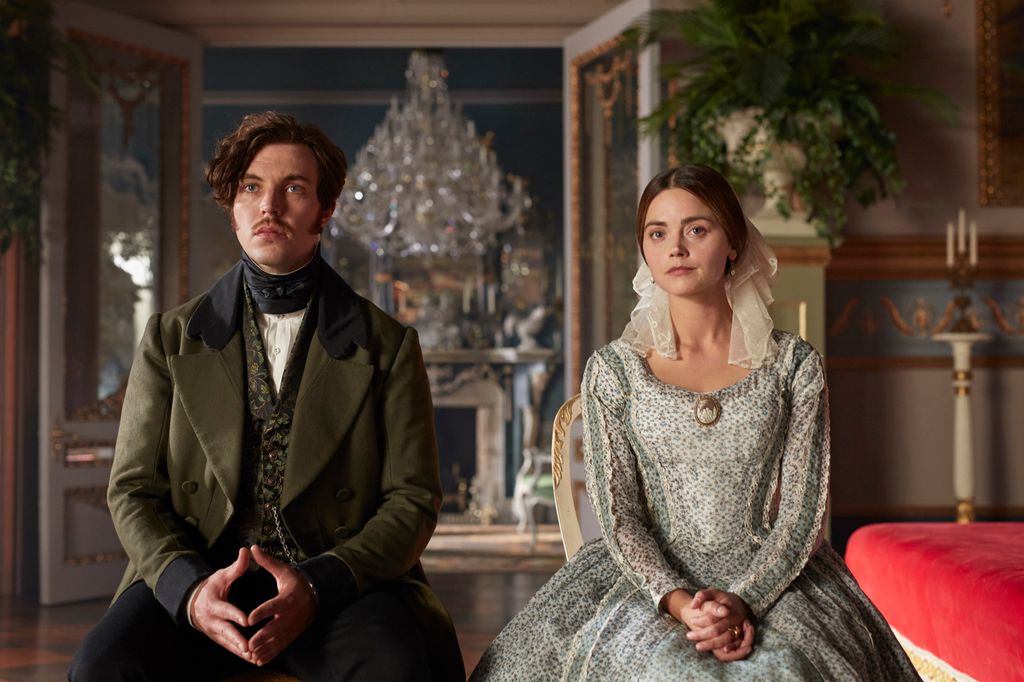
Created and principally written by Daisy Goodwin, Victoria draws on historical records while weaving in dramatic flair. It avoids dry textbook recounting, instead focusing on character-driven storytelling—Victoria’s grief, love, and resilience; Albert’s quiet ambition; and the web of court politics that threaten to undermine them. The ensemble cast is strong throughout: Nell Hudson as the loyal dresser Nancy Skerrett, Ferdinand Kingsley as the royal chef Charles Francatelli, and others who bring depth to the upstairs-downstairs world.
Critics and audiences have long praised the series, with Rotten Tomatoes scores in the high 80s and strong viewer acclaim for its “visually striking” period detail, “nostalgic” tone, and “understated” drama. Fans compare it favorably to The Crown, often saying they find it more enjoyable, thanks to its romantic focus and Coleman’s standout performance. The writing is taut and clever, the dialogue sharp yet elegant, and the pacing keeps you invested—never casual viewing, always immersive.
With no plans for a fourth season (though Coleman has expressed interest in returning someday), the three-season run feels complete yet leaves you wanting more. As Netflix’s “sneaky” addition continues to climb the charts, Victoria proves that great period drama endures. It’s beautiful, intense, and impossible to watch casually—perfect for anyone craving royalty, romance, and the thrill of power games that feel all too real. If you’re a fan of Downton Abbey or Wolf Hall, this is your new obsession. Dive in; the palace awaits.