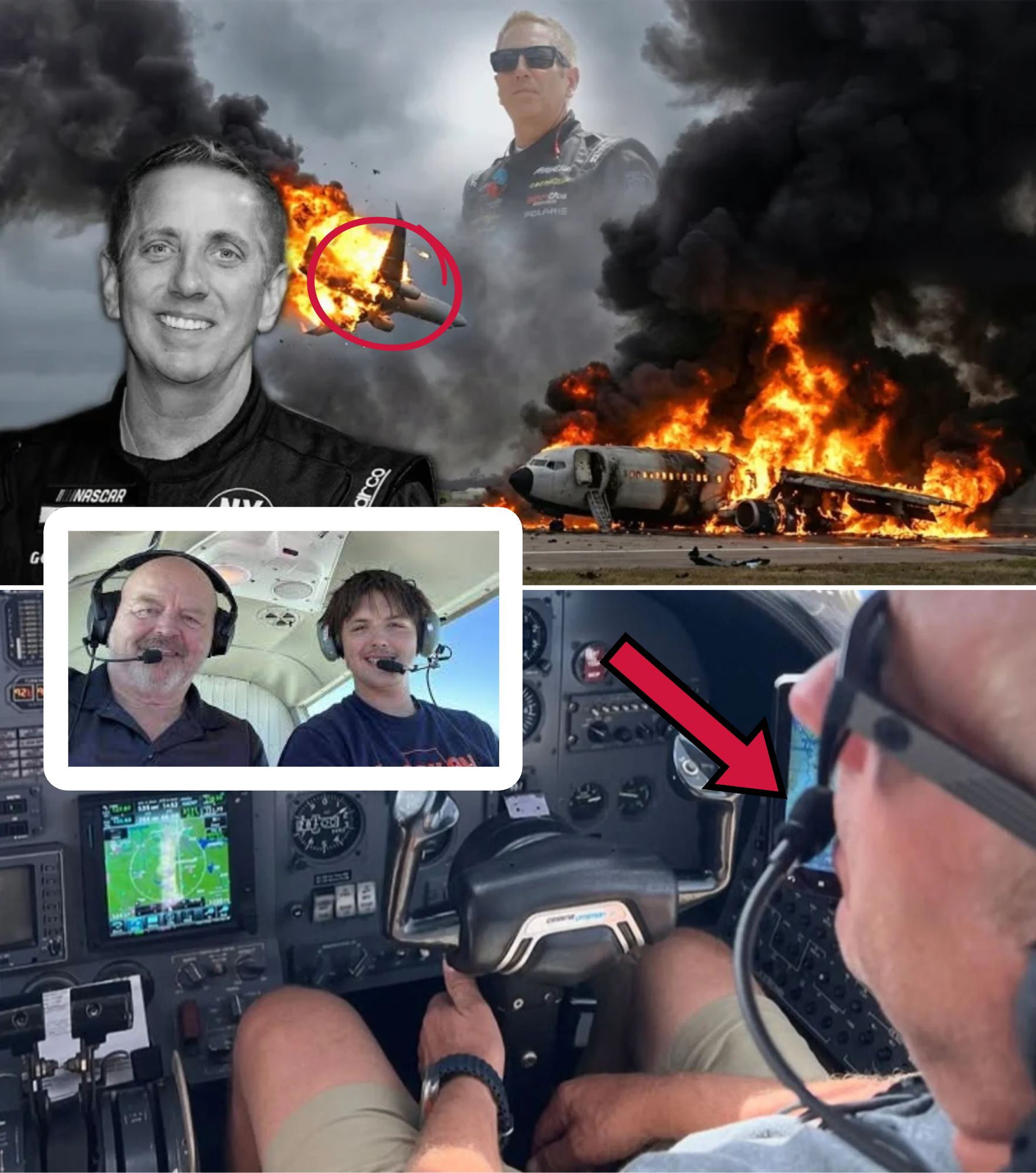
Federal investigators from the National Transportation Safety Board (NTSB) are grappling with a critical unknown in the probe into the December 18, 2025, plane crash that killed NASCAR veteran Greg Biffle and six others: who was actually piloting the Cessna Citation 550 during its catastrophic final moments? With three licensed aviators aboard, the ambiguity heightens the tragedy’s intrigue, as experts dissect a frantic four-minute sequence that offered no chance for survival. The jet, owned by Biffle’s company, departed Statesville Regional Airport amid drizzly, overcast skies, only to spiral into disaster shortly after.
Biffle, 55, a racing icon with 19 Cup Series victories and a storied career including Truck and Xfinity championships, was no stranger to high speeds—both on tracks and in the air. He held certifications for helicopters and single- and multi-engine aircraft. Accompanying him were professional pilot Dennis Dutton and his son Jack Dutton, a private pilot rated for single-engine planes. Rounding out the passengers: Biffle’s wife Cristina Grossu Biffle, 35; their children Emma Louise, 10, and Ryder James, 6; and close friend Craig Wadsworth. The group lifted off around 10:05 a.m. for what should have been a routine flight.
Trouble struck almost immediately. Radar tracks show the plane initiating a left turn westward post-takeoff, then abruptly looping back eastward toward the airport about five minutes in. This marked the start of the perilous four-minute ordeal. Air traffic controllers cleared an emergency landing on Runway 28, but the jet approached too low and off-course. Witnesses reported it grazing treetops, its landing gear extended and lights flashing desperately. In the cabin, panic ensued: a passenger—believed to be Cristina—texted a loved one, “emergency landing,” her phone later auto-sending a crash alert.
The descent turned deadly as the aircraft clipped a runway light pole roughly 1,800 feet short of the threshold. The impact ripped away sections of the wing and fuselage, propelling the jet into a tree line, more poles, and an airport fence. It skidded to a halt in flames, the post-impact fire engulfing everything. Responders arrived within minutes, but the inferno claimed all lives. NTSB teams recovered the cockpit voice recorder (CVR) and flight data recorder (FDR), now en route to labs in Washington, D.C., for analysis. Preliminary exams show all major components present at the site, with no pre-impact breakup evident. Engines from Pratt & Whitney Canada are being scrutinized, alongside maintenance records and weight distribution.
Aviation analysts point to potential factors like spatial disorientation in the low visibility or a sudden system failure, but NTSB Chair Jennifer Homendy stressed no conclusions yet. The low-altitude mishap left scant room for recovery—pulling up or going around was impossible at that speed and height. As of December 24, 2025, the investigation continues, with a preliminary report expected soon.
Biffle’s legacy endures through tributes from racing peers, who remember his grit and family devotion. Memorials grow, funding aviation safety and child welfare. This heartbreak echoes the sport’s history of losses, urging renewed vigilance in the skies.