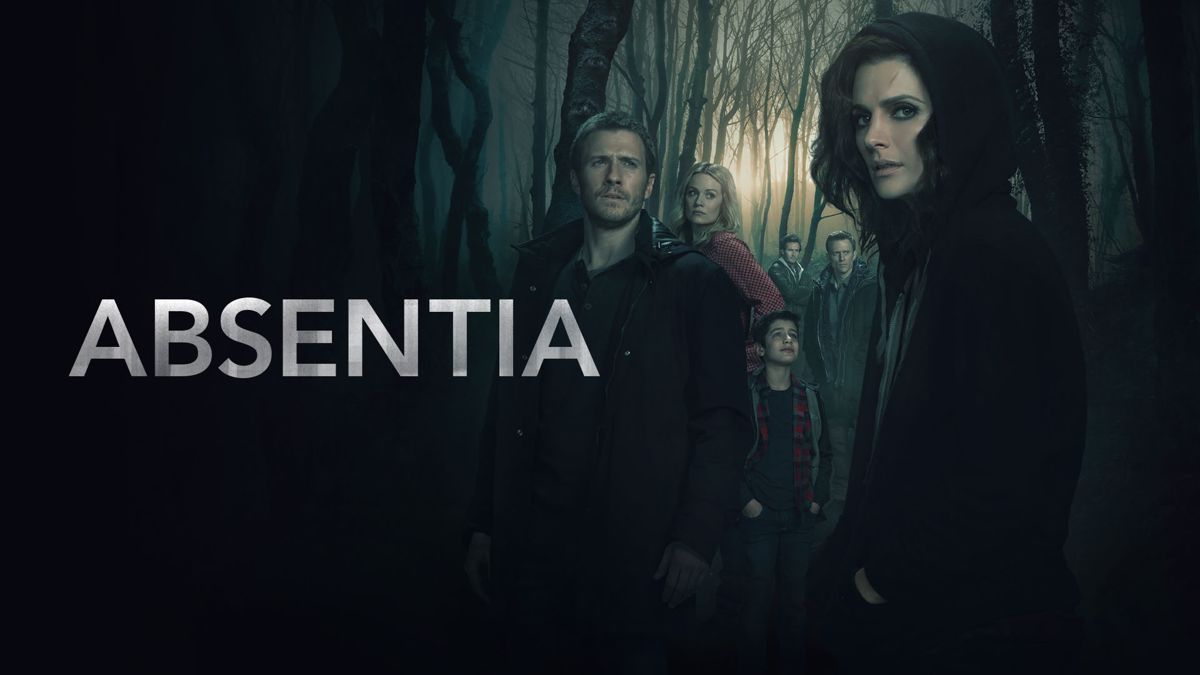
There is a moment in the pilot episode of Absentia, somewhere around the thirty-seven-minute mark, when Stana Katic, as Special Agent Emily Byrne, is discovered after seven years of captivity inside a transparent tank filled with murky water, her naked body floating like a specimen in formaldehyde, eyes wide open yet seeing nothing, skin carved with symbols that refuse to make sense, and the camera lingers on her face long enough for you to realize that what you are witnessing is not a rescue, but the birth of something that should never have been allowed to live. That single, silent shot is the DNA of the entire series: a woman who was declared dead, mourned, replaced, and finally erased from the world, now clawing her way back into a life that has healed over her absence like scar tissue, only to discover that the wound never closed; it simply learned to bleed inward.
Created by Matt Cirulnick and Gaia Violo for AXN and later picked up by Amazon Prime, Absentia ran for three seasons between 2017 and 2020, yet it never quite received the scream-it-from-the-rooftops recognition of Mindhunter or True Detective. Perhaps because its terror is quieter. Perhaps because its violence is intimate. Perhaps because it asks a question so much more frightening than “whodunit”: what if the person you love most came back… but the thing wearing their face was no longer them?
Season One begins with the kind of premise that sounds like a standard missing-person procedural until it mutates into something far darker. Emily Byrne, brilliant FBI profiler, disappears while hunting Boston’s most elusive serial killer. Her badge is found in a storm drain. Her blood is painted across a warehouse wall. Her husband and fellow agent, Nick Durand (Patrick Heusinger), spends years refusing to let go, until the world forces him to. He marries Alice (Cara Theobold), a gentle psychologist who helps raise Flynn, the son Emily never got to watch grow up. They build a careful, fragile happiness on the grave of the woman they both loved. Then one rainy afternoon, a hiker stumbles across a hidden cabin in the woods and finds Emily half-dead inside that glass coffin, barely breathing, covered in scars that spell out a language no one can read.
The reunion is not joyful. It is a collision.
Flynn, now six years old, screams when this stranger with his mother’s eyes tries to hug him. Nick’s new wife smiles the brittle smile of someone whose entire life has just been declared temporary. Emily’s brother Jack (Neil Jackson), a recovering addict who blamed himself for her disappearance, greets her with a mixture of ecstasy and dread, because the sister he buried is suddenly standing in his kitchen asking for coffee. And the FBI? They treat her like evidence. Like a suspect. Like a miracle that came with an expiration date.
But the true horror begins when Emily tries to remember. Flashes come in violent bursts: needles, water, a child’s lullaby played backwards, the feeling of teeth on bone. She wakes up in strange places covered in blood that isn’t hers. A new series of murders begins, each victim posed exactly like the ones from the case that swallowed her seven years earlier. The signature is identical. The timing is impossible. Because the man the FBI convicted of being the killer has been in federal prison the entire time Emily was gone.
So either the Bureau got the wrong man… or the right monster is walking around in Emily Byrne’s skin.
What follows is ten episodes of the most suffocating cat-and-mouse game ever filmed, where the mouse and the cat keep switching places. Every lead Emily chases drags her deeper into a conspiracy that involves corrupt agents, experimental psychiatric facilities, and a European orphanage that burned down decades ago yet somehow still casts a shadow across Boston. The deeper she digs, the more the people closest to her start dying in ways that only she could have orchestrated. Security footage shows a hooded figure with her exact height and gait. Her fingerprints appear on murder weapons she has never touched. Her own therapist begins to question whether Emily was ever truly a victim, or whether the tank was less a prison and more a chrysalis.
Stana Katic’s performance is a slow-motion car crash you cannot look away from. She plays Emily as a woman whose sanity is a house of cards built on a fault line. One moment she is the fierce agent who once took down terrorists with nothing but a paperclip and righteous fury; the next she is curled on the bathroom floor, fingernails torn and bloody from clawing at walls that weren’t there. Katic loses twenty pounds over the course of the season, her cheekbones sharpening into weapons, her eyes turning into black holes that swallow light. There is a scene in episode eight where she confronts her reflection after discovering a new scar on her abdomen that spells a word she does not remember carving, and the sound she makes is not human. It is the sound of something realizing the cage was never outside her skin.
Patrick Heusinger’s Nick Durand is the tragic counterpoint: a good man forced to choose between the ghost he never stopped loving and the family he built to survive her absence. Every time he reaches for Emily, you feel the guilt radiating off him like heat from asphalt. Cara Theobold’s Alice is heartbreaking precisely because she is not a villain; she is simply the woman who tried to mop up the ocean with a paper towel. And young Bruno Bichir as FBI supervisor Adam Radford carries the weight of secrets so corrosive they have begun to eat through his soul.
Season Two widens the lens and somehow makes the noose tighter. Emily, now a fugitive after being framed for multiple murders, is on the run across Europe, chasing the shadowy organization that turned her into a weapon. The orphanage from her nightmares is real. The children who survived it are not children anymore. And one of them has been waiting a very long time to finish what they started. The action sequences are brutal, the European locations drenched in perpetual rain and regret, but the true horror remains psychological. Every safe house Emily finds is temporary. Every ally eventually betrays her. Every mirror shows her someone she no longer recognizes.
By Season Three the series has fully embraced its descent into Greek tragedy. Emily is no longer asking whether she is innocent; she is asking whether innocence is even possible after what was done to her, and what she may have done to others while her mind was not her own. The final eight episodes are a blood-soaked reckoning that travels from Boston to Moldova to a forgotten biological research facility beneath a decommissioned Soviet prison. The revelations come fast and vicious: the real purpose of the tank, the reason certain memories were erased while others were implanted, the identity of the person who has been pulling strings since Emily was a child. The last two episodes are among the most emotionally devastating hours ever put on television, culminating in a choice so merciless that viewers still argue years later about whether it was justice, mercy, or the cruelest punishment imaginable.
What makes Absentia linger like a bruise you keep pressing is its refusal to give easy answers. There is no comforting voice-over telling you it was all a dream. There is no final shot of everyone smiling around a Thanksgiving table. Instead, the series ends with an image so quietly devastating that it feels like a blade sliding between ribs: a little boy standing in a doorway, holding a drawing of a family that no longer exists, asking a question the camera refuses to let us hear.
Critics at the time called it “relentlessly grim.” They were not wrong. But they missed the point. Absentia is not grim for shock value. It is grim because it dares to ask the question most thrillers are too cowardly to touch: what happens when the person you love most comes back from hell, but hell came back with them? How do you rebuild a life when the foundation has been poisoned? How do you forgive someone for surviving when their survival destroyed everything you became in their absence?
Stana Katic has never been better. This is the performance that should have launched her into the stratosphere alongside Elisabeth Moss and Jodie Comer, yet somehow it remains one of genre television’s best-kept secrets. Perhaps because the show is too European in its bleakness for American comfort. Perhaps because its violence against women is unflinching yet never exploitative. Perhaps because it forces you to sit with the realization that sometimes the most terrifying monster is not the one hiding in the woods; it is the one who used to kiss your child goodnight.
Seasons One through Three are streaming now on Amazon Prime. Watch with the lights on. Watch with someone you trust. But understand this: once you finish the final scene of episode thirty, you will never look at locked doors, childhood toys, or your own reflection the same way again.
Because some people disappear. Some people come back. And some people were never really gone; they were only waiting for the right moment to remind you that the darkest place in the world is not the tank they kept you in.
It is the space between who you were and who you are now.
And Emily Byrne never found her way out of that space. She only learned to live inside it.