In the fractured kaleidoscope of the Marvel Cinematic Universe, where timelines splinter like shattered vibranium and heroes’ choices echo across infinities, a seismic rumor has erupted that could redefine the saga’s twilight hours: Avengers: Doomsday, the penultimate chapter of the Multiverse Saga, may pivot its cataclysmic core around an unforeseen blood feud between the armored tyrant Doctor Doom and the shield-wielding paragon Steve Rogers. Leaked whispers from insiders paint a portrait of cosmic retribution, with Victor von Doom—resurrected in the iron-fisted visage of Robert Downey Jr.—fixating not on his canonical nemesis Reed Richards, but on the long-retired Captain America, blaming his time-heist gambit in Avengers: Endgame for unleashing the incursions that devoured Doom’s own reality. If these tidbits hold water, this isn’t just a villain’s origin—it’s a philosophical apocalypse, pitting unyielding idealism against tyrannical absolutism in a clash that could eclipse the Infinity War’s snap. Directed by the Russo Brothers, scripted by Stephen McFeely, and slated for a December 18, 2026, release, Doomsday promises to drag Steve Rogers from his pastoral exile, forcing the man out of time to confront the butterfly-winged catastrophe his heart’s desire wrought. In an MCU teetering on reinvention, this rivalry isn’t mere spectacle; it’s a mirror to the franchise’s soul, questioning whether heroes’ triumphs are ever truly selfless.
The MCU’s Multiverse Saga, now cresting its fifth phase amid box-office tremors and narrative pivots, has long danced on the razor’s edge of temporal chaos. Loki‘s branching timelines, Doctor Strange in the Multiverse of Madness‘ incursion horrors, and Deadpool & Wolverine‘s variant-fueled frenzy have primed audiences for a finale where every skipped stone ripples into Armageddon. Enter Avengers: Doomsday, the erstwhile Kang Dynasty rechristened after Jonathan Majors’ ousting, a $300 million behemoth helmed by Joe and Anthony Russo—the visionaries behind Infinity War and Endgame‘s operatic sprawl. Their return, announced at San Diego Comic-Con 2024, signals a masterstroke of continuity: McFeely, the scribe of Cap’s introspective arcs, reunites with the duo to weave a tapestry that honors the saga’s emotional scaffolding while detonating its foundations. Production, shrouded in Pinewood Studios’ fog-shrouded soundstages since February 2025, has already birthed viral set leaks—Doombots clanking through mock-Latverian spires, a ragtag New Avengers assembling amid rubble-strewn Wakandan vistas. But the heart of the maelstrom? A grudge as personal as it is planetary, with Doctor Doom’s emerald-gloved ire zeroed on Steve Rogers, the everyman eternal whose quiet domesticity in the 1970s ignited the multiversal fuse.
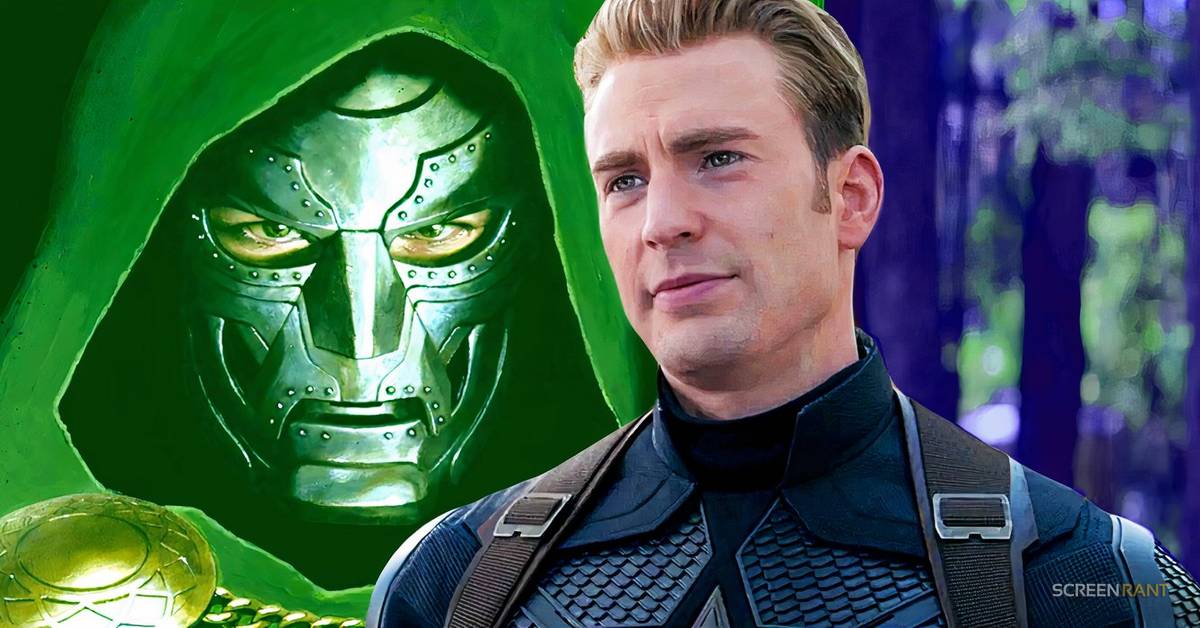
At the rumor’s epicenter throbs Victor von Doom, Marvel’s most Shakespearean despot: a Latverian monarch whose genius rivals gods, his scarred visage a perpetual mask of hubris and heartache. In comics lore, Doom debuted in 1962’s Fantastic Four #5 as Reed Richards’ college rival turned cosmic scourge, his Doombots and sorcery a symphony of stolen sovereignty. The MCU’s iteration, teased in The Fantastic Four: First Steps‘ mid-credits stinger (slated for July 2025), reimagines him as a multiversal exile—perhaps a variant plucked from a doomed Earth where incursions razed his ironclad utopia. Downey Jr.’s casting, unveiled at Comic-Con amid thunderous ovations, twists the knife: the man who armored Tony Stark’s wit into heroism now cloaks Doom’s megalomania in familiar baritone gravitas. Early concept art, glimpsed in fan recreations, depicts RDJ’s Doom storming a pastoral idyll—a weathered farmhouse nestled in upstate New York’s rolling greens—his cape billowing like judgment’s shroud. There, amid apple orchards and picket fences, resides Steve Rogers: the super-soldier who thawed from 1945’s ice only to freeze the multiverse in 2023’s epilogue.
Steve’s “mistake,” as the leaks frame it, stems from Endgame‘s poignant coda: having restored the Infinity Stones across timelines, the aged Rogers opts for a life unlived, Quantum Realm-hopping to 1949 to wed Peggy Carter and sire a lineage of quiet legacies. This act of radical empathy—prioritizing personal redemption over cosmic prudence—allegedly births the first true incursion: a reality bleed where Doom’s idyllic Latveria, complete with a devoted wife and son, crumbles under colliding worlds. Doom, ever the fatalist, interprets this not as quantum entropy but targeted sabotage—a sentinel’s hubris unraveling his sovereign dream. “Rogers’ choice was the pebble that avalanched the multiverse,” one insider quipped, echoing comic precedents where Cap thwarted Doom’s early coups. In Captain America #4 (2025’s Zdarsky run), a freshly defrosted Steve infiltrates Latveria mere weeks post-thaw, pummeling the nascent tyrant and unmasking his vulnerability to expose the man beneath the metal. Doomsday inverts this: an elder Rogers, grizzled and shieldless, faces a Doom who views him as the original sin, the democrat whose “freedom” fetish felled an empire. Their dynamic? A duel of doctrines—Rogers’ selfless vigilance clashing with Doom’s paternalistic absolutism—where every shield bash unearths the tragedy of good intentions gone genocidal.
This pivot electrifies for myriad reasons, chief among them the reunion of MCU titans Chris Evans and Robert Downey Jr., whose Civil War airport melee remains a benchmark of fraternal fury. Evans, who bowed out as Cap in Endgame‘s tear-streaked sunset, has since essayed the Human Torch in First Steps and dabbled in indies like Ghosted, but his return as prime Steve—confirmed via Windsor’s Great Park shoots in September 2025—stirs a maelstrom of nostalgia and novelty. Leaks detail a pivotal sequence: Doom, armored in arcane aegis, materializes in Rogers’ timeline via a pilfered Pym particle, confronting a silver-haired Steve and a frail Peggy (Hayley Atwell, reprising with poignant restraint) in their sun-dappled kitchen. “You played god with time, sentinel,” Doom snarls, his voice a Downey-distilled thunder, “and my blood paid the tithe.” The skirmish spills into pastoral pandemonium—Doombots razing barns, Cap wielding an antique axe in desperate defense—culminating in a wrenching revelation: Doom’s lost son, eerily mirroring a young Steve in valor, perished in the incursion’s crossfire. It’s Endgame redux, but inverted: where Tony’s snap was paternal sacrifice, Steve’s idyll becomes unwitting patricide, forcing the star-spangled idealist to reckon with heroism’s collateral carnage.
Thematically, this rivalry elevates Doomsday beyond spectacle, probing the MCU’s foundational paradox: Does the greater good justify the intimate cost? Rogers, the saga’s moral lodestar—forged in Brooklyn’s tenements, tempered by Hydra’s horrors—embodies bootstrap ethics, his shield a bulwark against tyranny’s tide. Doom, conversely, is absolutism incarnate: a scarred savant who cloaks conquest in benevolence, his Latverian fiefdom a welfare state ringed by doomsday devices. Their collision, unmoored from comics’ Cap-Doom skirmishes (like Avengers #25‘s Latverian liberation), forges fresh fire: Doom indicts Steve’s “selfish salvation” as the multiverse’s cancer, while Rogers counters that Doom’s iron-fisted utopia was always a facade for fascism. Echoes abound—Civil War‘s oversight schism, Winter Soldier‘s surveillance dread—but amplified: incursions as metaphors for unchecked interventionism, where one man’s domestic bliss births billion-world apocalypses. McFeely’s script, per set-side murmurs, intercuts their duel with multiversal vignettes—variants of Steve as a Hydra turncoat, Doom as a benevolent emperor—culminating in a fractured alliance where Cap must ally with his accuser to avert total collapse.
Yet Doomsday isn’t a two-hander; it’s an Avengers elegy, assembling a pantheon to parry Doom’s onslaught. Anthony Mackie’s Sam Wilson, now shield-bearer supreme, grapples with his predecessor’s phantom sins, their mentor-protégé tension a throughline from Brave New World (February 2025). Florence Pugh’s Yelena Belova and David Harbour’s Red Guardian inject Thunderbolts grit, their Soviet sarcasm clashing with Doom’s Teutonic pomp. The Fantastic Four—Pedro Pascal’s elastic everyman Reed, Vanessa Kirby’s fiery Sue—enter as reluctant foils, their interdimensional jaunt in First Steps colliding with Doom’s vendetta, forcing a Richards-Doombro rivalry that simmers secondary. Veterans return: Chris Hemsworth’s Thor, battle-weary and mead-soaked; Paul Rudd’s Scott Lang, quipping through quantum quagmires; Elizabeth Olsen’s Wanda, her scarlet strands a wildcard in incursion-weaving. New blood pulses—Joseph Quinn’s Johnny Storm, scorching skies; Ebon Moss-Bachrach’s loping Ben Grimm, pulverizing Doombots—while whispers of Patrick Stewart’s Professor X and James Marsden’s Cyclops hint at X-Men crossovers. The ensemble’s alchemy? A desperate diaspora, heroes haunted by Endgame‘s ghosts, united not by Thanos’ infinity but Doom’s singularity.
Production’s odyssey mirrors the plot’s temporal tangles: filming, delayed by 2024’s strikes, roared to life in Atlanta’s sprawl and London’s fog, with VFX houses like Weta Digital conjuring incursions as kaleidoscopic cataclysms—worlds overlapping in oily voids, skies raining debris from alternate Earths. The Russos, channeling Endgame‘s emotional heft, insist on intimacy amid apocalypse: quiet beats where Steve confides in Sam about Peggy’s fading light, or Doom monologues to a holographic specter of his son, Downey’s delivery laced with Stark’s wry ache. Alan Silvestri’s score evolves the Avengers motif into dirge-like dissonance, brass fanfares fracturing into atonal screams. Budget whispers crest $350 million, funding practical sets—a towering Doomstadt fortress, a splintered Avengers Compound—and de-aging tech to render Evans’ Steve as a vigorous veteran, his vibranium arm weathered but unyielding.
Fan fervor? Volcanic. X erupts with #DoomVsCap threads dissecting leaks, fan art of masked Downey looming over shieldless Evans racking millions of views. Reddit’s r/MarvelStudiosSpoilers theorizes Doom’s assault as Endgame‘s true epilogue, petitions surge for Evans’ full arc in Secret Wars (December 2027). Skeptics decry the pivot—why sideline Reed?—but proponents hail it as bold: a Cap swan song that honors his legacy without diminishing Sam, a Doom debut that humanizes the monster. In comics, their clashes (Captain America #247‘s Doomstadt duel) underscore ideological infernos; the MCU amplifies this, making Doomsday a requiem for Phase Four’s fractures.
As 2025’s curtain falls and reshoots beckon, Avengers: Doomsday looms as the saga’s scalpel: dissecting heroism’s hubris through Doom’s gaze on Rogers. It’s not vengeance for stones or snaps, but for stolen sunsets—the quiet life one man’s valor upended. When the credits roll on December 18, 2026, will Steve’s shield shatter, or forge a final stand? In the multiverse’s maw, one truth endures: even paragons cast long shadows. And Doom, ever watchful, waits in the dark.