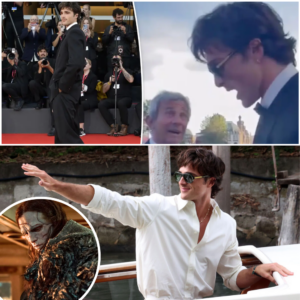
In the flickering glow of a single candle—or perhaps the cold fluorescence of a makeup trailer at dawn—Jacob Elordi captures a moment that no script could dictate. A selfie in the mirror, his face half-obscured by layers of prosthetic scars and stitches, eyes wide with the raw bewilderment of a soul freshly stitched from the remnants of the dead. Another shot: the hulking silhouette of a practical ship set, ropes taut against an imagined storm, snow drifting lazily from ceiling rigs onto a deck slick with artificial frost. These aren’t glossy promotional stills curated by a studio publicist; they’re intimate, unfiltered glimpses snatched between takes, born from Elordi’s own camera. As Guillermo del Toro’s Frankenstein storms Netflix screens this November, the 28-year-old Australian actor isn’t just stepping into the role of literature’s most tragic monster—he’s pulling back the veil on his deeply personal love affair with photography, turning the set into his private darkroom of discovery.
It’s a revelation that feels as electric as the lightning that birthed the Creature in Mary Shelley’s 1818 novel. Elordi, known for his brooding intensity in HBO’s Euphoria and the sly charisma of Saltburn, has long wielded his camera like a confidant, a tool to freeze the chaos of ambition and vulnerability. But on the labyrinthine sets of del Toro’s reimagining—where Gothic spires pierce studio skies and every prop pulses with handmade history—these images transcend mere documentation. They become portals, inviting fans into the alchemy of creation: the sweat-slicked hours of transformation, the whispered collaborations between visionary minds, and the quiet terror of embodying a being who yearns for humanity while the world recoils. In sharing this photo diary exclusively with Netflix’s Tudum, Elordi doesn’t just tease the film’s most anticipated release of the year; he confesses a creative hunger that mirrors the Creature’s own insatiable quest for connection. What secrets do these shots whisper about the man behind the monster? And how does peering through Elordi’s lens make us ache for the film’s embrace all the more?
Picture this: It’s late 2023, and Hollywood reels from dual strikes that have shuttered soundstages and silenced scripts. Del Toro, the Oscar-winning maestro of monsters whose films like Pan’s Labyrinth and The Shape of Water have redefined fairy tales as fever dreams, is nine weeks from cameras rolling on his decades-gestating passion project. The original lead for the Creature has dropped out, leaving a void as gaping as the Arctic ice where Shelley’s tale culminates. Enter Elordi, fresh off embodying Elvis Presley’s swagger in Sofia Coppola’s Priscilla, his phone buzzing with an urgent audition call. “I read the script in one sitting,” he later recalls in a candid chat with Variety, his voice laced with that signature mix of Aussie nonchalance and quiet fire. “It was like Guillermo had cracked open my chest and seen the wires inside.” By January 2024, production surges forward in Toronto’s Pinewood Studios, a frenzy of practical effects and period authenticity that del Toro insists is “a cinema of the soul.” Elordi’s photos, shot on a mix of film and digital—a nod to his analog roots—capture this urgency: a close-up of Oscar Isaac’s Victor Frankenstein, brow furrowed over alchemical tomes, the actor’s eyes reflecting the same obsessive gleam that dooms his creation.

But to understand the potency of these images, we must rewind to Elordi’s origins, where the seeds of his dual artistry were sown in the sun-baked suburbs of Brisbane. Born in 1997 to a landscape architect father and a high school speech pathologist mother, young Jacob was no screen-obsessed kid dreaming of red carpets. Instead, he found solace in the family’s backyard, tinkering with disposable cameras and sketching fantastical beasts inspired by his immigrant Lebanese heritage’s folklore whispers. “Photography was my first love, really,” Elordi shares in a 2020 Bustle interview, his words carrying the weight of a man who’s traded one lens for another. “It’s like journaling without the pressure of words—just light, shadow, and the truth in between.” Moving to Los Angeles at 17, camera in tow, he channeled Heath Ledger’s spirit—not just the brooding Joker, but the off-screen artist who documented his Brokeback Mountain isolation with Polaroids. Elordi’s early snaps, scattered across a Moleskine notebook, chronicle the grind: auditions in strip-mall casting offices, late-night drives along Mulholland, the ache of homesickness rendered in grainy black-and-white.
Breakout came swift and surreal with 2018’s The Kissing Booth, a Netflix rom-com that catapulted the lanky teen into teen-heartthrob status opposite Joey King. Yet it was HBO’s Euphoria that unleashed his darker edge, as Nate Jacobs, a powder keg of toxic masculinity whose fractured psyche Elordi dissected with surgical precision. “I had my camera on set the whole time,” he tells V Magazine, flipping through journal pages dotted with Nate’s scrawled confessions. “It kept me sane—turning the lens on the madness instead of drowning in it.” From there, roles piled like storm clouds: the aristocratic Felix in Emerald Fennell’s Saltburn, all Oxford indolence and hidden hungers; the King in Coppola’s Priscilla, a velvet-gloved tyrant whose pompadour couldn’t hide the rot. Each part honed his instrument—body, voice, gaze—but photography remained his anchor, a private rebellion against the industry’s glare. “It’s not about capturing perfection,” he muses in a Vogue Australia profile. “It’s about the mess, the in-between, the humanity we all hide.” By the time del Toro’s script landed, Elordi was primed: a performer who saw the Creature not as a lumbering brute, but a blank canvas craving color.
Del Toro’s Frankenstein isn’t just an adaptation; it’s a resurrection, a love letter to Shelley’s orphan tale forged in the fires of the director’s personal odyssey. For over 25 years, the Mexican auteur has chased this ghost, sketching storyboards in Super 8 vignettes and scribbling notes in margins of dog-eared editions. “Pinocchio and Frankenstein are twins in my mind,” del Toro tells IndieWire, his voice gravelly with conviction. “Both about the ache of becoming human, framed by eternity and death.” Strikes be damned; this was his “most personal film,” a meditation on fatherhood’s burdens—del Toro, a father himself, channeling generational scars into Victor’s hubris and the Creature’s quest for forgiveness. Casting was divine intervention: Isaac, del Toro’s Moon Knight collaborator, as the brilliant, broken Victor; Mia Goth as the ethereal Elizabeth, Victor’s ill-fated bride; Christoph Waltz as the enigmatic Professor Waldman; and a chorus of eccentrics including Felix Kammerer, Lars Mikkelsen, and David Bradley as the blind man whose fleeting kindness pierces the Creature’s isolation.
Production, spanning February to June 2024, was a tactile triumph, eschewing CGI for del Toro’s signature “practical magic.” Sets by Tamara Deverell evoked 19th-century Geneva and the Orkney Isles: a laboratory alive with bubbling retorts and sparking Tesla coils; an Arctic expanse where wind machines howl and dry-ice fog clings like regret. Composer Alexandre Desplat wove a score of haunted cellos and whispering winds, while Kate Hawley’s costumes—leather aprons scarred by acid, furs matted with “blood”—weighed like emotional anchors. Elordi’s photos immortalize this world-building: a wide-angle of the castle interior, flames licking stone walls as crew members adjust snow machines; a macro shot of Isaac’s hand, veins bulging as he stitches ethereal flesh, the actor’s wedding ring glinting like a talisman. “Guillermo creates universes you can taste,” Elordi reflects in Tudum. “Every detail breathes—it’s why I grabbed my camera. I didn’t want to forget the pulse.”

At the heart of it all throbs Elordi’s metamorphosis, a 10-to-11-hour daily ritual that blurred man and myth. Creature designer Mike Hill, whose résumé boasts Hellboy and District 9, sculpted 42 prosthetic appliances: jagged scars mapping stolen limbs, a bald pate veined like marble, dentures that slurred speech into guttural pleas, and a massive brown contact lens that shrank Elordi’s world to peripheral shadows. “From the moment I sat in that chair, the performance ignited,” Elordi recounts on The Tonight Show, demonstrating a tentative crawl that evolves into a predatory prowl. “It’s not makeup; it’s armor. Heavy, alive, whispering doubts.” To embody the arc—from wide-eyed infant to vengeful sage—he delved deep: studying butoh, the Japanese dance of the grotesque, for fluid, otherworldly grace; mimicking his rescue dog Layla’s puppyish stumbles for innocence lost. “I closed all doors emotionally,” he admits. “Eating became exploration, showering a rediscovery of skin. It was out-of-body, but profoundly in.”
Del Toro, ever the paternal guide, marveled at the alchemy. “Jacob plays him like a baby at first—helpless, wondrous—then as a man, scarred but sovereign,” he gushes in a BAFTA panel. “It’s all him; the makeup merely amplifies.” One BTS clip, shared by Netflix, timelapses the ordeal: Elordi’s easy grin fading as silicone adheres, eyes hardening into the Creature’s perpetual plea. Yet Elordi insists it wasn’t torment. “People romanticize method acting as suffering,” he tells The Hollywood Reporter. “This was joy—raw, collaborative. No torture, just truth.” His photos echo this: a mirror selfie mid-application, half-face human, half-horror, captioned in his diary, “Birth in fragments.” Another: Hill’s hands, steady as a surgeon’s, applying the final stitch, a testament to craft’s quiet heroism.
It’s through this lens—literally—that Elordi’s photography emerges as the article’s beating heart, a revelation as startling as the Creature’s first breath. Long before Frankenstein, his camera was a constant companion, a “journal in pixels” born from sibling rivalry with his photographer sister Isabella. “He got me into it,” she laughs in Vogue Australia, crediting Jacob’s Leica as the spark for her own career. On Euphoria‘s neon-drenched sets, he documented Zendaya’s quiet resolve; in Saltburn‘s opulent decay, Barry Keoghan’s impish grins. But Frankenstein elevated it to art therapy, a way to reclaim agency amid the prosthetics’ confinement. “The camera became my voice when words failed,” he explains in Tudum, flipping through prints like sacred relics. “Guillermo encouraged it—’Document the becoming,’ he said.”

The resulting diary is a masterclass in intimacy, each frame dissecting the creative crucible. One standout: Elordi, fully realized as the Creature, peers through a fogged laboratory window at Isaac’s Victor, the glass a metaphor for their fractured bond. The composition—low light raking scars, breath fogging the divide—evokes Caspar David Friedrich’s Romantic wanderers, lost in sublime isolation. Another: a group shot of the cast huddled around a practical fire pit, Goth’s Elizabeth laughing as Waltz recounts a Waldman anecdote, del Toro sketching furiously in the corner. “These aren’t posed,” Elordi notes. “They’re stolen breaths between the storm.” Fans devour them on social media, threads exploding with captions like “Elordi’s eye for pain is poetic” and “This is why we stan: vulnerability weaponized.” Through photography, Elordi demystifies del Toro’s process: how a falling snowflake mid-take sparks a rewrite; how Hill’s tweaks to a scar alter an entire scene’s emotional register. It’s stimulating, seductive—urging viewers to linger, to see the film’s layers before a single frame unspools.
On set, stories flowed like the Rhine in flood, binding this ensemble in alchemical kinship. Del Toro, a “gnome of generosity,” as Isaac dubs him, fostered a family vibe: daily “cabinet of curiosities” meetings where relics from his Bleak House collection—taxidermied owls, Victorian oddities—inspired improv. One evening, Elordi recalls in a Netflix reunion clip, the cast staged an impromptu “Creature’s first feast,” devouring prop brains (jelly molds, naturally) while del Toro narrated Shelley’s unpublished drafts. Tensions arose, too—Isaac’s Victor, unraveling in isolation, clashed with Elordi’s pleas for paternal warmth, birthing raw takes that del Toro hailed as “lightning in a bottle.” Goth, embodying Elizabeth’s quiet steel, bonded with Elordi over shared indie roots, their off-camera hikes through Toronto’s ravines fueling scenes of tender defiance. “We ripped our chests open,” Elordi says of the group, echoing del Toro’s ethos of “vulnerability as valor.” A blooper reel gem: Elordi’s contact lens pops mid-monologue, sending Isaac into hysterics—”The Creature sees clearly now!”—a levity that humanized the horror.
Since its November 7 Netflix debut (with a limited theatrical run), Frankenstein has ignited a cultural tempest, amassing 150 million hours viewed in week one and sparking think pieces from The New Yorker to TikTok dissections. Fans, primed by Elordi’s selfies—those “INCREDIBLE” mirrors of monstrosity, as Nerdist raves—praise the film’s empathy, a far cry from Boris Karloff’s lumbering icon. Oscar buzz swirls for Elordi (“Best Supporting? Consider it etched,” tweets one critic), while del Toro’s name trends alongside queries like “Creature cosplay tutorial.” Yet amid the frenzy, Elordi’s photos cut deepest, humanizing the hype. They remind us: monsters aren’t born; they’re beheld.
In the end, Elordi’s Frankenstein odyssey—prosthetics peeled away, camera stowed—is a renaissance. “It reignited my fire for film,” he confesses in a Berlinale sidebar, eyes alight. “And photography? It’s my forever haunt.” Del Toro’s vision, laced with forgiveness’s fragile grace, finds echo in these images: a call to see the “Other” as “Us,” to forgive the creator in ourselves. As the credits roll on this Gothic symphony, one question lingers, as insistent as the Creature’s cry: In a world quick to stitch judgments, what humanity will we dare to capture? Elordi’s lens, ever watchful, urges us closer. Dive in—the storm awaits.