World Cup Racism Scandal: Mexican Engineering Guild President Fired After Slant-Eye Gesture Behind Korean Influencer at Guadalajara Match.
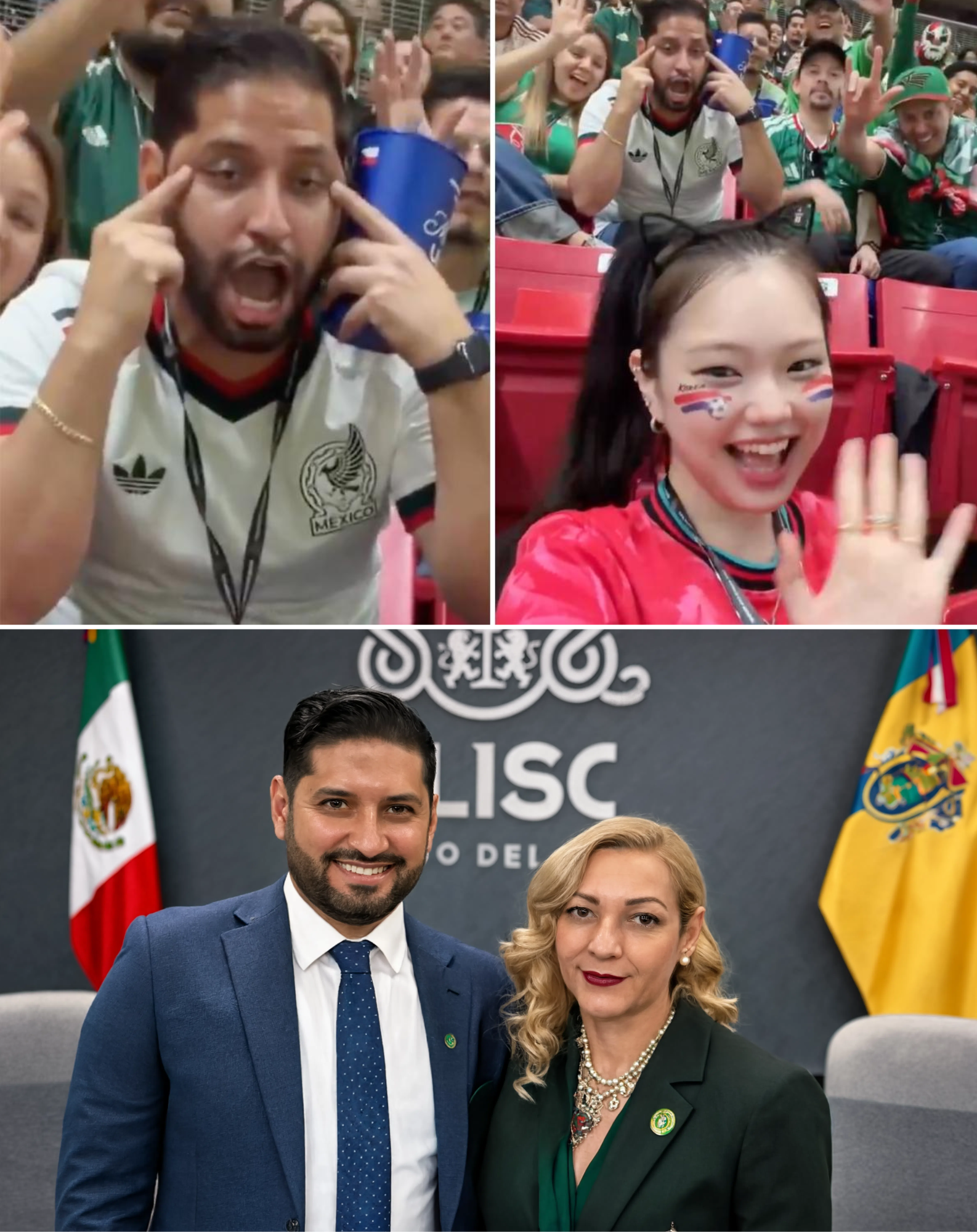
A thrilling 2026 FIFA World Cup match between South Korea and the Czech Republic at Estadio Akron in Guadalajara, Mexico, on June 12, 2026, was overshadowed by a shocking act of racism that has sparked international outrage and swift consequences. Ulises Fernando Bernal Miramontes, president of the College of Geomatics and Topographic Surveying Engineers of the State of Jalisco (CITGEJ), was caught on camera making a derogatory slant-eye gesture behind a popular South Korean influencer, leading to his immediate removal from his leadership position.
The incident unfolded as Yoon Su-jin, known online as Inocat or @inocat_t with millions of followers across TikTok and YouTube, was filming herself celebrating South Korea’s victory. In the background of her video, Bernal, wearing a Mexican national team jersey, is clearly visible pulling the corners of his eyes in a mocking gesture while laughing. The clip quickly went viral, drawing condemnation from fans across Korea, Mexico, and the global football community.
Yoon’s video captured the moment during the lively atmosphere at the stadium, where South Korea secured a 2-1 win. What should have been a celebration of sportsmanship turned into a painful reminder of lingering prejudices. The influencer later shared her experience, noting that while a few bad actors stood out, the majority of Mexican fans were welcoming, even joining in BTS chants and showing genuine warmth.
The response from Bernal’s organization was rapid and decisive. CITGEJ convened an emergency meeting of its Honor and Justice Committee on the same day the video surfaced. Officials confirmed Bernal’s removal from his position as president, stating they felt “deep sorrow” over the incident and acted immediately to uphold the association’s values. Bernal himself issued a public apology in both Spanish and English, expressing regret for his behavior and reportedly reaching out personally to Yoon.
This high-profile dismissal highlights the power of social media in holding public figures accountable. The engineering guild, which represents professionals in geomatics and topographic surveying, emphasized that such conduct has no place in their leadership. Mexican media and international outlets like the New York Post amplified the story, turning a stadium prank into a worldwide conversation about racism in sports.
The slant-eye gesture is widely recognized as a racist stereotype targeting Asian facial features, and its appearance at a major international tournament like the 2026 World Cup – co-hosted by Mexico, the United States, and Canada – has embarrassed Mexican football authorities and the broader community. Many Mexican fans took to social media to apologize, distancing themselves from Bernal’s actions and praising the hospitality shown to visiting supporters.
Experts on racism in sports note that while football has made strides through campaigns like FIFA’s “No to Racism,” isolated incidents like this reveal that education and cultural sensitivity training remain crucial. The World Cup, meant to unite nations, instead became a platform exposing divides when individuals fail to respect diversity. Korean netizens and international observers praised the swift firing, viewing it as a strong message against intolerance.
Yoon Su-jin, a prominent travel and lifestyle content creator, has used her platform to share positive experiences alongside the negative one. In follow-up posts, she highlighted interactions with friendly Mexican supporters and expressed appreciation for the overwhelming support she received after the video’s circulation. Her resilience and balanced perspective have earned further admiration.
The broader implications extend beyond this single event. As the 2026 World Cup continues, organizers and host nations face increased scrutiny to ensure safe, inclusive environments for all fans. Calls for better stewarding, awareness programs, and zero-tolerance policies have grown louder. For Bernal, the personal and professional fallout serves as a cautionary tale about the permanence of digital evidence in the age of smartphones and instant sharing.
In Mexico, the engineering community has rallied to reaffirm its commitment to professionalism and respect. CITGEJ’s quick action has been commended by many, helping to mitigate damage to the country’s image during its World Cup hosting duties. Meanwhile, discussions in South Korea have focused on the importance of speaking up against microaggressions, no matter where they occur.
This scandal underscores a vital truth: in our interconnected world, actions at a football match can reverberate globally within hours. It also offers hope through accountability – swift consequences, public apologies, and community pushback demonstrate that racism will not go unchallenged. As the tournament progresses, the focus returns to the pitch, but the lesson lingers: true sportsmanship requires respect both on and off the field.
The football world continues to evolve, with fans, players, and officials alike pushing for environments where every supporter feels safe and valued. For Yoon and countless others who have faced similar prejudice, moments like Bernal’s dismissal represent progress, however small. Yet the work to eradicate such behavior entirely remains ongoing, demanding vigilance from all involved in the beautiful game.