Witnesses Destroy Karmelo Anthony’s Self-Defense Claim in Austin Metcalf Murder Trial.
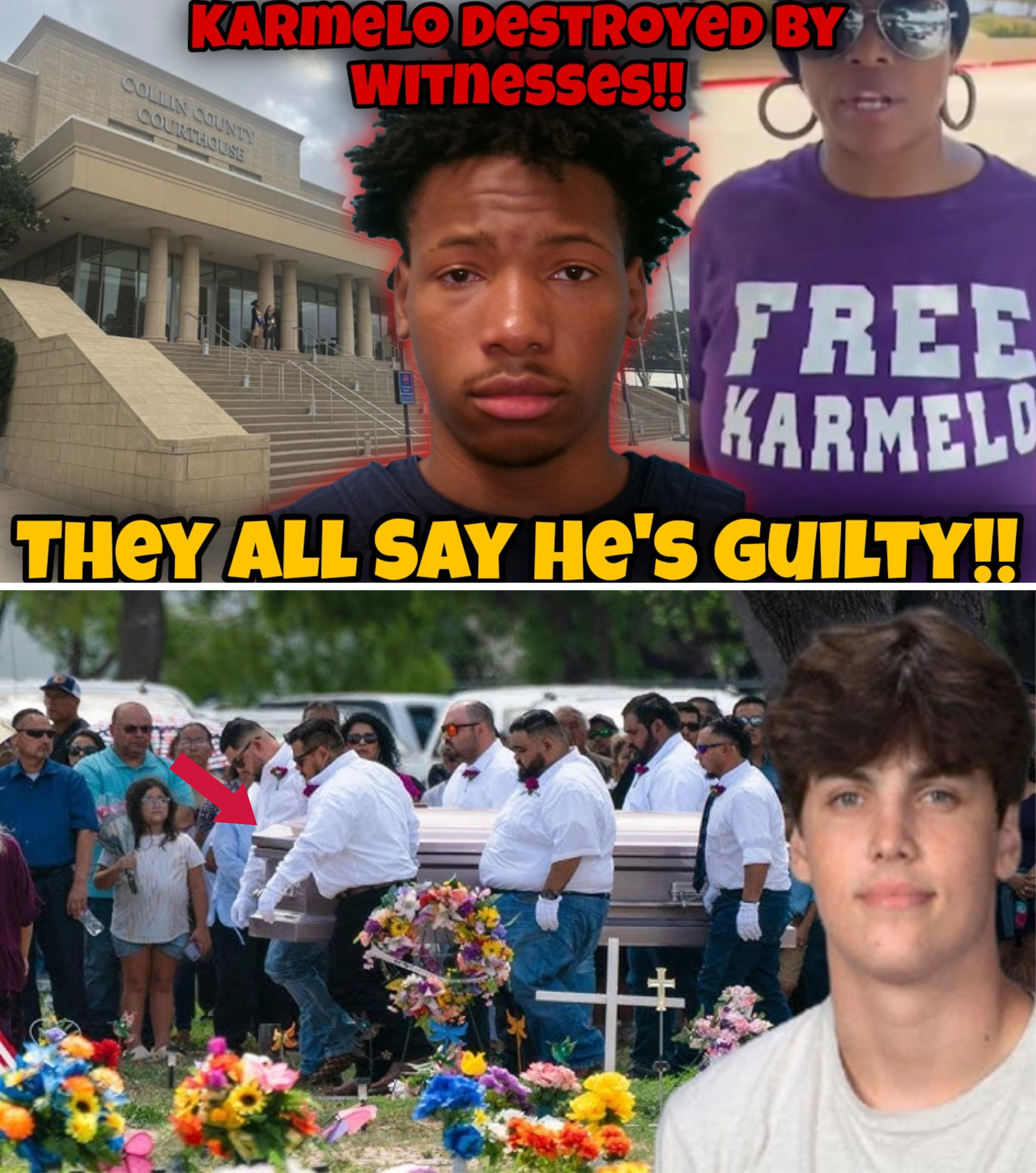
The fatal stabbing of 17-year-old Austin Metcalf at a Frisco, Texas track meet on April 2, 2025, has gripped the nation, sparking intense debates over self-defense, provocation, and justice. As the high-profile murder trial of 19-year-old Karmelo Anthony reaches its climax in Collin County, fresh testimony from multiple teenage witnesses appears to dismantle the defense’s narrative that Anthony acted to protect himself.
According to prosecutors, Anthony, who attended Centennial High School, entered the tent area reserved for Memorial High School athletes during a rain delay. He was repeatedly asked to leave by members of the rival team but refused, allegedly provoking the group and escalating tensions. Witnesses described Anthony as defiant, telling them to “make me leave” and later warning, “Touch me and see what happens” while keeping his hand inside his backpack—where the knife was located.
Austin Metcalf, a larger-built athlete, reportedly approached to escort the intruder out. Several eyewitnesses testified that Metcalf gave Anthony a light push on the shoulder with both hands—a non-lethal action—after which Anthony immediately pulled out a pocket knife and stabbed Metcalf directly in the chest. The wound was deep, piercing the heart, and despite immediate CPR efforts by coaches and students, Metcalf could not be saved.
One 16-year-old freshman witness, who helped set up the tent and played football and track, recounted the sequence under questioning:
- He confirmed Anthony did not belong in their tent and had been told to leave multiple times.
- Anthony grew angry and provocative instead of complying.
- When asked who instigated, the witness pointed to Anthony.
- The push from Austin was described as minor, while Anthony had his hand in his backpack beforehand.
Another witness who actually knew Anthony (“Melo”) and had greeted him earlier also testified against the self-defense claim. Even this acquaintance noted the oddity of Anthony being in the rival tent and described him getting mad when confronted. Multiple young witnesses consistently stated there was no justification for lethal force—Anthony was not under imminent threat of serious harm.
The prosecution rested its case after calling around 21 witnesses, many of them emotional teens who knew Metcalf personally and broke down on the stand. Body camera footage and other evidence further supported the timeline showing Anthony as the aggressor who came prepared with a weapon.
Anthony’s defense team argued self-defense under Texas law, claiming he feared for his life due to the size difference (Metcalf was reportedly bigger and more imposing) and the push. However, the defense rested without calling Anthony to testify himself, which legal analysts say may weaken their position. They presented limited witnesses, including some friends, but the overwhelming prosecution testimony painted a picture of provocation rather than pure defense.
The trial has been racially charged from the start. Supporters of Anthony have raised funds and spread claims of an “all-white jury” and bias, but court observers clarified the jury includes Asian, Hispanic, and other diverse members (roughly 58% white). Misinformation campaigns have flooded social media, with some framing the case along racial lines rather than facts. Anthony turned himself in shortly after the incident and has pleaded not guilty.
Closing arguments were set for June 9, 2026, with the jury deliberating potentially life-altering consequences. If convicted of first-degree murder, Anthony faces 5 to 99 years or life in prison. The case highlights complex Texas self-defense laws: deadly force is justified only against imminent unlawful deadly force, not mere words or a non-lethal shove, especially if the defendant provoked the encounter.
This tragedy has devastated two families and two school communities in Frisco. Metcalf was remembered as a promising athlete and friend, while the broader community grapples with youth violence, knife carry laws, and how quickly a rain-delayed track meet turned deadly. As the jury weighs the evidence, the testimony stands as a powerful counter to claims of self-defense—multiple voices describing the same sequence of events where provocation met a ready knife.
The full impact of this verdict will resonate far beyond the courtroom, serving as a stark reminder of the consequences of escalating minor disputes into irreversible tragedy.