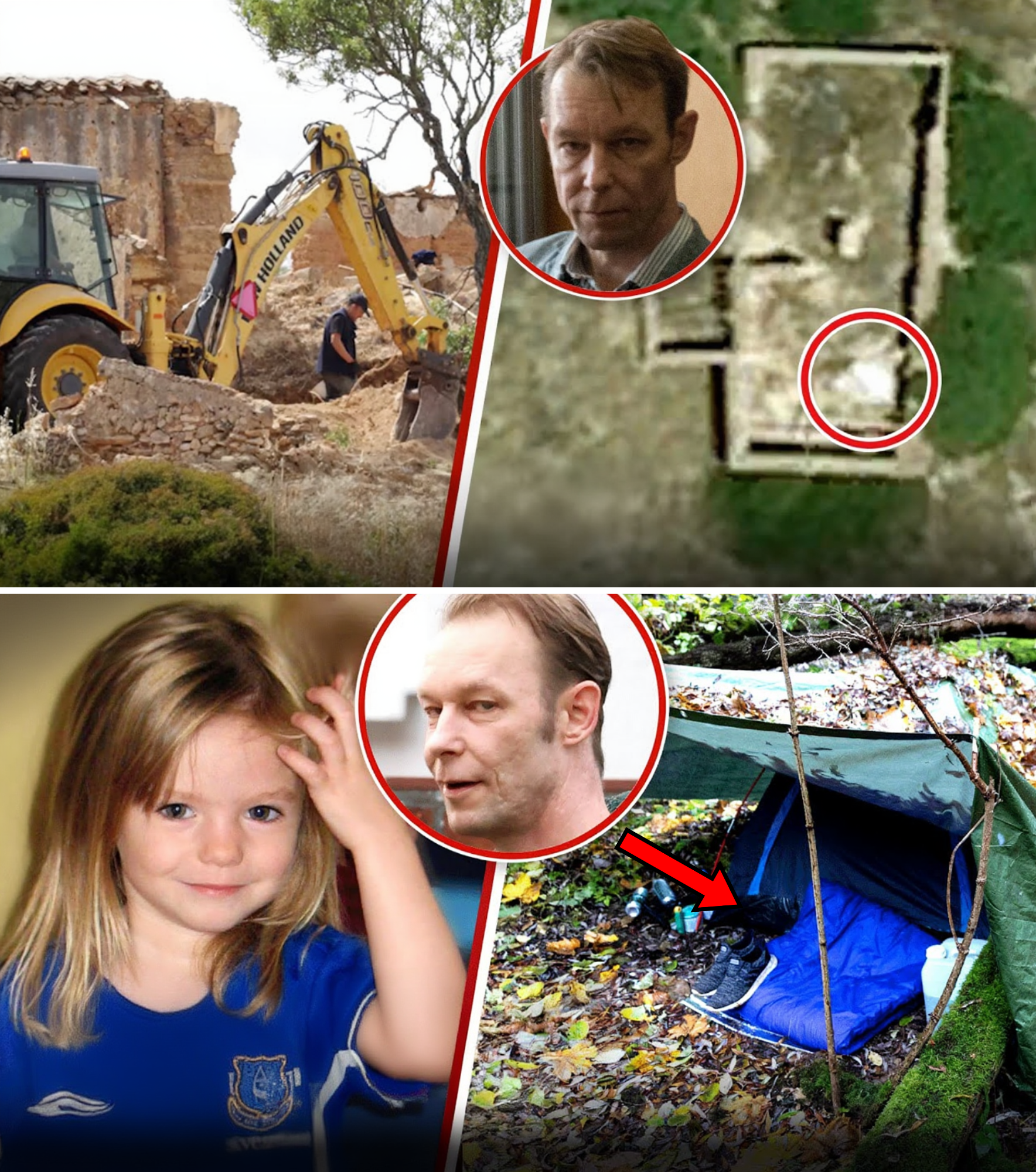
A new satellite photograph taken in June 2007—only weeks after three-year-old Madeleine McCann disappeared from her family’s holiday apartment in Praia da Luz—has become the focal point of the latest ground search in Portugal. The image clearly shows what appears to be a white tent erected inside the open-roofed walls of an abandoned farmhouse, located in scrubland between the Ocean Club resort and the cottage where prime suspect Christian Brueckner lived at the time. German prosecutors requested the excavation, convinced the isolated spot holds potential clues to Madeleine’s fate.
The search, which began in early June 2025 and involved Portuguese police supported by German investigators, targeted several derelict farm buildings and surrounding wasteland. White and blue forensic tents were erected to shield evidence from view, dirt roads were sealed, and JCB excavators dug deep trenches. Ground-penetrating radar swept the area for buried anomalies, while officers carried out meticulous fingertip searches of soil and debris. At least five crumbling structures were examined, with special attention paid to the farmhouse containing the tent-like feature visible from above. A significant trench was opened, and teams returned multiple times to sift through disturbed earth and collect samples.
Christian Brueckner, now 48, was living a transient existence in the Algarve in 2007. Evicted from his nearby cottage, he reportedly resorted to “wild camping” in his Jaguar and in remote spots to avoid detection while working casual jobs. Former associates described him using these scrublands as a “rat run”—hidden routes allowing discreet travel away from main roads. The tent spotted in the satellite image could represent one of his temporary shelters during the critical weeks after Madeleine’s disappearance on May 3, 2007. Investigators want to know whether he stored items there, disposed of evidence, or even held Madeleine briefly before moving her.
Brueckner remains the only official suspect named by German authorities in 2020. Prosecutors believe he abducted and murdered the child, basing their case on circumstantial evidence: a mobile phone ping placing him near the Ocean Club the night she vanished, witness statements linking him to the area, and disturbing material seized from his properties—including hard drives allegedly containing incriminating writings and images. A 2016 search under his deceased dog’s grave uncovered buried USB sticks, memory cards, and other items. His criminal record includes a 2005 conviction for raping a 72-year-old American tourist in the same resort town, as well as other sexual offenses.
Despite the intensity of the dig, no major discoveries were publicly confirmed when operations concluded after several days. Forensic samples were taken for laboratory analysis, but authorities have released no statement indicating a breakthrough. The lack of immediate results has frustrated some observers, though the McCann family and their representatives have urged patience, noting that even small traces—fibers from Madeleine’s pink pyjamas, DNA, or discarded items—could prove pivotal after nearly two decades.
The Madeleine McCann case has endured as one of the most high-profile missing-child investigations in history. She vanished from her bed while her parents dined nearby with friends. Initial Portuguese police efforts were marred by mistakes, including prematurely naming Kate and Gerry McCann as arguidos (suspects) before clearing them. The case went cold for years until German prosecutors reopened it in 2020, declaring Madeleine dead based on evidence against Brueckner. He has never been charged in connection with her disappearance and denies any involvement.
The 2007 satellite image adds an unsettling dimension. The tent’s presence so soon after the abduction suggests Brueckner may have used the ruin as a short-term base during a period when police activity was intense. If he kept belongings or evidence there, items could have been buried, burned, or left to decay over the years. The scrubland’s isolation—far from tourist areas yet close enough to the resort—fits the profile of someone seeking privacy while remaining in the vicinity.
Brueckner’s release from a German prison in September 2025 after serving seven years for the 2005 rape conviction briefly complicated matters. He was seen living in a tent in northern German woodland under electronic monitoring before moving into council accommodation amid community protests. His ongoing refusal to be interviewed by British or Portuguese police has hindered progress, though cooperation between German, Portuguese, and British authorities continues.
For Kate and Gerry McCann, every new search revives hope tempered by years of disappointment. Through their foundation they continue advocating for missing children worldwide, keeping Madeleine’s image and story alive. The couple has expressed cautious optimism about the latest developments, stressing that even minor finds could move the case forward.
The tent anomaly may ultimately prove insignificant—a temporary shelter belonging to someone else entirely—or it could unlock long-buried secrets. Forensic results from soil samples, potential DNA traces, or recovered artifacts will take months to process. Until then, the abandoned farmhouse and its ghostly white shape in a 19-year-old satellite photograph stand as silent witnesses to a mystery that refuses to fade.
Madeleine McCann would be 22 years old today. Her parents, siblings, and an entire generation still wait for the day when answers replace questions. The latest dig, driven by a single overhead image, reminds the world that even the faintest trace of evidence can keep hope alive after nearly two decades of silence.