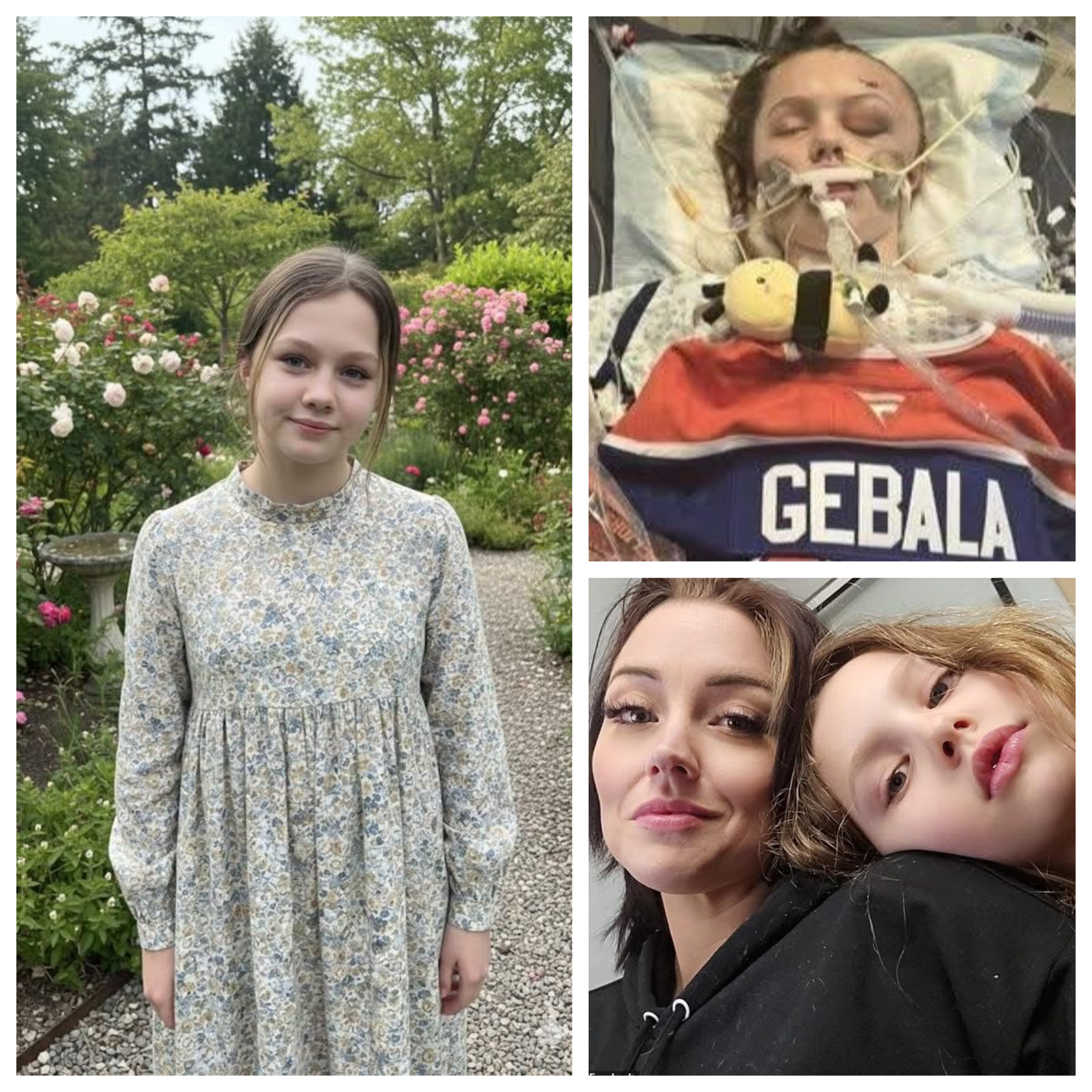
Twelve-year-old Maya Gebala has become a symbol of extraordinary bravery in the aftermath of the devastating mass shooting at Tumbler Ridge Secondary School on February 10, 2026. While chaos erupted in the library, Maya did not hide or flee—she ran toward the doors in a desperate attempt to lock them and protect her classmates from the armed attacker. In that moment of selfless heroism, she was struck multiple times, sustaining gunshot wounds to her head and neck that left her fighting for her life.
Air-lifted to BC Children’s Hospital in Vancouver, Maya arrived in critical condition with severe trauma that included bleeding on the brain, damage to the brain stem, and significant injury to the left hemisphere where bullets entered and exited. Initial medical assessments were grim: doctors prepared her family for the possibility that she might not survive the first night. Yet Maya defied those early predictions, showing incremental signs of resilience that have kept hope alive through weeks of uncertainty.
Recent updates from her mother, Cia Edmonds, and other relatives reveal the latest chapter in Maya’s grueling recovery. After emergency surgery to address hydrocephalus—dangerous fluid buildup on the brain caused by swelling and blocked cerebrospinal pathways—Maya began taking breaths independently, a milestone that shifted her care from full ventilator support to pressure-assisted breathing. She has opened her right eye, responded to stimuli, and demonstrated small voluntary movements in her right hand and leg during brief windows of awareness.
Despite these encouraging steps, the extent of the neurological damage remains profound. Physicians have likened the injury pattern to that of a severe stroke, with widespread disruption to motor pathways on the right side of her body. The brain stem involvement, where a bullet exited, combined with swelling and tissue destruction on the left side, has led specialists to warn that full paralysis or near-total loss of movement on Maya’s right side may be permanent. Recovery of deliberate function—fine motor control, walking, or even basic gestures—is uncertain and will depend on how much neuroplasticity her young brain can harness in the coming months and years.
Maya’s journey has been marked by repeated crises. She battled pneumonia complicated by MRSA, meningitis, and cerebral leaks requiring multiple surgeries within days of admission. Each setback tested her family’s endurance, yet updates consistently highlight her fighting spirit. Relatives describe her as “still in there,” responding to familiar voices and touch even when heavily sedated or in minimal consciousness states. Her father, David Gebala, has shared moments of quiet triumph: a twitch of a finger, a cough that signaled airway protection, or brief eye opening that felt like a direct connection across the void.
The community around Tumbler Ridge and beyond has rallied in remarkable ways. A GoFundMe campaign organized by family cousin Krysta Hunt has raised substantial funds to support Maya’s long-term rehabilitation, adaptive equipment, and family travel expenses. Hockey leagues across British Columbia have honored her love for the sport with tributes, jersey retirements, and fundraising games. Strangers send messages of encouragement that Cia reads aloud at her bedside, turning the hospital room into a space filled with collective hope.
Maya’s story also underscores broader conversations about trauma care for pediatric gunshot victims. The combination of penetrating brain injury, secondary swelling, infection risks, and the emotional aftermath demands multidisciplinary intervention: neurosurgery, intensive care, physiotherapy, occupational therapy, speech-language pathology, and psychological support for both patient and family. Her youth offers some advantages—younger brains often exhibit greater adaptability—but the severity of the wounds means progress will be measured in small, hard-won victories rather than rapid recovery.
Amid the medical updates, Maya’s act of courage remains central. Eyewitness accounts and survivor testimonies confirm she prioritized others when seconds mattered most. That same determination appears to fuel her ongoing fight. Though doctors caution against unrealistic expectations, the fact that she is breathing independently and showing responsiveness after injuries once deemed unsurvivable speaks to an extraordinary will.
The Tumbler Ridge tragedy claimed eight lives and injured dozens, leaving scars on an entire region. For Maya’s family, every day is a balance of gratitude for her survival and grief over what has been lost. Cia Edmonds has spoken openly about the emotional weight, the stolen moments of normal childhood, and the quiet fear that full restoration may remain out of reach. Yet she also emphasizes faith, community support, and the unbreakable bond between mother and daughter.
As Maya continues her rehabilitation at BC Children’s Hospital, specialists monitor for further complications while therapists begin gentle interventions to stimulate neural pathways. The road ahead is long—potentially involving years of therapy, assistive devices, and adaptive strategies—but the girl who once raced to lock a door against danger now inspires thousands with her refusal to surrender.
In a world often defined by tragedy, Maya Gebala’s story stands as a testament to courage under fire and the enduring power of the human spirit to fight, even when the odds appear insurmountable.