The disappearance of 84-year-old Nancy Guthrie from her quiet Tucson home has gripped the nation, transforming a peaceful retirement neighborhood into the epicenter of one of the most perplexing missing-persons cases of 2026. What began as a routine welfare check on February 1 has evolved into a sprawling investigation featuring digital blackouts, medical device data, recovered surveillance footage, and a heated debate over a single object glimpsed in a suspect’s pocket.
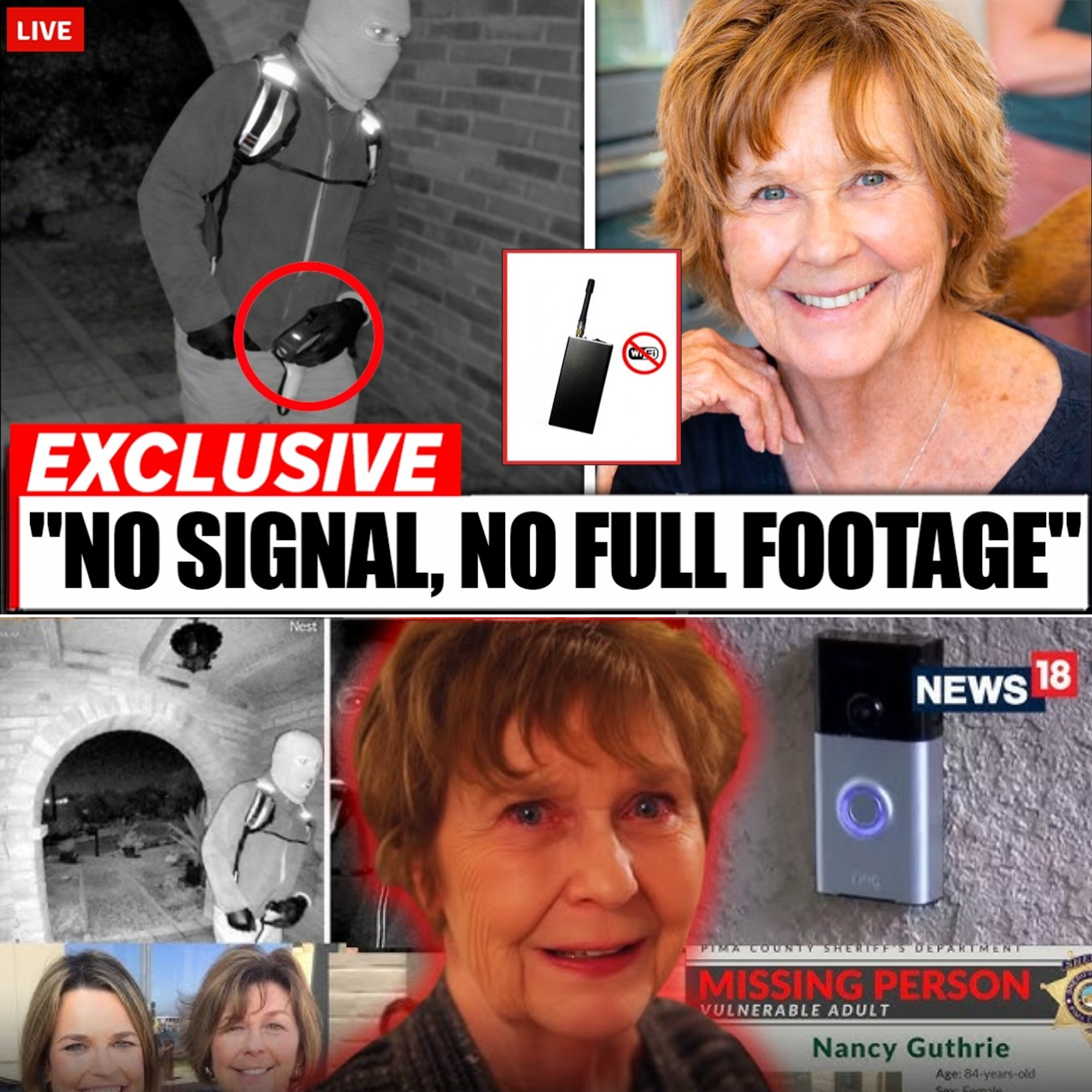
Guthrie, a well-known community member and mother-in-law to NBC journalist Savannah Guthrie, was last seen on January 31, 2026. Security footage from her Nest doorbell camera captured a masked figure in gloves and dark clothing approaching her porch at approximately 1:47 a.m. The individual removed the camera — an act that prevented cloud backups from capturing subsequent events. Additional neighborhood cameras later recovered from Google servers showed a person-shaped detection at 2:12 a.m. near her property line. Critically, her pacemaker’s remote monitoring application disconnected abruptly at 2:28 a.m., creating a narrow 41-minute window during which investigators believe she was abducted.
The FBI and Pima County Sheriff’s Department quickly expanded their inquiry beyond traditional physical evidence. In early March 2026, agents conducted door-to-door interviews in the Catalina Foothills asking a single, pointed question: “Did your internet go down the night Nancy disappeared?” Multiple residents confirmed unusual outages or severe Wi-Fi disruptions precisely during the overnight hours of January 31–February 1. One camera positioned on the property closest to Guthrie’s home exhibited a complete gap in footage — but only for those critical hours. No other periods showed similar interruptions.
This pattern prompted speculation about a Wi-Fi jamming device. Such tools can selectively block wireless signals within a targeted radius, potentially disabling smart home cameras, motion sensors, and even medical telemetry without arousing immediate suspicion. Initial media reports leaned heavily into the “jammer theory,” suggesting the perpetrator used portable radio-frequency interference equipment to create a digital blind spot around the residence.
However, a former FBI agent specializing in electronic surveillance has challenged that narrative. Jennifer Coffindaffer, appearing on several national broadcasts, closely examined enhanced stills from the recovered porch footage. She pointed to an antenna-like protrusion visible in the suspect’s pocket and argued it more closely resembles a two-way radio — commonly called a walkie-talkie — than an active jammer. “If this were a functioning Wi-Fi jammer,” Coffindaffer explained, “we would expect collateral disruption to other nearby wireless devices, including the very Nest camera that recorded the removal and the pacemaker app’s cellular backup link. Neither occurred at the precise moment the suspect was visible. That tells me the device was likely passive communication equipment, not an active blocker.”
The walkie-talkie interpretation carries explosive implications. If accurate, it means at least two individuals were involved: one on-site committing the act, and another monitoring or directing from a remote location. This would elevate the crime from an opportunistic act to a premeditated, team-based operation — a scenario far more organized and therefore potentially more traceable through cell-tower data, radio-frequency logs, or witness sightings of a second vehicle or person.
Adding to the intrigue, ransom notes demanding payment in Bitcoin were received shortly after the disappearance. No proof-of-life evidence has surfaced, and authorities have not confirmed any payments. The notes, combined with the sophisticated disabling of monitoring technology, point to a perpetrator (or perpetrators) familiar with digital forensics and law-enforcement investigative techniques.
The broader investigation remains active. Forensic teams continue analyzing DNA lifted from the porch area and the removed camera. Video enhancement specialists are working on additional neighborhood footage, while digital forensics experts comb through internet service provider logs to map the exact scope and timing of the reported outages. A cumulative reward topping $1 million — contributed by private donors, media outlets, and community funds — underscores the urgency to generate new leads.
Nancy Guthrie’s case is no longer just about a missing elderly woman in a low-crime suburb. It has become a textbook example of how emerging technologies — smart-home systems, wearable medical devices, cloud storage — can both aid and hinder criminal investigations. When those same technologies are turned against the victim, they create eerie silence where evidence should exist.
Public fascination continues to grow. True-crime forums dissect every timestamp, armchair analysts debate jammer schematics versus walkie-talkie models, and concerned citizens in Tucson remain vigilant. The FBI Tip Line (1-800-CALL-FBI) and Pima County Sheriff (520-351-4900) continue to receive calls.
Until Nancy is found — or those responsible are brought to justice — the questions linger: Was the internet blackout a targeted strike or coincidence? Was the pocket device a tool of isolation or coordination? And most hauntingly, who was on the other end of that possible transmission in the dead of night?
News
Bizarre Scene at Body Discovery Site Fuels Chilling Questions in American Airlines Flight Attendant Eric Gutierrez Molina Case.
The discovery of a body believed to be that of 32-year-old American Airlines flight attendant Eric Fernando Gutierrez Molina has taken a darker turn, with police uncovering a bizarre scene…
Virgin River Season 8 Confirmed — Four-Month Time Jump, Baby Heart Surgery Drama, and Major Cast Changes Revealed.
Netflix’s hit romantic drama “Virgin River” is officially returning for an eighth season, and new details about the upcoming chapter have fans both excited and anxious as the story prepares…
My Life with the Walter Boys Season 3 Trailer Unleashes Chaos — Jackie’s Final Choice, New Twists, and the Walter Family Drama Intensifies.
Netflix’s beloved teen drama “My Life with the Walter Boys” is officially returning for Season 3, and the newly released official trailer has sent fans into a whirlwind of excitement,…
Old Money Season 2 Trailer Sparks Massive Fan Frenzy — Release Date, Plot Twists, and Returning Romances Revealed.
Netflix’s hit Turkish romantic drama “Old Money” is officially heading for a second season, and the newly released trailer announcement has sent fans into a frenzy of excitement and speculation….
Nancy Guthrie Family Issues Emotional Plea to Tucson Community — “Someone Knows Something” as FBI Shifts Focus to Local Leads and Weekend Patterns.
As the search for 84-year-old Nancy Guthrie stretches into its 50th day, her family has released a heartfelt, six-paragraph statement approved by the FBI, directly addressing the people of Tucson…
Nancy Guthrie Recognized Her Masked Attacker at the Door, FBI Profilers Confirm — Botched Personal Revenge Plot and Amateur Mistakes Exposed in Tucson Disappearance.
In the early hours of February 1, 2026, 84-year-old Nancy Guthrie vanished from her home in Tucson, Arizona, in a case that has left investigators, behavioral experts, and the public…
End of content
No more pages to load