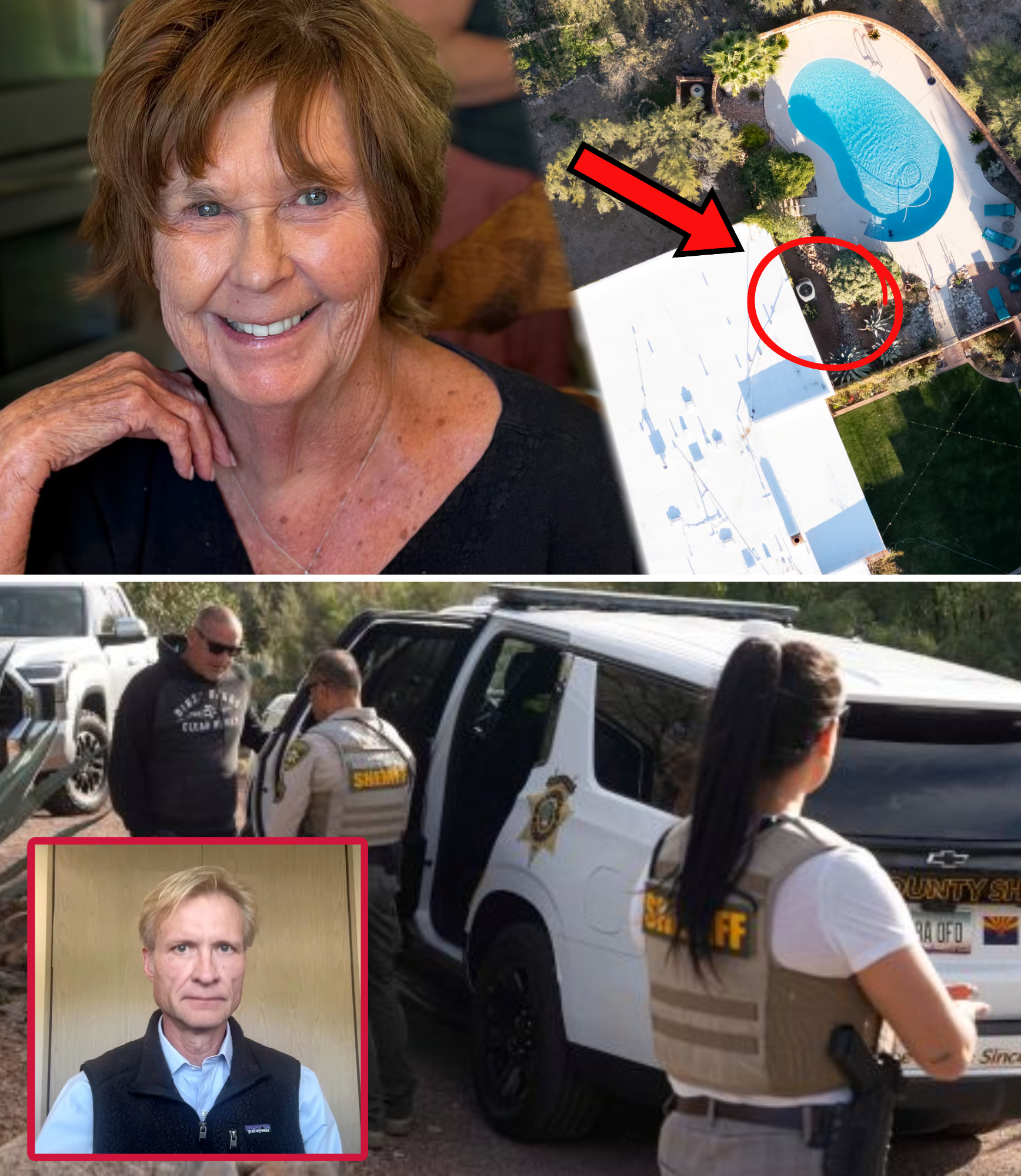
Residents of the affluent Catalina Foothills neighborhood in Tucson, Arizona, are confronting an unsettling reality in the wake of Nancy Guthrie’s disappearance: the same lush landscaping, large setbacks, and privacy-focused design that make the area feel exceptionally safe may have inadvertently shielded an armed intruder from external surveillance during the early-morning abduction of the 84-year-old mother of TODAY co-anchor Savannah Guthrie.
Longtime neighbors describe the community as “very safe” with virtually no history of violent crime. Late-night activity is common and unremarkable—joggers, dog walkers, and residents returning home at 10 or 11 p.m. face no unusual risk. Yet when investigators began canvassing for additional footage beyond the 44-second residual clip from Nancy Guthrie’s own Google Nest doorbell camera, they encountered a widespread limitation: most private security systems are oriented toward property lines rather than public streets.
One resident explained to local reporters: “Our cameras only cover the front yard, not the street, because of the distance. So it only picks up the yard area and nothing beyond that. And that’s not rare here.” Mature trees, tall privacy hedges, decorative shrubs, and winding driveways set far back from the curb create natural visual barriers. Many homes sit on oversized lots with landscaping intentionally designed for seclusion, meaning even well-placed Ring or Nest cameras often capture only the immediate porch and driveway, leaving sidewalks, roadways, and passing vehicles largely out of frame.
The absence of municipal street-level surveillance—common in many upscale suburban areas that prioritize aesthetics, resident privacy, and lower infrastructure costs over comprehensive public monitoring—further compounds the blind spots. Unlike dense urban zones with pole-mounted cameras or traffic systems, Catalina Foothills relies almost entirely on private residential devices. When the intruder approached around 3 a.m. on February 1, 2026, he could move along sidewalks, side yards, or less-visible approaches without being recorded by neighboring systems.
The FBI’s primary visual evidence remains the haunting doorbell footage showing the suspect—fully masked, gloved, dark-clad, backpacked, and armed—tilting his head to avoid the lens, attempting to block it with a gloved hand, then placing yard branches and leaves over the device. When that failed, he fired a single shot to destroy the camera completely. A nearby resident’s dashcam captured the same figure at the porch but provided no additional identifying angles due to distance and foliage obstruction. No other external neighborhood footage has surfaced showing the suspect’s arrival, vehicle, or escape route, reinforcing the neighbors’ observation that the area’s layout inherently limits street-level visibility.
Investigators have intensified door-to-door requests for any overlooked recordings, hard-drive archives, or motion-triggered clips from the 1–4 a.m. window. Digital billboards continue flashing alerts across states, the tip line (1-800-CALL-FBI) sees steady volume, and searches have expanded to surrounding areas, including near daughter Annie Guthrie’s residence. Yet the physical environment remains a significant obstacle: what residents once celebrated as beautiful, secure privacy now appears to have given a predator concealment.
Nancy Guthrie’s medical vulnerability heightens the urgency. She requires daily medication for hypertension and heart conditions, relies on a pacemaker (which lost remote monitoring connectivity around the incident), and left behind her phone, wallet, hearing aid, and car—indicating a sudden, forced removal. Blood confirmed as hers was found on the front porch near the shattered camera, supporting the abduction classification.
The family’s public anguish has intensified. Savannah Guthrie’s most recent statement carried palpable desperation: “We are at an hour of desperation. We need your help. Bring her home.” She appealed directly to anyone nationwide to report even the smallest detail. Earlier family videos addressed possible captors with pleas to listen, later acknowledging potential messages (“We received your message, and we understand”). Ransom notes delivered to media carried expired deadlines without verified proof of life or authenticated contact; authorities continue treating all communications as active investigative material.
The neighborhood’s self-perception as “very safe” makes the crime especially jarring. Residents who once felt protected by their landscaped barriers now question whether those same features enabled the intruder to operate undetected. One neighbor summed up the collective shock: “This is a very unusual event here. We look out for each other… but no one saw anything.”
Forensic efforts remain focused on touch DNA recovered from the destroyed doorbell, porch surfaces, and fragments—areas the intruder handled extensively during the failed cover attempt and shooting. The flashlight clenched in his mouth may have left saliva traces, while clothing details (backpack style, holster placement) and behavioral markers (left-handed handling, deliberate head avoidance) continue to circulate widely.
As the search stretches across blind spots both literal and figurative, the neighborhood’s layout emerges as both hindrance and potential clue. Dense foliage and secluded lots may have hidden the crime… but they could also preserve overlooked trace evidence in overlooked corners. Every resident reviewing old footage, every tip submitted, carries the faint hope of piercing the natural veil that shielded the abduction.
For Savannah Guthrie, her family, and a nation following the case, the plea remains urgent and unbroken: “Bring her home.” In a community that prized safety through seclusion, the painful lesson is clear—privacy can become peril when no one is watching the street.