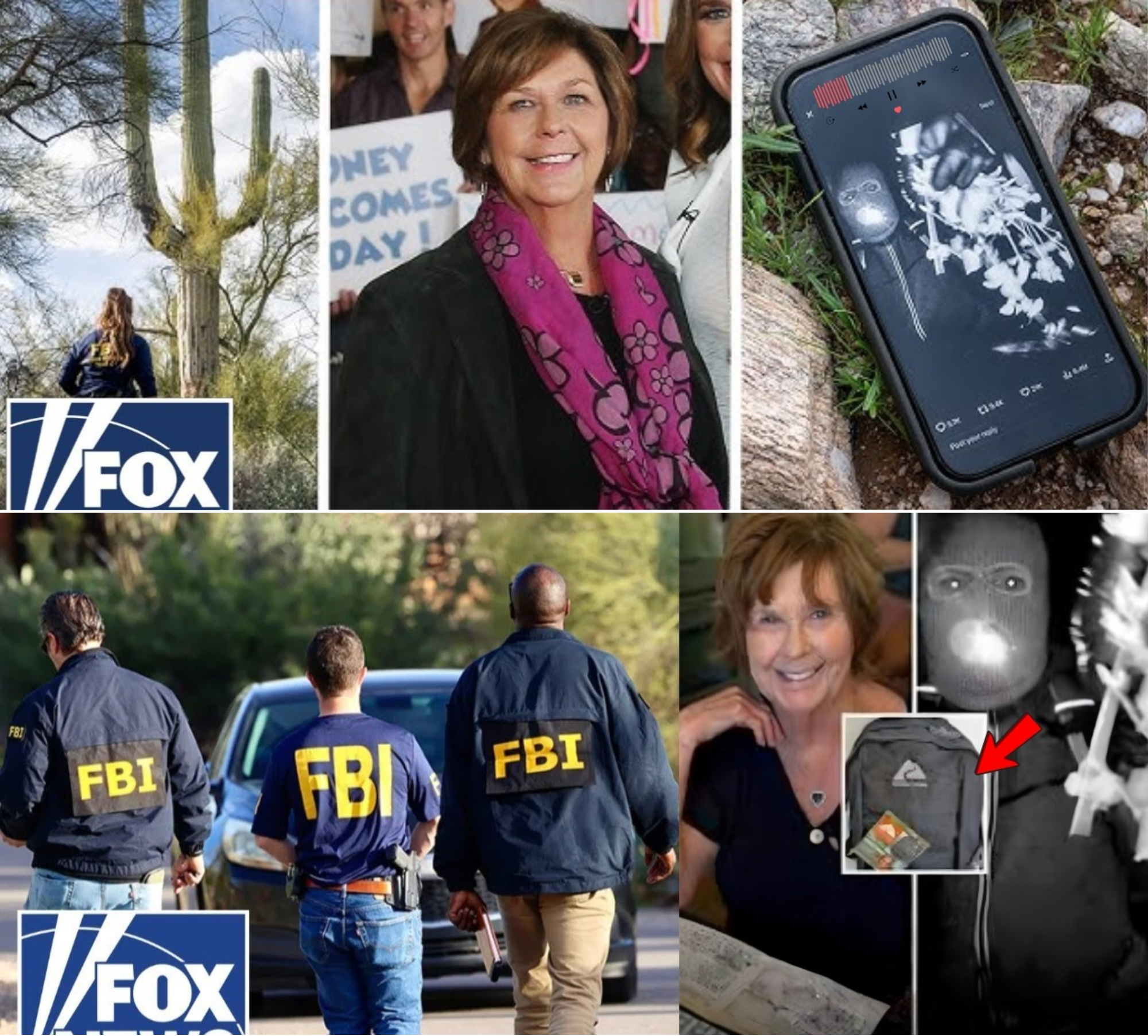
As the search for 84-year-old Nancy Guthrie enters its 13th day, a cybersecurity expert with prior FBI ties has ignited speculation that authorities may possess critical unreleased audio captured by the Nest doorbell camera at her Tucson home. Eric O’Neal, drawing from his counterintelligence background, explained in a detailed breakdown how battery-backed devices like Ring or Nest can continue recording audio even after video feeds are disrupted or the unit is physically removed, potentially preserving ambient sounds from the abduction’s aftermath.
Nancy Guthrie, mother of NBC’s Today co-anchor Savannah Guthrie, vanished from her Catalina Foothills residence between late January 31 and early February 1, 2026. Family members dropped her off after dinner around 9:30 p.m., and she failed to join a scheduled virtual church service the next day around noon, prompting the report of her missing. Blood drops on the porch tested positive for her DNA, and authorities quickly classified the incident as an abduction, citing evidence she was taken against her will.
The pivotal Nest footage, recovered through FBI forensic efforts from cloud backups despite initial offline status, shows a masked male suspect approaching the door shortly after 2 a.m. on February 1. Gloved and armed with what appears to be a holstered handgun, the individual first tries blocking the lens with a hand, then tears yard vegetation to obscure the view. The FBI’s Phoenix office later released enhanced details: the suspect is a male, 5’9″ to 5’10” tall, average build, wearing a black 25-liter (or 24-liter per some reports) Ozark Trail Hiker Pack backpack — a specific model now central to public appeals.
O’Neal highlighted that while the video feed cut around 1:47 a.m. amid tampering, audio streams often persist independently via onboard memory or residual power. Such recordings could capture footsteps retreating, vehicle sounds, muffled voices, breathing, or incidental dialogue — elements absent from released visuals but potentially invaluable for voice analysis, accent identification, or environmental cues linking to a suspect’s location or identity.
Complementing this, investigators recovered multiple black gloves during extensive desert searches near the home and along nearby roads like Campbell Avenue. These items, documented under forensic tents, await DNA profiling to determine any match to the suspect or Nancy herself. The FBI’s Next Generation Identification (NGI) system continues processing partial biometric data from the footage — eye spacing, nasal structure, facial contours — cross-referenced against vast databases including state DMV records.
The tip volume has surged to nearly 18,000 since February 1, with over 1,000 flooding in within 24 hours of the porch video release alone. The FBI elevated the reward to $100,000 for information leading to Nancy’s recovery or related arrests. Pima County Sheriff’s deputies, collaborating with federal agents, requested neighbors submit security footage from targeted periods: January 11 (9 p.m. to midnight) and early January 31 into February 1, hunting for pre-abduction surveillance activity like scouting vehicles or individuals.
Additional Ring camera footage emerged showing a man with similar backpacks near a locked gate about five miles away at 1:52 a.m., suspiciously timed with the home camera disruption and later motion alerts. Ransom communications have surfaced sporadically — bitcoin demands ranging from $67,000 to higher figures sent to media outlets like TMZ — though authenticity varies. One recent note complained of not being “taken seriously,” while a man accused of sending fake texts and a brief call to family members faced court but was released pending trial. No verified proof-of-life has emerged, and family pleas emphasize belief in Nancy’s survival.
Savannah Guthrie has shared poignant Instagram videos featuring old family footage set to music, captioned with resolute hope: “We will never give up on her.” She and siblings maintain public appeals, directing tips to 1-800-CALL-FBI, tips.fbi.gov, or local sheriff lines, while stressing Nancy’s fragility — reliance on daily heart medications, a pacemaker, and mobility support — heightening fears over elapsed time without care.
Searches remain aggressive, with agents fanning out in foothills terrain, erecting evidence tents at key spots including the porch area, and addressing reported jurisdictional hurdles over evidence transfer (gloves initially routed to private labs). A person detained near the U.S.-Mexico border in Rio Rico was questioned and released without charges, and no arrests tie directly to the case yet.
Analysts point to the suspect’s apparent missteps — incomplete camera sabotage, exposed holster, makeshift concealment — suggesting possible amateur execution despite premeditated aspects like armament and timing. Theories range from opportunistic crime to targeted abduction, perhaps linked to Savannah’s public profile, though no stalker connections have been confirmed.
Amid the anguish, the potential existence of hidden audio represents a tantalizing wildcard. If preserved, it could provide acoustic forensics breakthroughs — speaker identification, background noise triangulation, or even emotional tells — accelerating what has become a national obsession. Authorities process every lead meticulously, from digital telemetry to physical traces, in hopes one element — a sound, a glove thread, a tip — reunites the Guthrie family and ends this nightmare.