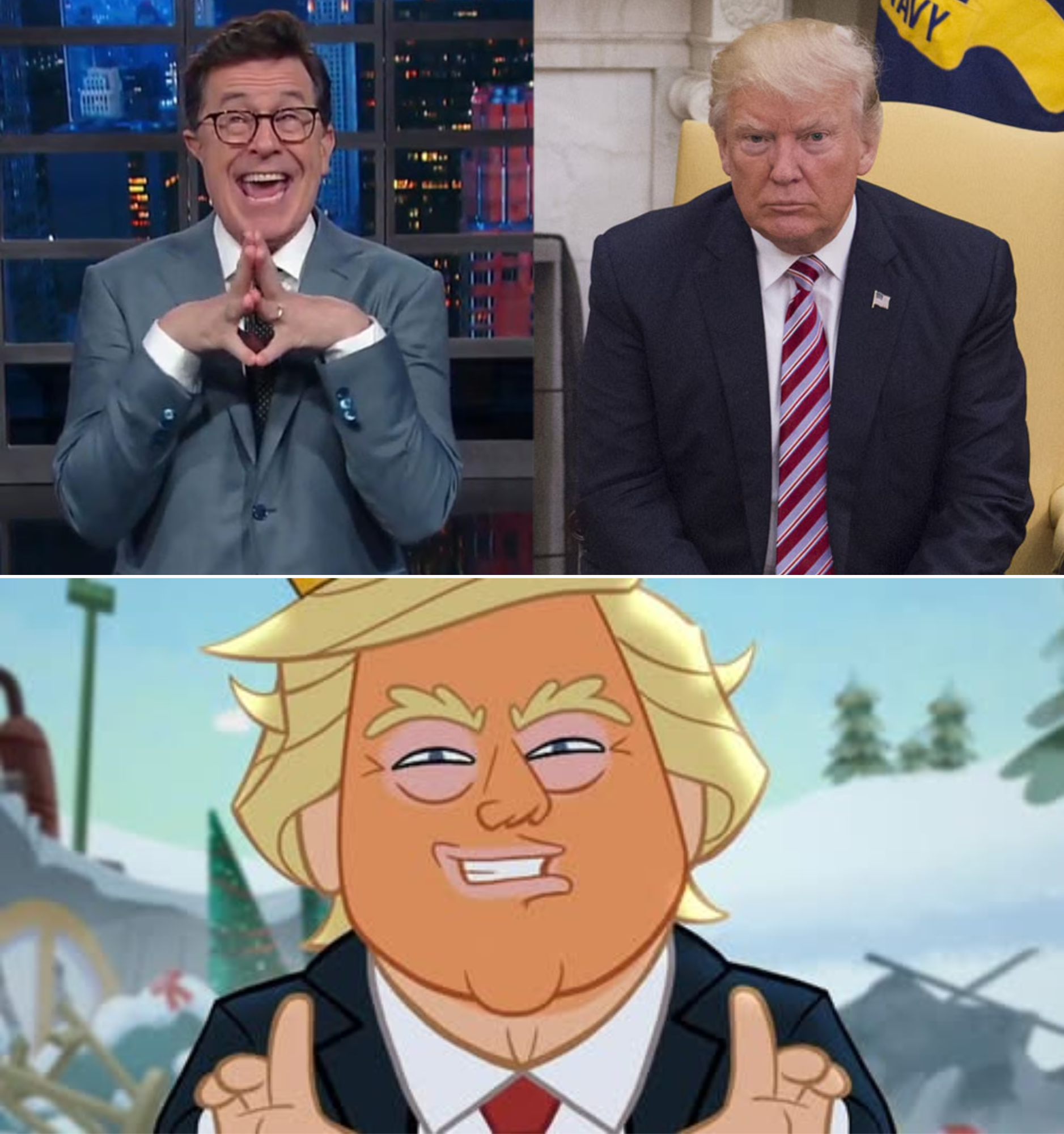
In a fiery escalation of his long-standing feud with late-night television hosts, President Donald Trump unleashed a scathing early morning rant on Truth Social, targeting Stephen Colbert with harsh insults just as the holiday season reached its peak. On Wednesday, December 24, 2025—Christmas Eve—Trump branded the “Late Show” host a “dead man walking” and urged CBS to “put him to sleep,” framing it as a “humanitarian” act. The outburst, posted around dawn, also posed a pointed question to his followers: “Which Network has the worst Late Night Talk Show Host?” This latest salvo appears to be a direct response to Colbert’s recent animated holiday special that mercilessly mocked Trump, blending satire with seasonal cheer in a way that clearly struck a nerve.
The controversy ignited with Colbert’s airing of “Colbert’s Canceled Christmas: The Last Noel,” a cartoon short broadcast on December 19, 2025. Narrated by actor Nick Offerman, the animated tale depicts a tyrannical figure dubbed “King Jag Bag”—a thinly veiled caricature of Trump—who declares Christmas canceled. In the story, the king dispatches ICE agents to raid the North Pole, accusing Santa’s elves of being undocumented workers. The narrative culminates with the bulldozing of Santa’s workshop to make way for a lavish “Trumpmas Ballroom,” complete with gaudy decorations and self-promotional flair. Santa, voiced in a folksy style, faces deportation threats, while the elves rally in a humorous resistance. The clip, filled with witty jabs at Trump’s policies on immigration and business ventures, ends on a redemptive note, emphasizing hope and unity amid chaos. Viewers praised it for its sharp humor, with social media buzzing about its timely critique during Trump’s second term preparations.
Trump’s response didn’t hold back. In his Truth Social post, he accused Colbert of “running on hatred and fumes,” dismissing the comedian’s relevance in an era where late-night ratings have fluctuated amid streaming competition. This isn’t the first clash between the two; their animosity dates back to Trump’s first presidency, when Colbert frequently lampooned him through impressions, monologues, and animated segments. Notable past exchanges include Colbert’s 2017 controversial joke that led to FCC complaints and Trump’s repeated Twitter tirades labeling Colbert “no talent” and “unfunny.” The feud has become a staple of political entertainment, symbolizing the divide between conservative figures and liberal-leaning media.
Colbert, 61, a veteran comedian who took over “The Late Show” in 2015 after his acclaimed “Colbert Report” run, has built a career on political satire. His show, airing weeknights on CBS, often tops ratings in its slot, drawing millions with topical humor. The holiday special, produced by the show’s team, was promoted as a lighthearted yet pointed commentary on current events, aligning with Colbert’s style of blending absurdity with activism. Fans rallied online, sharing clips and memes, while critics noted its echo of classic holiday specials like “Rudolph” but with a modern, edgy twist.
As Christmas Day dawned on December 25, 2025, the exchange highlighted the enduring role of comedy in American politics. Trump’s supporters echoed his sentiments, calling for boycotts of CBS, while Colbert’s audience defended the right to satire under the First Amendment. Neither CBS nor Colbert’s representatives have issued immediate responses, but insiders suggest the host may address it in upcoming episodes. This holiday dust-up serves as a reminder of how entertainment and governance intersect, often sparking national conversations. With Trump’s inauguration approaching in January, such media skirmishes could intensify, keeping late-night TV in the spotlight. For now, the public watches as two cultural heavyweights trade barbs, turning festive cheer into headline fodder.
