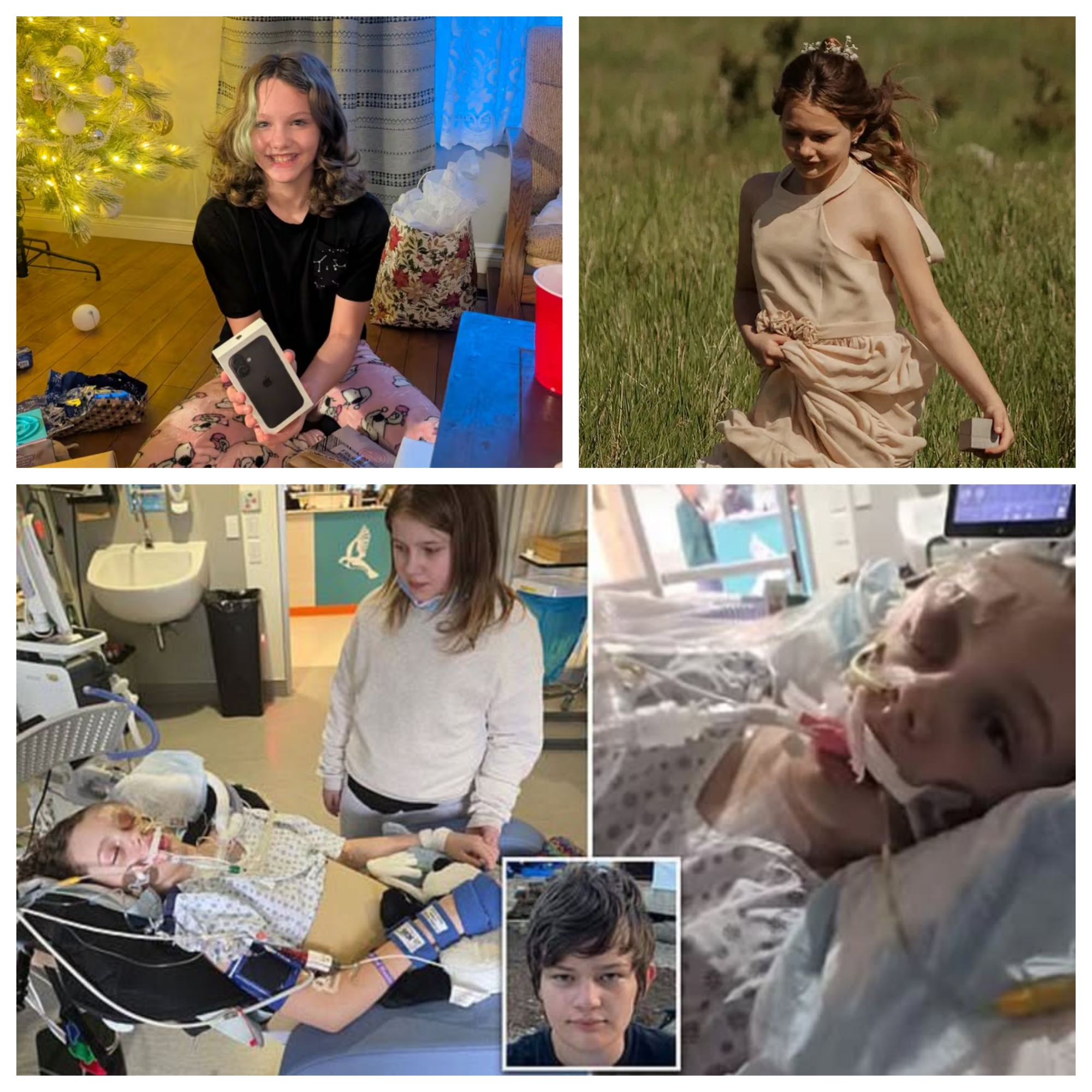
Twelve-year-old Maya Gebala remains in critical but stable condition at BC Children’s Hospital in Vancouver more than two weeks after she was shot multiple times while attempting to shield classmates during the February 10, 2026, shooting at Tumbler Ridge Elementary-Secondary School. Medical specialists have now provided the most detailed prognosis yet: the traumatic brain injuries Maya sustained are comparable in severity to those seen in a major ischemic stroke, leaving her right side potentially permanently paralyzed. Despite the grim outlook, physicians emphasize that Maya is breathing independently, showing small but consistent signs of neurological improvement, and displaying what one neurologist called “remarkable resilience for her age.”
The shooting unfolded shortly after 10 a.m. on a cold Monday morning in the remote northeastern British Columbia community of Tumbler Ridge (population ~2,200). A 17-year-old student, identified as Dylan K., entered the school armed with a semi-automatic rifle and opened fire in a second-floor hallway. Maya, in grade 7, was among the first students in the line of fire. Multiple eyewitness accounts and preliminary police statements indicate she deliberately moved to block younger children behind her, taking at least three rounds—two to the torso and one to the head. Her actions are credited with giving several classmates time to run or take cover, potentially saving multiple lives before responding RCMP officers neutralized the shooter, who was found dead from a self-inflicted wound.
Maya was airlifted to the nearest trauma center in Prince George before being transferred to BC Children’s Hospital, where she has remained in the pediatric intensive care unit. Initial surgery addressed life-threatening internal bleeding and skull fractures, but the bullet that struck her left temporal lobe caused extensive damage to motor and sensory pathways controlling the right side of her body. Neurologists now classify the injury as a “severe hemispheric insult with widespread axonal shearing,” a pattern typically seen after large-vessel strokes or high-velocity penetrating trauma. The prognosis for meaningful recovery of right-sided motor function is guarded; specialists estimate that even with intensive rehabilitation, Maya faces a high likelihood of permanent hemiplegia (paralysis on one side), significant speech and cognitive challenges, and long-term dependency on mobility aids.
Yet amid the sobering medical reality, glimmers of hope persist. Maya has been weaned off mechanical ventilation and is now breathing room air. She has shown purposeful eye movements, occasional tracking of voices, and reflexive withdrawal from painful stimuli—signs that higher brain centers are still active despite the damage. Her Glasgow Coma Scale score has improved steadily from an initial 5 to the current range of 9–10, placing her in a moderate disability category rather than persistent vegetative state. Physiotherapists have begun passive range-of-motion exercises on her right limbs to prevent contractures, while speech-language pathologists monitor for any return of swallowing or vocalization.
Maya’s family—mother Sarah Gebala, father Michael, and younger brother Liam—have maintained a near-constant vigil at her bedside. Sarah issued a brief statement through hospital communications staff: “Maya is still fighting every single day. She protected her friends without hesitation, and now we’re fighting for her. The doctors are honest about how serious this is, but they also say her spirit is extraordinary. We feel every prayer, every kind thought. Please keep holding her in your hearts.”
The community of Tumbler Ridge has rallied in unprecedented ways. A GoFundMe campaign launched by school staff has surpassed $420,000, earmarked for long-term rehabilitation, home modifications, and family support. Pink ribbons—Mayas favorite color—adorn nearly every lamppost and storefront in town. Vigils continue nightly outside the school, now permanently closed pending structural and psychological safety assessments. Provincial officials have committed funding for expanded mental-health services in the Peace River region, recognizing the collective trauma inflicted on students, teachers, and families.
The shooter, Dylan K., had no documented history of violence but had posted cryptic messages on private social-media accounts in the weeks prior expressing anger and isolation. Police recovered a manifesto-style document on his devices that referenced school grievances and a desire to “make them remember.” The investigation remains active, with a coroner’s inquest expected later this year to examine school security protocols, mental-health intervention gaps, and firearm access in rural communities.
Maya’s story has resonated far beyond British Columbia. Messages of support have arrived from across Canada, the United States, and Europe, including personal notes from Prime Minister Justin Trudeau and Governor General Mary Simon. A national petition calling for stronger school-safety measures and youth mental-health funding has gathered over 180,000 signatures. Child psychologists note that Maya’s actions exemplify the “bystander intervention” and “prosocial courage” seen in rare cases of extreme altruism under threat—behavior usually associated with much older individuals.
For now, the focus remains on Maya’s daily progress. Neurosurgeons continue to monitor intracranial pressure and perform serial imaging to track swelling resolution. Rehabilitation specialists have begun planning for the eventual transition to inpatient therapy, which could last months or years. While the possibility of full recovery is slim, the medical team stresses that pediatric brains possess greater plasticity than adult ones; intensive therapy, stem-cell research trials (if eligible), and Maya’s own determination could yield unexpected gains in speech, partial motor return, or adaptive skills.
Sarah Gebala ended her statement with a mother’s quiet strength: “Maya risked everything for her friends. Now we’re asking the world to risk a little hope for her. She’s not giving up—we won’t either.” In a small town forever changed, and a nation watching, the tiny warrior who stood between danger and her classmates continues her fiercest battle yet—one breath, one day, one small victory at a time.