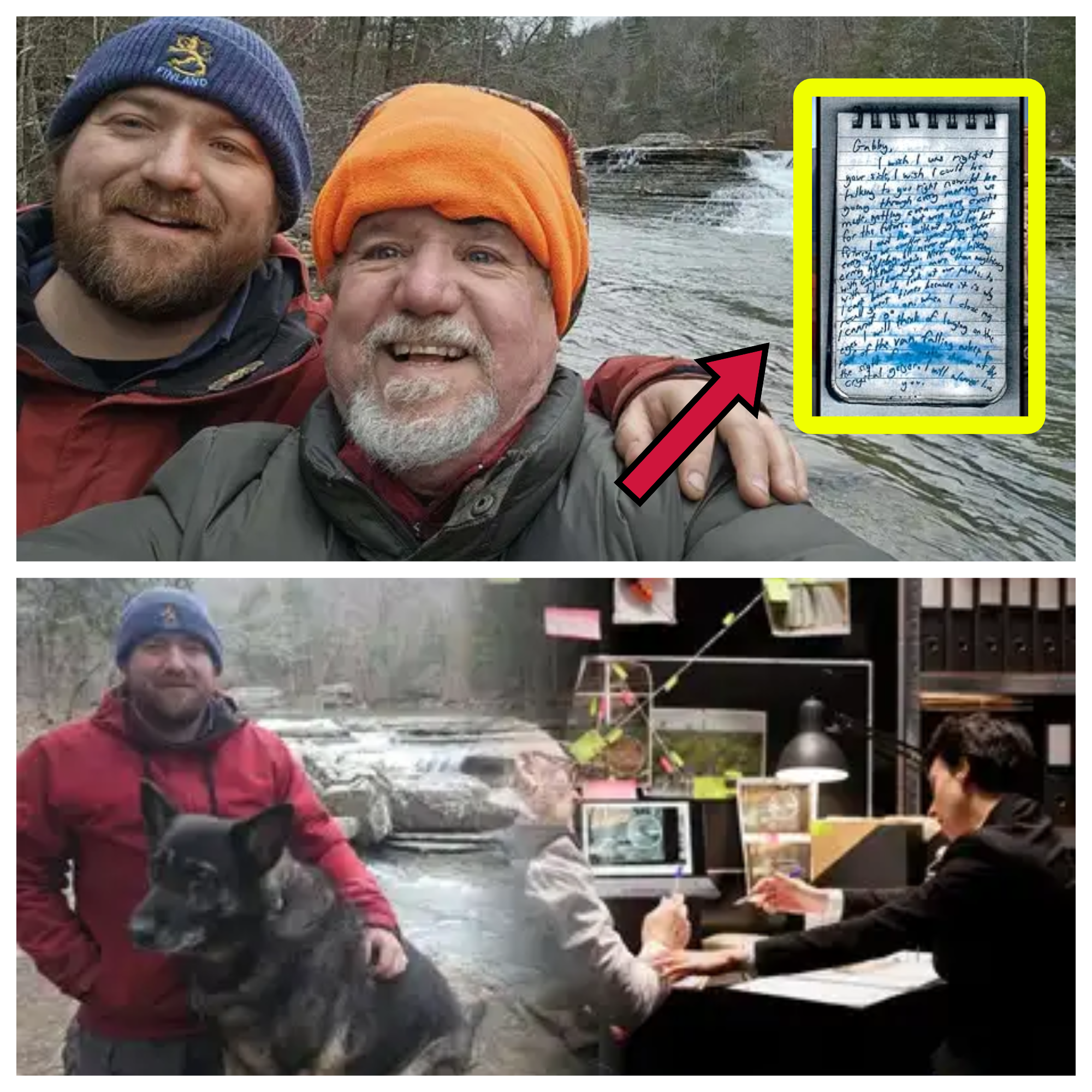
Christopher Palmer, a 39-year-old outdoorsman from Arkansas, had always found solace on the water. To those who knew him best, kayaking wasn’t merely a hobby—it was an extension of who he was. Friends recall how he treated the rhythms of rivers and oceans with the same reverence others reserve for sacred texts. He would rise before first light, load his kayak onto his red 2017 Ford F-250, and vanish into the quiet hours when the world still slept. Palmer preferred routes that demanded respect: narrow channels flanked by breakwaters, where waves built unpredictably and visibility could drop to mere feet within minutes. He navigated not by GPS alone but by intimate knowledge of currents, wind patterns, and tidal shifts—details he recorded obsessively in small, leather-bound notebooks he carried everywhere.
On January 12, 2026, that truck was discovered abandoned on a remote stretch of beach between ramps 43 and 44 at Cape Hatteras National Seashore in North Carolina’s Outer Banks. Park rangers responding to reports of an unattended vehicle found no sign of Palmer or his German shepherd companion, though food bowls, clothing, and other personal items hinted at recent use. Traffic camera footage captured the truck arriving, with a blue-and-white kayak secured in the bed, but the vessel itself was gone when authorities arrived. Palmer’s phone pinged intermittently near Avon and Buxton before going silent, placing him in the vicinity during those early morning hours.
What began as a standard missing-person case quickly took on layers of tragedy and speculation. Family members, led by Palmer’s father Bren, revealed that Christopher had been privately battling a terminal illness. In statements shared via social media and local outlets, they expressed a painful conviction: he had chosen to end his life at sea. The family requested that official searches be scaled back or concluded, citing both the harsh Atlantic conditions and their belief that recovery was unlikely—and perhaps unwanted. “He went into the sea,” Bren Palmer reportedly said, a statement that echoed across news reports from WITN, WAVY, and others covering the Outer Banks.
Yet amid the grief, one detail has haunted online discussions and fueled viral posts: the discovery of one of Palmer’s personal tide notebooks. Folded neatly and protected inside a waterproof bag, it was reportedly located among items linked to the case—possibly recovered from the truck or a nearby area. Unlike standard nautical charts, Palmer’s notebooks were deeply personal. Pages filled with hand-drawn sketches of eddies, notes on moon phases affecting tidal pulls, and observations of how specific breakwaters altered flow in fog or low light. Friends who had seen similar books described them as part journal, part scientific log—evidence of a mind that found order in chaos.
The presence of the notebook raises quiet but persistent questions. Why leave such a cherished item behind in a sealed, protective bag if the outing was unplanned? Did it contain a final entry—a reflection, a goodbye, or simply one last record of the water he loved? Some close to him speculate it was deliberate: a way to preserve the knowledge he had accumulated, ensuring it survived even if he did not. Others see it as heartbreaking proof of intent. In the fog-shrouded channels he favored, where visibility vanishes and currents turn treacherous without warning, even an experienced kayaker can be overwhelmed. Hypothermia sets in quickly in winter Atlantic waters, and a single miscalculation in timing or route can prove fatal.
The Outer Banks, with their shifting sands and powerful riptides, have claimed countless lives over the centuries. Cape Hatteras, known as the “Graveyard of the Atlantic,” sees unpredictable weather and strong offshore pulls that can carry even strong paddlers far from shore. Palmer’s preference for solitary dawn launches into these quieter, less-patrolled zones amplified the risks. He avoided crowded tourist areas, choosing instead the liminal spaces between man-made barriers where nature still held dominance.
Investigators have not released full details on the notebook’s contents, if indeed it was officially recovered and examined. Social media has filled the void with theories: some portray Palmer as a man seeking one final communion with the sea; others suggest foul play or an accident masked by circumstance. Yet the family’s statements lean heavily toward acceptance of a purposeful departure. His dog, believed to have accompanied him on many prior adventures, remains unaccounted for, adding another layer of sorrow—did the loyal companion follow him into the water, or was it left behind in a final act of separation?
Palmer’s story resonates because it touches on universal themes: the pull of solitude, the comfort found in nature’s unforgiving embrace, and the private battles that sometimes lead people to places from which there is no return. His notebooks, those quiet testaments to a life spent observing and understanding water, stand as a reminder that some journeys are charted not on maps but in the heart.
As the search winds down and the waves continue their relentless motion, the image lingers: a man in a kayak at dawn, notebook tucked safely away, paddling toward the horizon where sea meets sky—and perhaps, for him, peace. The waterproof bag preserved his words against the elements, but the ocean keeps its own secrets. Whatever the final truth, Christopher Palmer’s connection to the water was profound, and in the end, it may have been the only place he felt truly at home.