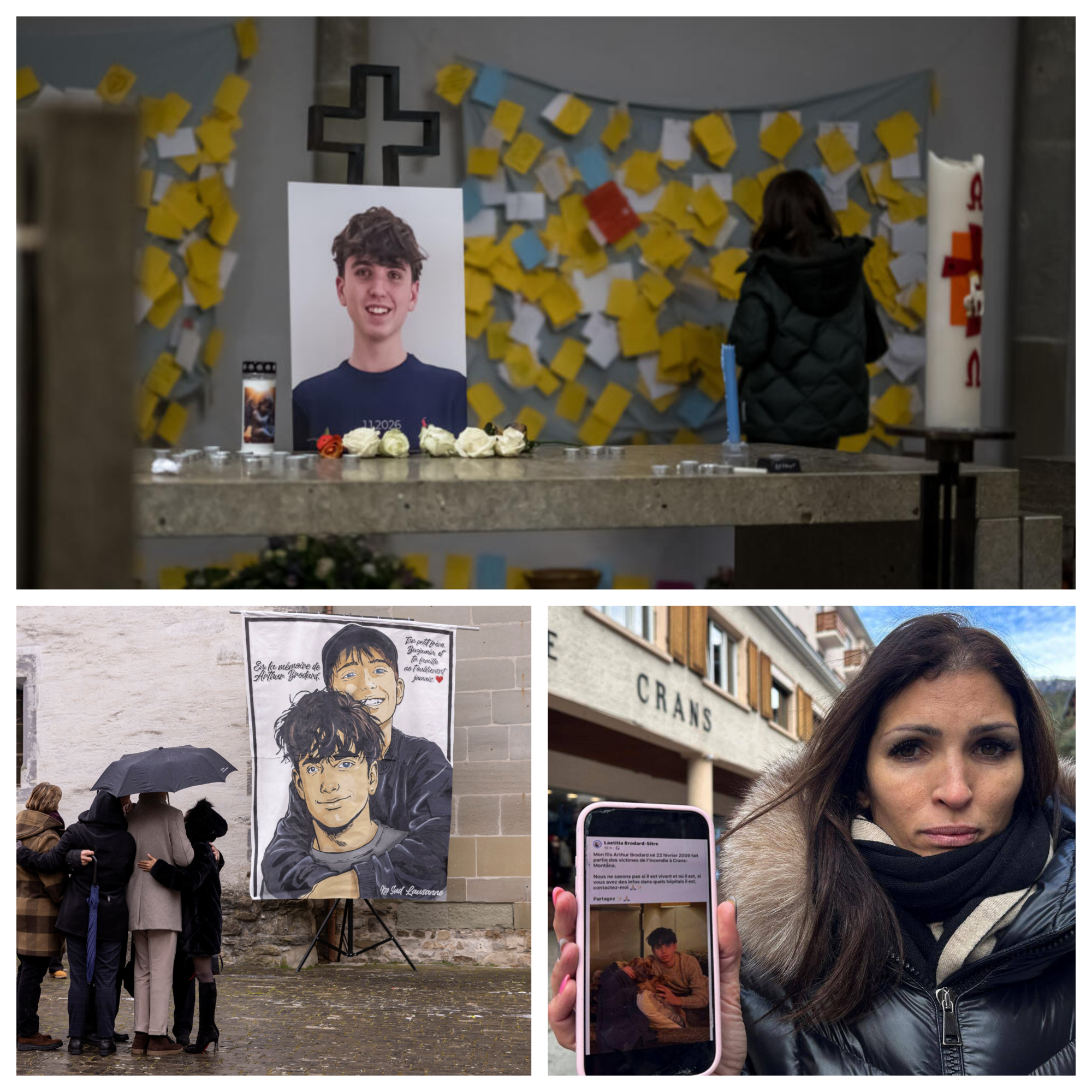
Laetitia Brodard-Sitre stands at her son’s funeral, clutching a white teddy bear and a red rose—symbols of the Lutry Football Club colors Arthur loved so much. The 16-year-old soccer player was one of seven teammates from the club who perished in the flames that engulfed Le Constellation bar in Crans-Montana on New Year’s Eve 2025. As Switzerland mourns the 40 dead—most of them teenagers—his mother has broken her silence with a devastating accusation: the tragedy stemmed from deliberate negligence that turned a night of celebration into an inescapable inferno.
The fire erupted shortly after midnight on January 1, 2026, in the packed ski resort bar during a New Year’s party crowded with young revelers. Investigators believe sparkling candles on Champagne bottles, held high toward the ceiling, ignited flammable soundproofing foam that had never been properly tested or inspected. The blaze spread rapidly in the low-ceilinged space, trapping dozens inside. Panic ensued as smoke filled the air and flames blocked exits. Forty lives were lost, including Arthur Brodard and many of his friends. Over 100 others suffered severe injuries, some with third-degree burns requiring months of treatment.
Laetitia Brodard-Sitre’s grief has given way to outrage. In statements following the funerals and amid the ongoing investigation, she has pointed to what she describes as reckless disregard for safety protocols. The bar, she claims, operated with banned or substandard materials, locked fire extinguishers that could not be accessed in time, and narrow escape routes that became death traps when crowds surged. “They let our children burn alive,” she has said in emotional appeals, arguing that basic precautions—regular safety checks, compliant insulation, accessible equipment—were ignored for profit or convenience.
Official findings support elements of her pain. The bar had not undergone mandatory annual safety inspections since 2019, according to Crans-Montana’s mayor. Soundproofing foam on the ceiling, believed to have fueled the rapid spread, was never verified against current fire regulations. Prosecutors opened a criminal probe into the bar’s co-owners, French couple Jacques Moretti (49) and Jessica Moretti (40), charging them with manslaughter by negligence, bodily harm by negligence, and arson by negligence. Jacques Moretti was briefly held in custody to prevent flight risk during questioning. The couple has denied wrongdoing, with leaked reports suggesting they shifted blame toward a deceased waitress seen holding flaming bottles—though she too perished in the blaze.
The victims’ youth amplifies the horror. Of the 40 killed, 26 were teenagers, the youngest a 14-year-old Swiss girl and a 14-year-old French boy. Arthur, at 16, was among those from Lausanne who had traveled to the resort with friends to ring in the new year. His soccer club lost seven members, with five more hospitalized in critical condition. Funerals across Switzerland have become communal acts of mourning, with teammates carrying his coffin and national flags lowered in tribute. Laetitia Brodard-Sitre spoke at her son’s service, her voice breaking as she remembered a boy full of life, always the first to support his team, now gone forever.
Survivors’ accounts add to the emerging picture of chaos and missed opportunities. Some described narrow doors that jammed under pressure, others recalled extinguishers mounted too high or behind locked panels. One 18-year-old survivor, waking from a coma weeks later, spoke of unrelenting nightmares—flames, screams, the smell of burning foam. The bar’s popularity among young people made the overcrowding predictable, yet safety measures appeared inadequate for the crowd size and festive use of pyrotechnic elements like sparklers on bottles.
The tragedy has prompted a national reckoning. Switzerland observed a day of mourning, church bells rang across the Alps, and vigils drew hundreds marching in silence. Pope Francis offered condolences, and political leaders called for immediate reforms to fire safety in entertainment venues. Questions swirl around enforcement: why were inspections skipped for six years? Were local authorities complicit in overlooking violations? The probe now examines not only the owners but potential systemic failures in oversight.
For families like the Brodards, answers cannot come soon enough. Arthur’s mother has channeled her grief into demands for accountability, insisting the fire was no unavoidable accident but the result of choices that prioritized business over lives. “Our Arthur has left to party in paradise,” she posted on Facebook after confirmation of his death, a poignant farewell amid agony. Yet her public statements carry a sharper edge: negligence was not passive—it was active disregard that cost her son and dozens more their futures.
As trials loom, the Crans-Montana fire stands as a stark warning. A night meant for joy became a nightmare because safeguards were absent or ignored. The average victim age of 19 underscores the generational loss—dreams of soccer careers, first loves, university plans—all extinguished in minutes. Laetitia Brodard-Sitre’s words cut through the official reports: “They let our children burn alive.” In her heartbreak lies a call that echoes far beyond the Alps—for vigilance, for justice, for a world where no parent must bury a child because someone chose convenience over care.