Twenty-eight days after Nancy Guthrie vanished from her Tucson home, the investigation shows subtle but significant shifts in momentum. On February 28, 2026, NewsNation correspondent Brian Entin stood live outside the now-familiar Catalina Foothills residence, describing a scene far quieter than the chaotic early weeks filled with news trucks, satellite dishes, and volunteer search parties. The change is deliberate: resources are being strategically reallocated. A portion of the FBI team has relocated to Phoenix to comb through massive volumes of regional traffic-camera footage and private surveillance feeds, while a smaller, focused group remains in Tucson to maintain local coordination. Pima County Sheriff’s detectives assigned full-time to the case continue their work, though some have been temporarily reassigned to handle a surge in unrelated violent crime in the area—a reminder that even high-profile disappearances must compete for investigative bandwidth.
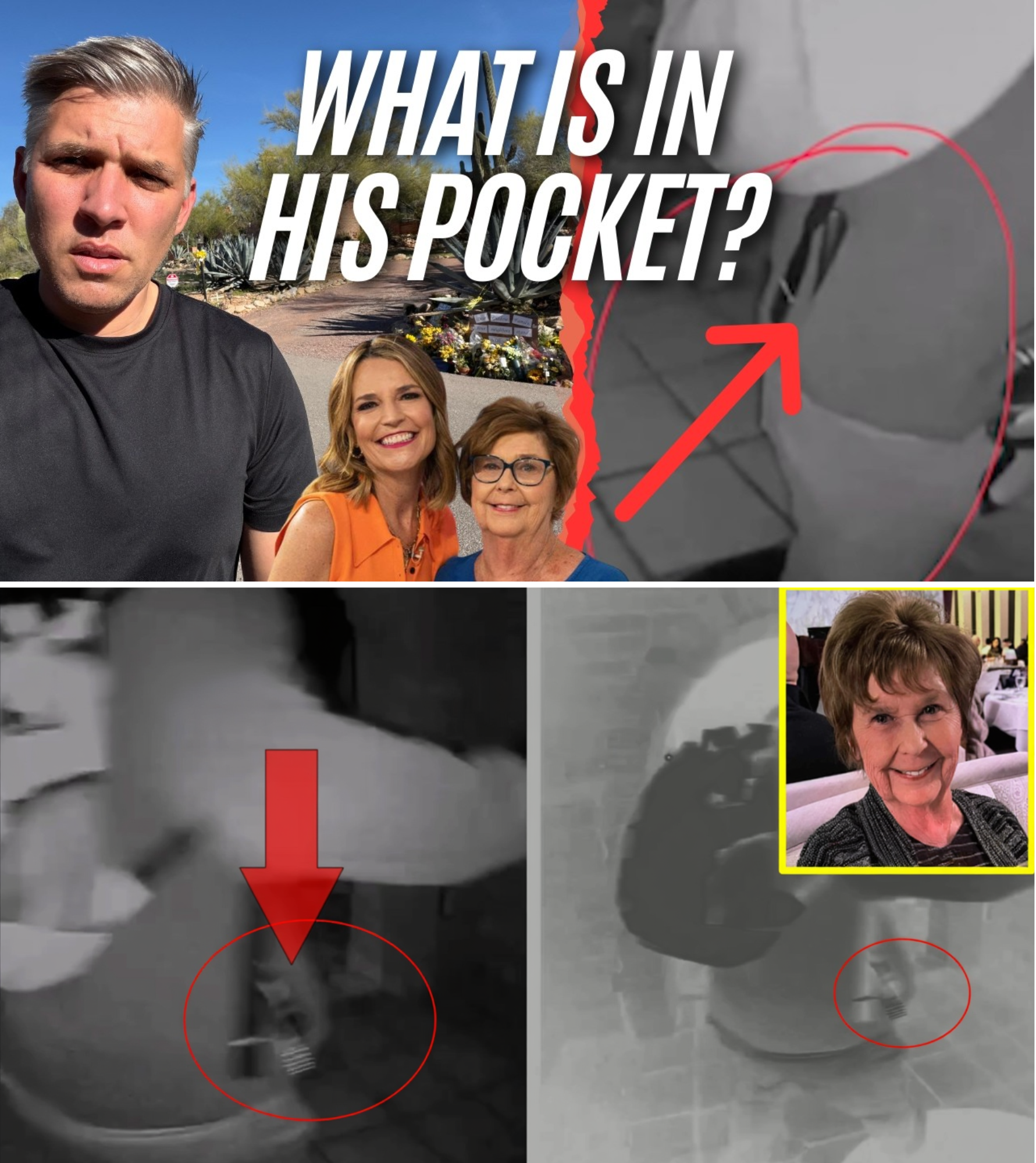
The single publicly released image from Nancy’s Google Nest doorbell camera remains the most scrutinized piece of evidence. The still captures the masked suspect in the act of disabling the device, but online communities have zeroed in on one small detail: a distinct bulge in the right-front pocket with what looks like a short antenna or rod protruding. The observation has fueled endless debate across true-crime forums, Reddit threads, and X discussions. Is it a phone? A flashlight? Or something far more tactical?
Tracy Walder, a former FBI special agent and CIA officer with extensive experience in counterintelligence and behavioral analysis, joined Entin to offer expert insight. After examining enhanced versions of the image, Walder outlined two leading possibilities. The first—and in her view most likely—is a compact walkie-talkie. Short-range two-way radios require no cellular connection, leave no carrier logs, and avoid triggering geo-fencing alerts that law enforcement routinely pulls in abduction cases. A suspect communicating with a lookout or getaway driver would prefer this low-tech option over a traceable smartphone.
The second theory: a portable signal jammer. These handheld devices can block Wi-Fi, cellular, and even some alarm frequencies within a 10–30 meter radius. While no electronics were reported stolen from the Guthrie home, jammers are inexpensive and widely available online. Walder noted that if the suspect anticipated Nancy’s home security system or nearby Ring cameras, a brief jamming burst could explain the clean cut in the feed without obvious tampering damage. Still, she rated this scenario lower because jammers are bulkier and less common in residential crimes unless the perpetrator has specific technical knowledge or prior reconnaissance.
Walder then directed attention to the black backpack visible in the footage. She speculated it likely contained items for restraint and transport: zip ties, duct tape, rope, or even a tarp or heavy blanket to conceal and move a person. The confirmed presence of Nancy’s blood at the scene—on the floor near the entry—raises the grim possibility that she was injured or already deceased before being removed. In cases where victims are killed during or immediately after abduction, perpetrators sometimes stage the scene to suggest kidnapping for ransom, buying time to dispose of the body. Walder expressed particular alarm at the complete absence of any proof-of-life contact from the abductor(s). In most ransom-driven cases, perpetrators eventually make demands or provide evidence to keep negotiations alive. Here, four weeks in, there has been nothing.
The crime’s targeted character is unmistakable. Walder dismissed opportunistic burglary theories outright. The suspect arrived masked and gloved, deliberately covered the camera lens with nearby foliage, and chose a pre-dawn hour when the home was occupied only by an elderly woman living alone. “This is not a house you stumble upon at random,” she emphasized. The location is set back from the main road, not easily visible to passersby. That level of specificity points to prior knowledge—either surveillance of the family routine or direct familiarity with the residence.
Walder also addressed investigative mechanics that viewers frequently ask about. Polygraph examinations, she explained, are deployed early and quickly—typically 30–60 minutes—to rapidly eliminate or prioritize suspects and tipsters. While results are inadmissible in court, they help narrow focus. U.S. attorneys have recently walked the crime scene, a standard step when prosecutors anticipate eventual charges. The $1 million reward offered by the Guthrie family remains in effect, with strict anonymity protections for tipsters unless they are directly implicated in the crime. Walder praised the FBI’s ability to verify credible leads while shielding sources.
Entin fielded several viewer-submitted questions. No evidence links the disappearance to the large crowds at the Tucson Gem Show that weekend. No neighboring vacant homes have been confirmed as staging points. A separate 911 call reporting a woman yelling inside a vehicle in the area was investigated and ruled unrelated. He cautioned against believing unverified online rumors—such as fabricated screenshots of Google searches or alleged witness statements—that continue to circulate.
Despite the slow public pace, optimism persists among those closest to the case. Investigators are actively pursuing genetic genealogy on the unknown male DNA from the discarded gloves, cross-referencing regional video for vehicle matches, and tracing financial anomalies that could point to motive. The blood evidence, doorbell footage, and now intense focus on the suspect’s pocket gear keep the door open for a breakthrough. Every day that passes without proof-of-life increases urgency, but also the likelihood that forensic persistence or a single overlooked detail will provide answers.
For Savannah Guthrie and her siblings, the emotional toll remains immense. Daily social-media posts continue to share memories of their mother’s warmth, humor, and strength while pleading for any credible information. The reward stands at $1 million, payable only upon Nancy’s recovery according to FBI protocols. As the investigation moves deeper into its second month, the pocket bulge—whether walkie-talkie, jammer, or ordinary item—has become a symbol of how the smallest overlooked clue can suddenly shift an entire case. With blood, DNA, and now renewed digital scrutiny in play, the balance remains between heartbreaking silence and the possibility of imminent resolution.