Christopher Palmer kept his stage 4 cancer diagnosis entirely to himself until the very end. The 39-year-old Arkansas native, known among friends and family for his deep love of the outdoors, disappeared from the Outer Banks of North Carolina in early January 2026 while traveling with his 11-year-old German Shepherd, Zoey. What began as a standard missing-person search along the remote beaches of Cape Hatteras National Seashore evolved into a profoundly moving story of loyalty, autonomy, and chosen peace when his father, Bren Palmer, revealed the truth in a series of raw, heartfelt Facebook posts.
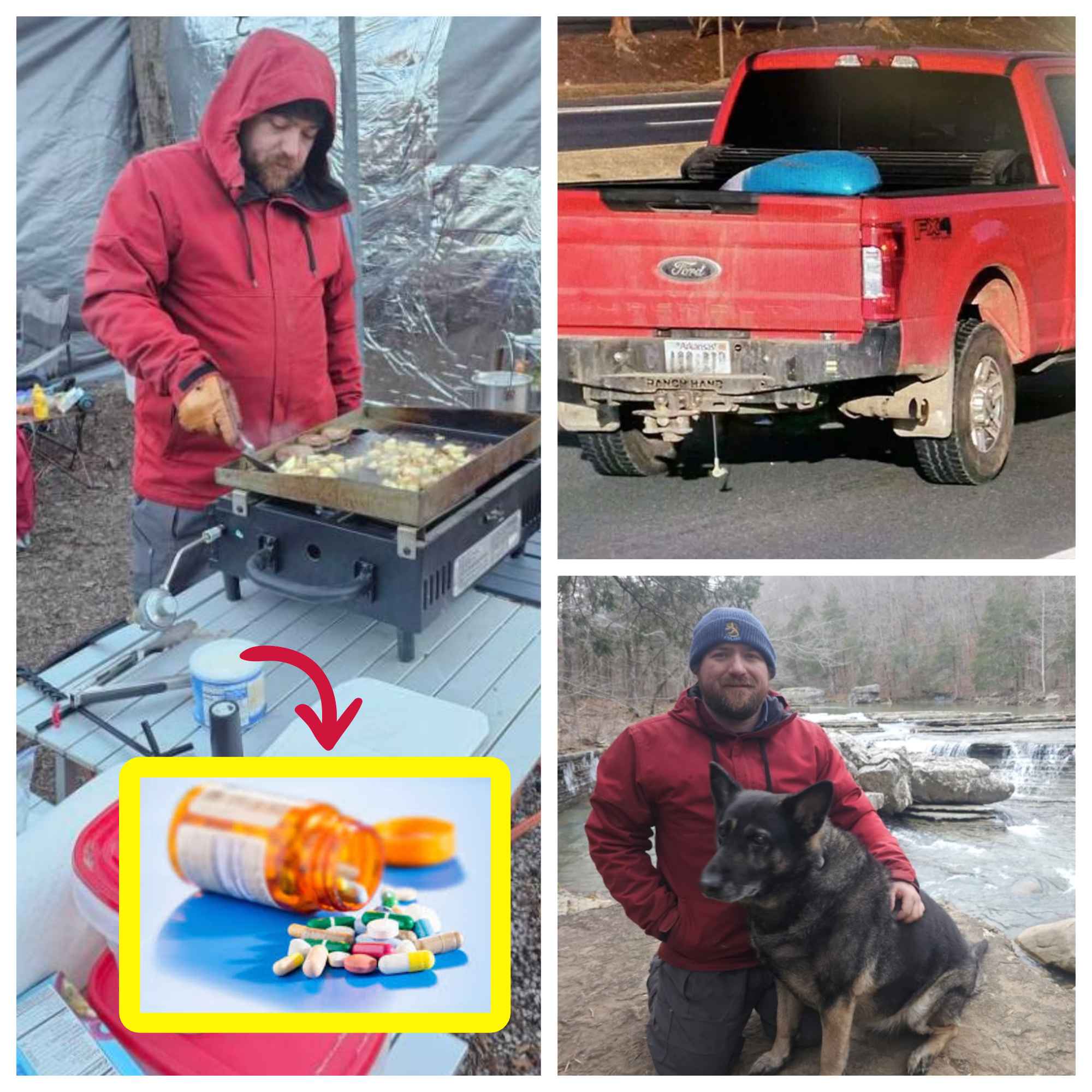
The journey started on December 8, 2025, when Palmer set out for a camping trip in the Great Smoky Mountains. He checked in regularly with family until January 9, when all contact stopped. On January 12, rangers found his Ford F-250 pickup abandoned on the sand at Cape Hatteras, with personal items strewn along the shoreline. The scene suggested he had entered the water and not returned. Extensive searches involving the National Park Service, U.S. Coast Guard, local law enforcement, and volunteers combed beaches, dunes, and nearby waters for days. On January 24, Bren Palmer asked that active efforts be suspended, signaling acceptance of the likely outcome.
In the days that followed, the family shared what they had learned only after his disappearance: Palmer had been living with advanced cancer. The diagnosis had come quietly, and he chose not to tell even those closest to him. Bren’s posts explained that aggressive treatments would have stripped away the independence and connection to nature that defined his life. “Christopher loved the outdoors and valued his independence,” Bren wrote. “The treatments ahead would have taken much of that away, and he did not want that future for himself.” Rather than endure prolonged suffering in a medical setting, Palmer opted for a final chapter on his own terms—surrounded by wilderness and the one being who had always stayed by his side.
That companion was Zoey, the German Shepherd he had raised since she was a puppy. Described by the family as “beautiful” and “well-behaved,” Zoey had accompanied Palmer on countless hikes, camping trips, and quiet evenings in the woods. In her later years, she developed severe hip dysplasia, requiring daily medications and growing increasingly frail. Evidence recovered from the truck—a shovel—led the family to conclude that Palmer spent time in the forest during the Smoky Mountains leg of his trip, remaining with Zoey as her condition worsened. “It’s our belief that our son spent some time in the woods to be with her in her final days,” Bren explained. “After her passing he laid her to rest and continued his trip to the coast.” This sequence—burying his lifelong friend in a place they both loved, then driving to the sea—paints a portrait of devotion that transcends words.
The family’s disclosures put an end to swirling online rumors. Early speculation included claims that Zoey had been found alive, injured, or abandoned; others invented elaborate conspiracies. Bren addressed the misinformation head-on, asking the public to respect the family’s grief and avoid spreading falsehoods. “Please do not believe all the false stories floating around the internet,” he urged in one update. The truth, though painful, offered a clearer picture: a man confronting two unbearable losses—his health and his dog—and deciding neither would face the end alone.
Palmer’s final act unfolded against the backdrop of the Outer Banks’ wild, windswept coastline. Cape Hatteras National Seashore, with its isolated beaches and powerful Atlantic waves, provided the solitude he sought. Leaving his truck on the sand marked the boundary between land and sea, between life as he knew it and the peace he chose. Ocean currents made recovery improbable, and with no new leads, search teams stood down. Yet the absence of a body did little to diminish the sense of closure the family found in understanding his choices.
Zoey’s role in the story struck a deep chord. For many who followed the updates, the image of Palmer carrying his aging dog through trails, then ensuring she rested in the woods before facing his own end, became the emotional core. The “rainbow bridge”—a comforting metaphor from pet-loss literature envisioning a painless reunion in the afterlife—appeared repeatedly in tributes. Comments flooded social media: “Zoey was waiting for him on the other side,” “They are running free together now,” “Rest easy, both of you—no more pain.” The bond between human and animal, often understated in everyday life, stood front and center as a source of profound strength and sorrow.
Palmer’s story prompted wider reflection on terminal illness, end-of-life decisions, and the ethics of autonomy. Supporters admired his refusal to burden others with his diagnosis and his commitment to Zoey until the last moment. Conversations touched on mental health support for those facing cancer, the challenges of chronic illness in pets, and the right to choose how—and where—one’s life concludes. While Palmer’s path was deeply personal and not framed as advocacy, it resonated with anyone who has watched a loved one (human or animal) suffer.
Memorials emerged organically. Photos of Palmer kneeling beside Zoey—her silver muzzle resting against him, eyes full of trust—spread across platforms. People shared their own stories of losing companions to age, illness, or euthanasia, finding solace in the idea that loyalty endures. The rainbow bridge became a recurring symbol: a place where old dogs run without limping and their people arrive whole again.
Bren Palmer’s final posts expressed gratitude to search teams, volunteers, and strangers who offered kindness. He asked that focus remain on remembrance rather than rumor, closing one update with a simple wish: “May Chris and Zoey forever rest in peace.” Those words captured the essence of the story—not only loss, but a life shaped by love for nature, unwavering loyalty to a dog, and the courage to face an ending on one’s own terms.
Christopher Palmer leaves behind a legacy of quiet strength. He was the man who hiked remote trails, who carried his aging companion when she could no longer walk alone, who confronted stage 4 cancer without complaint, and who chose peace in the vast Atlantic rather than prolonged suffering. In the ocean that received him, he found the freedom he cherished. Beyond the rainbow bridge, he and Zoey are together again—healthy, joyful, inseparable—exactly as they always were meant to be.