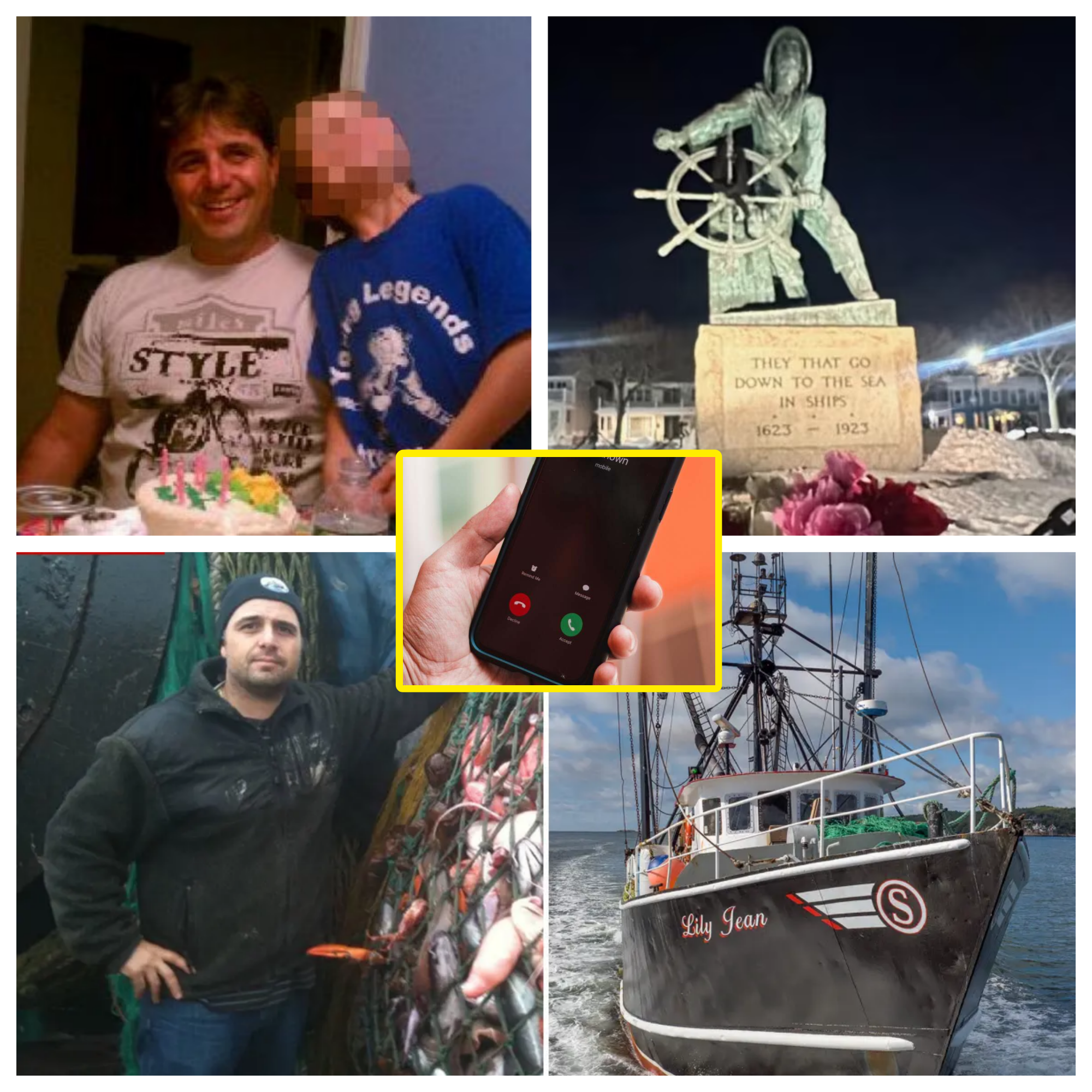
The final hours of Captain Accursio “Gus” Sanfilippo unfolded in the dead of night, far from the spotlight he once shared on national television. Sanfilippo, the seasoned skipper of the 72-foot commercial fishing vessel Lily Jean, had built a reputation in Gloucester as a fifth-generation fisherman known for his skill, resilience, and quiet leadership. His boat and crew had been featured in a 2012 episode of the History Channel’s “Nor’Easter Men,” a series that captured the raw dangers of New England’s winter groundfishing—long hauls in brutal weather for haddock, flounder, and lobster. Viewers saw Sanfilippo and his team enduring freezing spray, high winds, and relentless shifts at sea, often spending up to 10 days away from home. That exposure made him a recognizable figure in the tight-knit fishing community and beyond, but it was his personal connections that revealed the human side in the tragedy’s aftermath.
In the early morning of January 30, 2026, as the Lily Jean made its way back toward Gloucester after a routine trip, Sanfilippo placed a call to his friend and fellow captain Sebastian Noto around 3 a.m. The conversation, recounted by Noto to local media including NBC Boston, centered on the punishing conditions. Temperatures hovered near 12°F (-11°C) with wind chills far worse, and freezing spray was coating everything exposed. Sanfilippo sounded worn out, telling Noto, “I quit. It’s too cold.” He mentioned the air holes—likely vents or scuppers—were freezing over, a common hazard that can exacerbate icing issues on deck. Yet Noto described him as calm, with no panic or urgent concern about the boat’s stability or immediate safety. It was simply a fisherman venting about the cold that defines their winter livelihood.
That call proved to be Sanfilippo’s last known communication. Just a few hours later, at 6:50 a.m., the Coast Guard received an automatic activation from the Lily Jean’s EPIRB—no voice distress call, no VHF transmission, nothing from the captain, crew, or the young NOAA fisheries observer aboard. Responders arrived to find a debris field, one unoccupied life raft, and the body of Sanfilippo himself recovered from the water. The search, spanning over 1,000 square miles in frigid seas, was suspended the next day with no further survivors or signs of life. All seven aboard were presumed lost: Sanfilippo, crew members Paul Beals Sr. and his son Paul Beals Jr., John Rousanidis, Freeman Short, Sean Therrien, and 22-year-old Jada Samitt, the NOAA observer whose family described her as vibrant, compassionate, and deeply committed to sustainable fisheries.
The suddenness of the sinking—no time for a Mayday despite multiple communication options—has fueled speculation about rapid capsizing from ice accumulation, a rogue wave in the Nor’easter conditions, or a combination of factors. The Coast Guard’s Northeast District launched a formal investigation on February 2, assisted by the NTSB, to determine the cause. Early reports noted the vessel was returning to repair fishing gear, possibly laden, in seas of 7-10 feet with heavy freezing spray. Such conditions can quickly add dangerous top-weight, shifting the center of gravity and making even stable boats prone to roll or pitch-pole without warning.
Sanfilippo’s final call adds a poignant layer to the mystery. Friends and community members, including Massachusetts State Sen. Bruce Tarr—who grew up with Sanfilippo—have expressed disbelief that a captain of his experience would push into danger knowingly. Tarr called the loss “unfathomable,” emphasizing Sanfilippo’s care for his crew. Noto’s recollection paints a picture of exhaustion rather than alarm: a man who had spent decades facing Nor’easters but was simply fed up with the unrelenting cold that morning. In fishing culture, such complaints are common—complaining about the weather is almost a rite—but this one resonates as tragically prophetic.
Gloucester, America’s oldest seaport with a fishing heritage spanning over 400 years, has been rocked before by such losses, most famously chronicled in “The Perfect Storm.” Memorials quickly formed at the Fishermen’s Statue and St. Ann’s Church, where a vigil drew hundreds. Families released statements of profound grief: the Beals family noted the bittersweet comfort that father and son were together; Samitt’s loved ones highlighted her bravery and belief in her role as both observer and crew member. Donations poured in through organizations like Fishing Partnership Support Services to support the bereaved.
The tragedy underscores ongoing risks in commercial fishing—one of the deadliest professions—particularly in winter. Freezing spray warnings were in effect, and while EPIRBs alerted rescuers, the lack of voice communication or personal beacons highlights gaps in redundancy. Advocates call for better de-icing protocols, real-time stability monitoring, and mandatory personal locator devices. NOAA even paused observer deployments temporarily due to the weather forecast following the incident.
As the investigation continues—likely months-long—the final call from Sanfilippo lingers as a heartbreaking reminder of the human cost. He was calm, tired, ready for the warmth of home. Instead, the Atlantic claimed him and his crew in silence. Gloucester mourns not just the lives but the tradition they embodied: men and women who feed communities while braving unforgiving seas. Their names will join the long memorial list, a somber benchmark in a town built on resilience and loss.