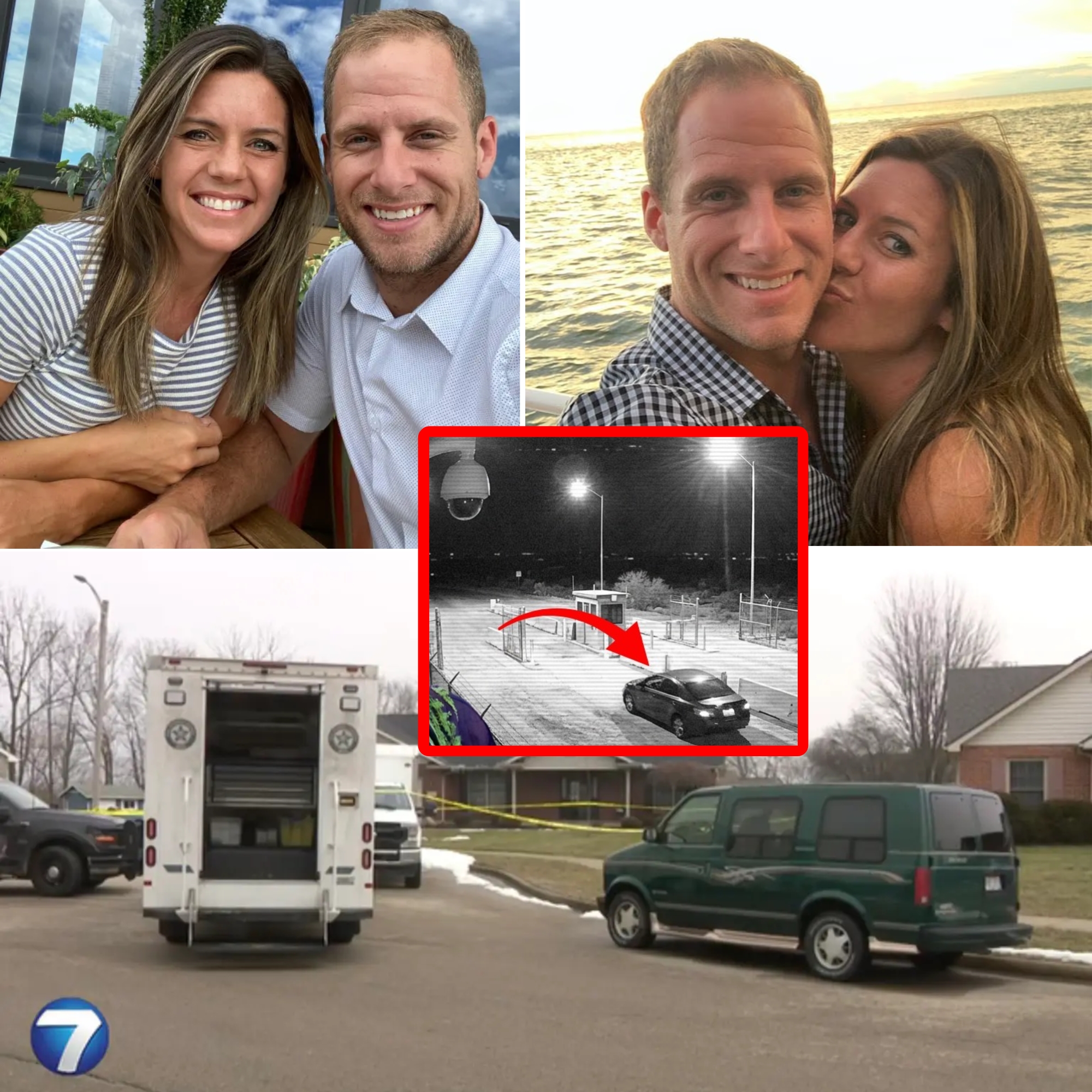
Seventeen seconds—that’s the razor-thin margin separating a grieving husband’s desperate emergency call from what prosecutors now describe as a meticulously staged crime scene in the February 16, 2026, shooting death of Ashley Flynn. The dashcam footage, recovered from Caleb Carl Flynn’s vehicle and scrutinized by investigators, shows the 39-year-old Tipp City resident performing deliberate preparatory acts outside the family home on Cunningham Court mere moments before he dialed 911 to report his 37-year-old wife had been shot during an alleged home invasion.
The clip, timestamped in the pre-dawn darkness, begins approximately half a minute prior to the emergency call placed at roughly 2:30 a.m. In those critical 17 seconds, Flynn is visible exiting the car, moving briefly toward the open garage, returning to the driver’s seat, manipulating an item (possibly fabric, a small object, or something related to his clothing), and performing what appears to be a quick self-check or adjustment. The sequence is calm, purposeful, and devoid of the frantic energy he displays seconds later on the recorded 911 call, where he reports a burglary, gunshots, and his wife’s critical condition while sounding breathless and horrified.
This brief digital snapshot has become central to the case’s pivot. Flynn’s initial narrative was compelling on its face: he claimed to have arrived home, discovered the garage door ajar, entered to find Ashley fatally wounded from two gunshots, and immediately called for help while the couple’s two young daughters slept undisturbed in their bedrooms. Police responded swiftly, treating the scene as a violent intrusion. Yet as the multi-agency investigation—led by Tipp City Police with support from the FBI, Ohio Bureau of Criminal Investigation, and Miami County Sheriff’s Office—deepened, contradictions accumulated rapidly.
Forensic examination revealed the two gunshot wounds were fired at close range with a 9mm handgun later located inside the residence. No clear signs of forced entry existed beyond what could have been easily fabricated. No foreign DNA, fingerprints, or footprints pointed to an unknown intruder. Area surveillance, including neighbors’ Ring cameras and street-level footage, captured nothing resembling a fleeing suspect or unfamiliar vehicle in the critical window. Most damningly, cell-phone location data placed Flynn’s device in the immediate vicinity of the home well before his reported “discovery” time.
The dashcam segment bridged those gaps with devastating clarity. Prosecutors contend the 17 seconds document tampering in progress: Flynn allegedly used the interval to reposition the firearm, wipe surfaces, ensure no incriminating blood transfer appeared on his person, or verify that the staged elements—open garage, disturbed items—would support his intruder story under initial scrutiny. These actions underpin the two felony tampering with evidence charges filed alongside one count of murder and two counts of felonious assault.
Chief Greg Adkins addressed the media after Flynn’s February 19 arrest, noting the investigation’s collaborative nature produced “sufficient probable cause” without initially disclosing the video. Legal experts familiar with similar cases highlight how short-duration recordings often prove decisive in domestic-violence-turned-homicide prosecutions. A calm, deliberate 17-second prelude directly undercuts claims of spontaneous shock, suggesting premeditation or at least immediate cover-up.
Ashley Flynn was widely admired in Tipp City. A substitute teacher and former full-time educator with Tipp City Schools, she also coached seventh-grade volleyball at Tippecanoe Middle School, earning praise for her encouraging spirit, radiant smile, and genuine care for every student. Active in the Christian Life Center in Butler Township—where Caleb had previously participated in music ministry—she and her husband presented a picture of a faith-driven family. His 2013 American Idol Season 12 audition, during which he declared his love for Ashley as “more than anything,” resurfaced online, now carrying a haunting weight against the backdrop of murder allegations.
The couple’s two elementary-school-aged daughters, physically unharmed, remain at the emotional heart of the tragedy. Community support surged immediately: a GoFundMe campaign exceeded $80,000 in its first days, designated for the girls’ immediate needs, therapy, and long-term security. Red-and-white ribbons appeared throughout the neighborhood as quiet symbols of remembrance and solidarity. School staff, volleyball families, and church members organized vigils and memorials, sharing stories of Ashley’s warmth, her ability to make every child feel valued, and the light she brought to classrooms and courts.
Flynn entered a not-guilty plea during arraignment; bond was set at $2 million, and he continues to be held in Miami County Jail. Prosecutors have declined to release the full dashcam clip or complete 911 audio publicly, citing the need to protect trial integrity. Analysts predict the video will feature prominently if the case proceeds to trial, potentially serving as visual proof of intent or consciousness of guilt.
The incident has shaken Tipp City, a small community long regarded as safe and family-oriented. Neighbors and friends grapple with the dissonance: the Ashley they knew as kind, engaged, and full of life versus the violent end she suffered in her own home. The revelation of the dashcam footage has intensified public conversation about domestic violence, hidden dangers within seemingly stable marriages, and the power of everyday technology to expose deception.
For the daughters, the path ahead involves navigating profound loss while surrounded by a community determined to preserve their mother’s memory. Counselors, extended family, and faith-based support networks have mobilized to provide stability amid the legal storm. Ashley’s legacy—as an educator who inspired, a coach who motivated, and a mother who loved fiercely—endures in every tribute, every shared story, and every effort to ensure her children grow up knowing her light.
Seventeen seconds may seem insignificant in isolation, but in this case they represent a turning point: the moment a carefully constructed facade allegedly began to crack under the unblinking eye of a dashboard camera. As the judicial process unfolds, those fleeting frames stand as a stark reminder that truth can hide in the briefest intervals—and that justice often arrives through the smallest, most overlooked details.