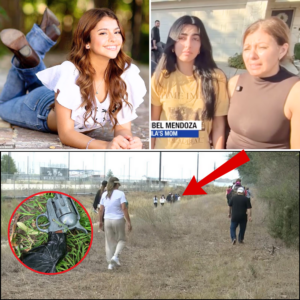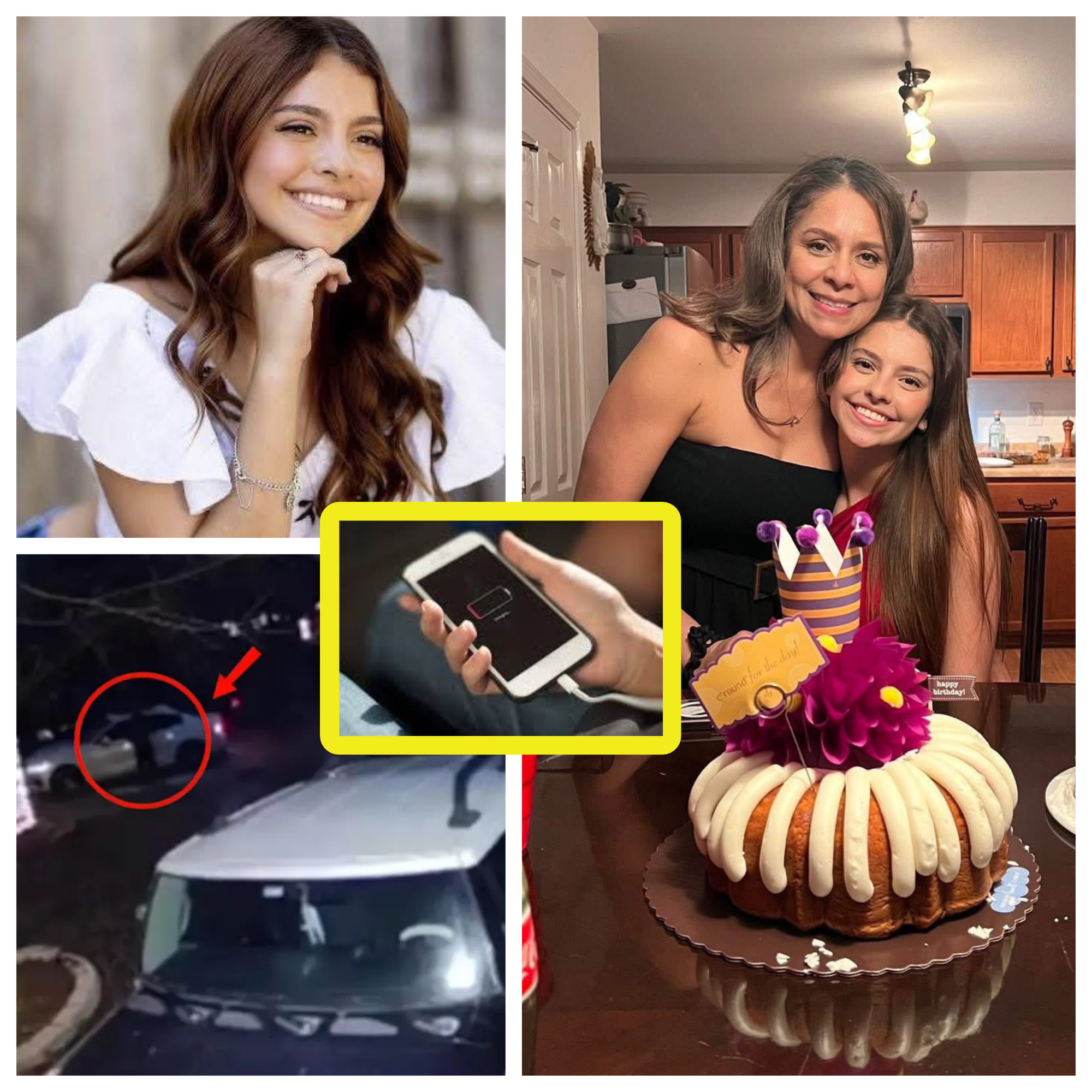
In the tragic case of 19-year-old Camila Mendoza Olmos, who vanished from her northwest Bexar County home on Christmas Eve 2025, a puzzling detail has emerged from her mother’s account, raising eyebrows among investigators and online sleuths alike. Rosario Olmos recounted discovering her daughter’s phone on the bed, uncharged and turned off, prompting her to plug it in herself. Yet, in the midst of the frantic search, suggestions surfaced that Camila might have stepped out to hunt for her charger in the car—a theory that clashes with the timeline and leaves families and authorities grappling with unanswered questions. This apparent inconsistency has fueled speculation: If the phone was already home and mom charged it, why propose a charger quest as her reason for leaving?
Camila, a vibrant U.S. citizen with ties to Southern California, was last seen around 6:58 a.m. on December 24, dressed in a black North Face sweater with baby blue accents, matching shorts, and white shoes. She left without her phone or most belongings, taking only her car key despite leaving the vehicle behind. Dashcam footage captured a figure believed to be her walking along Wildhorse Parkway, a routine path, before she appeared to search her car for an unidentified item. Friends noted she always carried her phone on walks, making its absence unusual. Her mother, upon waking, tried calling but found the device dead on the bed. “I put it on the charger,” Rosario shared, her voice heavy with despair during interviews.
The family’s anguish deepened as days passed without leads. Described as outgoing and loving, Camila had recently ended a mutual romantic relationship but showed no overt signs of distress. Her father, Alfonso Mendoza, recalled her constant smiles and affection, while brother Carlos flew in to join over 100 volunteers scouring a three-mile radius. The Bexar County Sheriff’s Office classified her as in “imminent danger,” citing a history of depression and suicidal ideation, though no foul play was initially suspected. The FBI assisted with digital forensics, enhancing videos and probing potential federal angles, while Homeland Security checked borders and flights—ruling out ICE involvement.
As searches intensified, covering fields and woods with drones and K-9 units, the charger theory gained traction in community discussions. If Camila realized her phone was dead, perhaps she left it behind to fetch a spare from the car, only to vanish mid-task. But mom’s action of charging it herself complicates this: Did Camila know about an available charger at home? Or was the search for something else entirely? Online forums buzzed with theories, some suggesting the discrepancy hints at hidden stresses or overlooked clues in her final moments.
Tragically, on December 30, a body was discovered in tall grass near a landscaping company just yards from home, alongside a firearm missing from a relative. Sheriff Javier Salazar announced the find, emphasizing no foul play suspected pending autopsy results from the medical examiner. The CLEAR Alert was discontinued, shifting the narrative toward possible self-harm, though identification remains unconfirmed. Family members, devastated, held vigils and pleaded for information, with aunt Nancy Olmos vowing to turn every stone.
This case echoes broader concerns about mental health, urging awareness of resources like the 988 lifeline. Camila’s story, from a seemingly ordinary walk to a heartbreaking end, underscores vulnerabilities in everyday routines. As investigations wrap up, the phone charger puzzle lingers—a small detail amplifying the mystery of a young life cut short. Communities rally, but the “why” behind that final step outdoors may forever haunt those left behind.