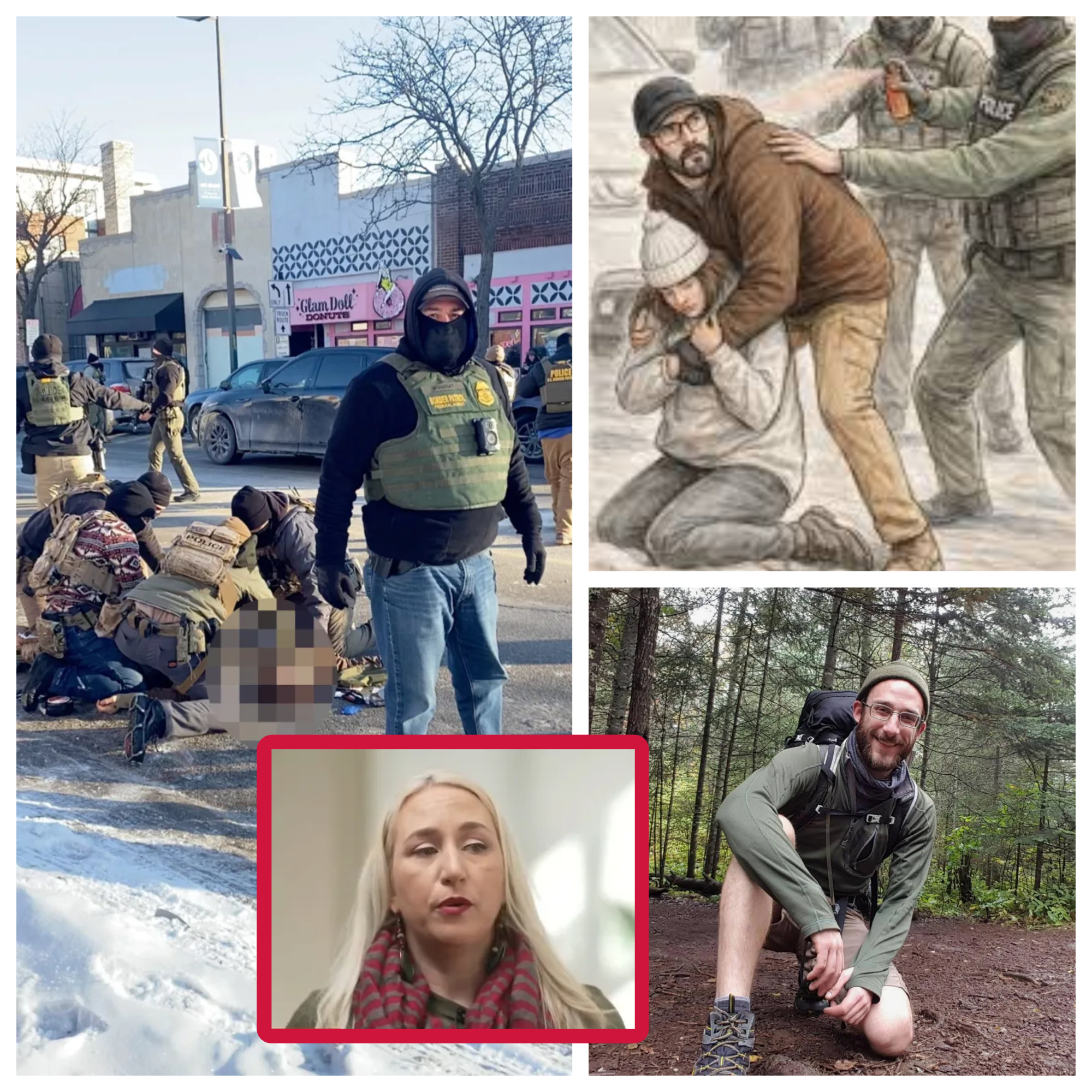
Stella Carlson never intended to become the central figure in one of the most scrutinized police shootings of recent years. On her way to paint children’s faces at a church event on a Saturday morning in late January 2026, the Minneapolis resident heard the familiar sound of whistles—a community signal warning of federal immigration agents in the area. What unfolded next on Nicollet Avenue would be captured on her phone, providing critical footage that has challenged the initial account from the Department of Homeland Security and its secretary, Kristi Noem.
Carlson, often referred to in early viral clips as the “pink coat lady,” spoke exclusively to CNN’s Anderson Cooper in her first public interview. She described pulling over, getting out of her car, and beginning to record when she saw what appeared to be a physical altercation in the street. Alex Pretti, a 37-year-old ICU nurse at the Minneapolis VA Health Care System, was directing traffic and interacting with bystanders amid protests against aggressive immigration enforcement tactics. Carlson’s decision to stay and film stemmed from a growing sense of civic duty after recent incidents, including the fatal shooting of Renee Good earlier that month by an ICE officer.
Her video, now widely circulated, shows Pretti holding only a cellphone in one hand as agents approached. Multiple angles from her footage and other bystanders reveal no instance where Pretti brandished or pointed a firearm. Instead, agents tackled him to the ground, pinning his arms. One officer reached into the scuffle and emerged with Pretti’s legally carried concealed pistol—removed from its holster after he was already restrained. Seconds later, agents opened fire, with shots appearing to strike Pretti in the back and elsewhere as he lay face down. Carlson described watching Pretti arch his back and his head roll back in the moments before death, noting how quickly the scene escalated despite Pretti’s lack of visible resistance.
The footage directly contradicts statements made by Homeland Security Secretary Kristi Noem in the immediate aftermath. Noem described Pretti as having “attacked” officers, “brandishing” a weapon, and posing an imminent threat that justified lethal force in self-defense. She labeled the incident an act of “domestic terrorism” and suggested Pretti resisted disarmament violently. Carlson’s recording shows no such actions: Pretti never drew his gun, and it was secured by an agent before any shots were fired. She emphasized she was unaware Pretti was armed until after the shooting, adding that she would not have approached so closely had she known.
Carlson’s account aligns with other emerging evidence. Additional bystander videos and body camera footage obtained by various outlets show similar sequences: Pretti on the ground, restrained, with agents yelling “gun” only after one removed the weapon from his possession. A preliminary internal review by Customs and Border Protection, shared with lawmakers, omitted claims of Pretti attacking or brandishing, instead noting resistance during arrest and agents firing after perceiving a threat. Two federal officers discharged their service weapons, with reports indicating nearly two dozen rounds fired in total.
The discrepancy has fueled accusations of misleading statements from the administration. Carlson told Cooper she stayed to document because “leaving Alex by himself undocumented wasn’t an option.” She referenced the recent killing of Renee Good as a turning point for many in Minneapolis, where community members began carrying whistles and monitoring federal activity to protect vulnerable residents. “It could be any of us,” she said, reflecting on the risks of bearing witness in such volatile encounters.
In the days following the shooting, federal agents involved were placed on administrative leave, and calls for an independent investigation intensified. Carlson revealed she has not been contacted by federal authorities, including the FBI, despite her footage serving as key evidence. She now works with a legal team to handle inquiries and protect her safety amid intense public attention.
Pretti’s family has consistently maintained he was a compassionate caregiver who posed no threat. His parents described him as a “good man” dedicated to veterans and community support. Supporters point to his lack of criminal record, legal firearm permit, and role as a frontline health worker during crises. The video evidence has shifted public discourse, with many questioning the initial narrative pushed by Noem and other officials.
Carlson’s courage in filming and speaking out has drawn widespread praise. She has been compared to other citizen journalists whose footage exposed injustices, emphasizing the importance of ordinary people documenting encounters with law enforcement. Her pink jacket became a recognizable symbol in viral clips, drawing solidarity from those advocating for transparency and accountability.
The broader context involves escalating tensions over immigration enforcement in Minneapolis, with protests against tactics perceived as overly aggressive. Pretti’s death marked the second fatal shooting of a U.S. citizen by federal immigration officers in the city that month, heightening community fears and calls for reform.
As investigations continue, Carlson’s video stands as a pivotal piece of evidence. It challenges official claims, demands answers about the use of force, and underscores the power of bystander documentation in holding authorities accountable. For Carlson, the decision to record was instinctive: “We all have to be brave.” Her footage ensures Pretti’s final moments are not defined by conflicting statements but by what the lens captured—raising urgent questions about truth, justice, and the right to bear witness.