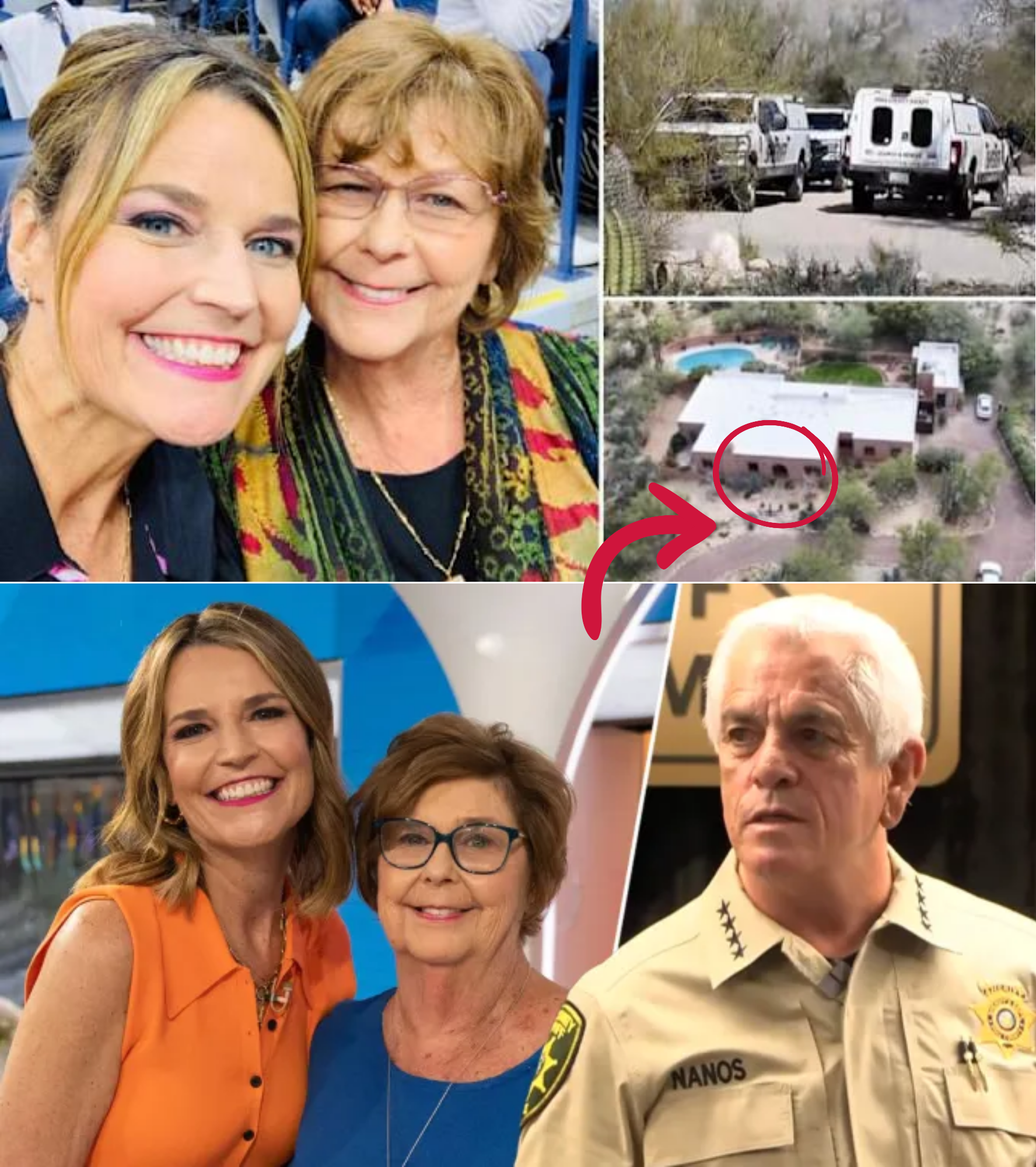
Nancy Guthrie’s abduction from her quiet Tucson home has thrust the Guthrie family into a vortex of fear and speculation, with one theory rising above the rest: that her daughter Savannah’s high-profile career as a “Today” show co-anchor may have drawn a deranged individual seeking notoriety or revenge. The 84-year-old vanished sometime between her drop-off around 9:30 p.m. on Saturday, January 31, 2026, and the discovery of her empty residence the following morning. Pima County Sheriff Chris Nanos classified the incident as a kidnapping early on, citing forced entry, traces of blood near the doorway, and evidence of a hasty removal. No major theft occurred, suggesting the motive wasn’t financial gain but something more personal—and possibly tied to Savannah’s public persona.
Savannah Guthrie, a household name for her incisive interviews and charismatic presence on NBC’s flagship morning show, has long navigated the double-edged sword of fame. Her role exposes her to millions, from political heavyweights to everyday viewers, fostering admiration but also attracting the unstable. In this case, experts and online sleuths alike posit that Nancy became a proxy target, the “softest spot” to strike at Savannah. Former FBI profiler Mary Ellen O’Toole, commenting on national news, explained how celebrities’ relatives often bear the brunt of parasocial obsessions: “When direct access to the star is impossible, attackers pivot to family members to maximize emotional devastation and force a response.” This aligns with patterns seen in other high-profile incidents, where stalkers or disgruntled fans escalate from online harassment to real-world harm.
The timeline underscores the calculated nature of the act. After dinner with Annie and her husband Tommaso Cioni, Nancy settled in for the night. Her pacemaker last synced with her Apple Watch at approximately 2:22 a.m. Sunday, pinpointing the moment she was likely carried out—still asleep, her watch left behind in the bedroom. The swift execution, with no reported noises alerting neighbors in the affluent Catalina Foothills neighborhood, points to premeditation. Dense mesquite bushes and sparse streetlights provided cover, allowing the intruder to slip away undetected. Nancy’s limited mobility and medical dependencies—heart medications she couldn’t go without—made her an easy mark, but also amplified the cruelty: without her pills, her condition could turn critical within days.
Ransom demands have only deepened the mystery, fueling the fame-connection theory. Multiple notes surfaced, unusually directed to media outlets like TMZ and local Tucson stations rather than the family. They demanded millions in Bitcoin, with some including unreleased details about Nancy’s pajamas or home layout—hints that could indicate genuine involvement or clever scavenging from news leaks. Sheriff Nanos confirmed the communications are under FBI scrutiny, with digital forensics tracing IP addresses and metadata. Yet the public dissemination smacks of a bid for attention: a perpetrator craving the spotlight Savannah commands, using the abduction to insert themselves into the narrative. “This isn’t standard kidnap protocol,” noted criminologist Dr. Scott Bonn on CNN. “Legitimate criminals avoid publicity to evade capture. This feels performative, like a twisted fan script.”
Savannah’s fame has indeed been a blessing in many ways—propelling her from legal correspondent to Emmy-winning anchor, interviewing presidents and celebrities, and amassing a devoted following. But it has its curses. Past reports detail her dealing with unwanted advances, including a 2024 incident where a viewer sent escalating letters, prompting enhanced security. While unconfirmed if linked, such episodes highlight the risks. Online forums on Reddit and X buzz with theories: Was this a jilted admirer seeking revenge for a perceived slight in an interview? Or a fame-seeker aiming to go viral through association? One viral thread on r/TrueCrime speculates the abductor monitored Savannah’s social media for family details, noting Nancy’s routine church visits as a vulnerability.
The family’s response has been heart-wrenching and unified. In a raw Instagram video posted February 4, Savannah, Annie, and brother Camron Guthrie appealed directly: “We need absolute proof that she is alive… We are ready to talk.” Savannah’s composure cracked as she begged for her mother’s medications, underscoring the human toll. “She’s our everything,” she said, tears streaming. The plea bypassed media, aiming straight at the captor, but it also humanized the story, countering cold speculation. Friends describe Nancy as a devout, resilient woman whose faith community held vigils, candles flickering in the desert night.
Investigators face mounting pressure. The FBI has bolstered the team with behavioral analysts and cyber experts, sifting through hundreds of tips via the 1-800-CALL-FBI line. Ground searches—drones scanning canyons, K-9 units sniffing trails, helicopters with thermal imaging—have combed the Sonoran Desert without yields, thwarted by rugged terrain and elusive leads. Digital forensics probe the missing Ring doorbell camera, smashed or removed to blind surveillance. No suspects named as of February 5, yet Nanos dismissed family involvement outright: “They’re cooperating fully; rumors are baseless.” This swift shutdown quells misinformation but raises questions—why protect so fiercely if not to refocus on external threats like a fame-driven stalker?
President Trump weighed in, pledging resources after a call with Savannah: “We’ll find her; no stone unturned.” The case’s national spotlight, ironically amplified by Savannah’s profile, aids awareness but complicates discretion. Parallels to cases like the 1981 Adam Walsh abduction or more recent celebrity family threats remind us fame’s glow casts long shadows. For the Guthries, it’s a curse manifesting in real-time horror.
As days tick by, Nancy’s absence grows dire. Her pacemaker, a lifeline, now a silent witness to the crime. The theory that Savannah’s stardom invited this—whether through obsession, revenge, or attention-seeking—gains traction absent other motives. No theft, no grudges evident; just a vulnerable elder snatched to wound a public figure. True crime podcasts dissect it, but for the family, it’s no story—it’s survival. Hope clings to tips, forensics, and faith. Until Nancy returns, the question lingers: Is fame a beacon or a bullseye? In this tragedy, it feels perilously like the latter.
News
The Black Bag in the Ravine: Chilling Discovery in the Death of American Airlines Flight Attendant Eric Gutierrez.
The tragic case of 32-year-old American Airlines flight attendant Eric Fernando Gutierrez Molina took an even darker turn as investigators in Colombia recovered a black bag linked to the missing…
The Secret Weekend Pattern: How the FBI’s Latest Breakthrough May Finally Trap Nancy Guthrie’s Abductor.
As March 2026 draws to a close, the disappearance of 84-year-old Nancy Guthrie from her home in Tucson’s Catalina Foothills has entered its 55th day with no arrest and no…
The Insider Who May Have Opened the Door: FBI Hunts for the Person Who Knew Nancy Guthrie’s Home Too Well.
In the affluent Catalina Foothills neighborhood of Tucson, Arizona, where residents often leave garage doors open and security feels routine, the abduction of 84-year-old Nancy Guthrie on the night of…
The Vacant House Perch: SWAT Commander Reveals How the Kidnapper Likely Staged Nancy Guthrie’s Abduction.
In the upscale Catalina Foothills of Tucson, Arizona, where million-dollar homes boast layered security and residents pride themselves on knowing every face and vehicle, the disappearance of 84-year-old Nancy Guthrie…
The Empty House Next Door: Chilling Clues FBI Uncovered in Nancy Guthrie’s Kidnapping.
In the exclusive Catalina Foothills neighborhood of Tucson, Arizona, where seven-figure mansions sit behind layered security gates and vigilant residents know every vehicle and routine, an unthinkable crime shattered the…
The Hidden Daughter Who Inherited the Entire Guthrie Ranch – The Will No One Saw Coming.
In the rugged hills near Billings, Montana, the Guthrie family ranch stood as a symbol of American grit for decades. What began as a modest 30-acre lease in the 1940s…
End of content
No more pages to load