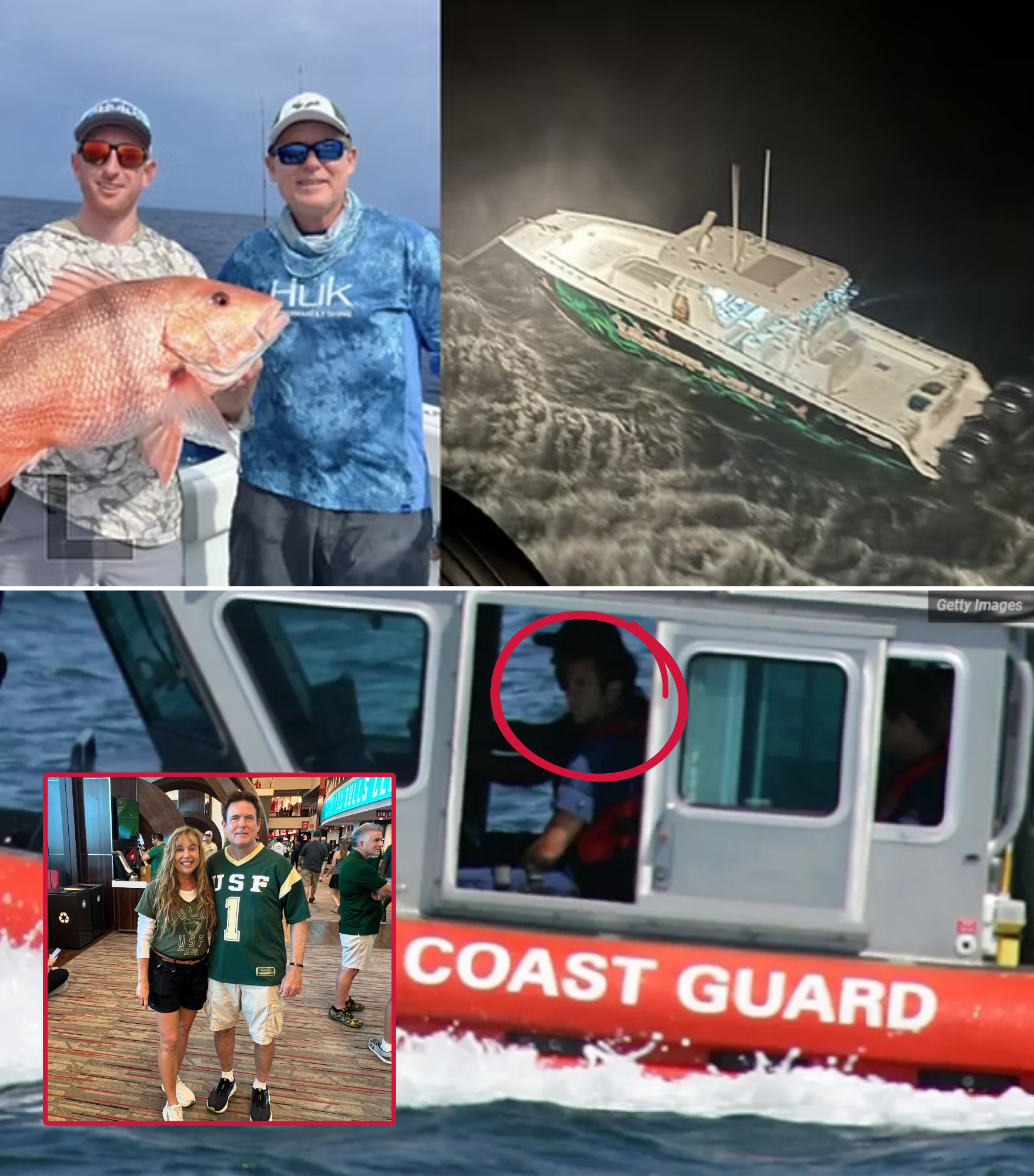
In a development that has added a layer of emotional complexity to an already baffling case, the son of missing Florida attorney Randall “Randy” Spivey has come forward with claims that his father exhibited unusual signs of mental and physical distress in the days leading up to his disappearance during a fishing trip in the Gulf of Mexico. The revelation, shared amid ongoing federal investigations, has prompted renewed scrutiny of the circumstances surrounding the incident, which also involved Spivey’s nephew, 33-year-old Brandon Billmaier.
The story began on December 19, 2025, when Spivey, 57, a well-known personal injury lawyer and founder of the Spivey Law Firm in Fort Myers, set out with Billmaier for what was intended to be a routine deep-sea fishing excursion. The two men, described by family and colleagues as experienced boaters and close relatives, departed from a private dock aboard Spivey’s 42-foot Freeman vessel, equipped for offshore adventures. Billmaier, who worked as a trial attorney at the Shiner Law Group in Boca Raton, had joined his uncle for the trip, which was expected to last the day. However, when they failed to return or respond to calls by evening, alarm bells rang.
Billmaier’s wife, Deborah, contacted authorities around 9 p.m., triggering a swift response from the U.S. Coast Guard. The following day, the boat was discovered adrift approximately 70 miles west of Fort Myers, with engines running, fishing gear in place, and no apparent damage. Two life jackets were notably absent, but there was no activation of the vessel’s emergency beacon or distress signals, raising immediate questions about what transpired. The Coast Guard launched an extensive search covering over 7,000 square miles, utilizing helicopters, cutters, and aircraft, while local agencies and volunteers assisted.
After three days of intensive efforts amid challenging sea conditions, the active search was suspended on December 22, 2025, with officials citing diminished survival probabilities due to factors like water temperature and currents. Capt. Corrie Sergent of the Coast Guard Sector St. Petersburg stated, “We’ve exhausted all available resources, and our thoughts are with the families.” The families expressed gratitude but continued private searches, with Spivey’s son, also named Randy, posting appeals on social media for boaters and pilots to remain vigilant. “My dad and my cousin are out there somewhere,” he wrote, emphasizing the family’s determination.
Jurisdiction shifted to the FBI on December 23, 2025, as the incident occurred in federal waters, transforming the case into a missing persons investigation with potential criminal undertones. Initial theories focused on accidental causes, such as a sudden wave or mechanical issue leading to the men going overboard. However, the lack of evidence for foul play—combined with the boat’s intact condition—left many questions unanswered. Online speculation proliferated, including unsubstantiated rumors linking Spivey to a past federal probe involving local law enforcement, though authorities have dismissed any connection.
The case took a poignant turn on December 30, 2025, when Spivey’s son broke his silence in a more detailed manner, revealing concerns about his father’s well-being prior to the trip. In statements shared through family channels and echoed on social media, the younger Randy described his father as displaying “unusual signs” that were out of character. He reportedly noted that Spivey appeared withdrawn, unusually quiet, and at times seemed “haunted,” as if burdened by an unseen weight. Specific complaints included insomnia, with Spivey mentioning difficulty sleeping, and moments where he would stare off into space for extended periods. The son also recalled comments from his father that, in retrospect, carried an “unnervingly final” tone.
“He wasn’t himself,” the son is quoted as saying in family discussions relayed to investigators. These observations have fueled speculation that mental health struggles or physical ailments may have played a role, potentially contributing to the events at sea. The family emphasized that Spivey was a seasoned boater with decades of experience, making a straightforward accident seem improbable. “Something was off,” the son added, suggesting that these changes were not merely stress from work but something deeper.
Mental health experts contacted for comment noted that such symptoms could indicate conditions like depression, anxiety, or even early signs of neurological issues, though without medical records, these remain hypothetical. Dr. Elena Vargas, a psychologist specializing in stress-related disorders, explained that high-pressure professions like law can exacerbate underlying problems. “Attorneys often deal with trauma through their clients’ cases, which can lead to burnout or more serious mental health challenges,” she said in a general discussion of similar cases. However, she cautioned against drawing conclusions without evidence.
The revelation has prompted the FBI to reassess aspects of the investigation, including reviewing Spivey’s recent medical history and personal communications. Sources close to the probe indicate that while no foul play has been confirmed, the possibility of intentional actions—such as a deliberate overboard incident—cannot be ruled out entirely. Family members have stressed that their intent in sharing these details is not to speculate but to provide context that might aid in understanding the tragedy. “We want answers, not assumptions,” a relative told reporters.
This disclosure comes amid broader discussions about mental health in the legal profession, where long hours and emotional tolls are common. Organizations like the Florida Bar have resources for attorneys facing such issues, but stigma often prevents seeking help. Spivey, known for his advocacy in accident cases, had built a reputation as a fighter for victims, but friends say the cumulative stress may have weighed heavily.
As of January 8, 2026, passive monitoring of Gulf currents continues, with a shirt believed to belong to Billmaier recovered on December 31, 2025, near the Dry Tortugas, providing partial closure but no bodies. The families remain in mourning, organizing memorials while urging the public to report any debris. Deborah Billmaier shared, “Knowing more doesn’t heal the pain, but it helps us remember them fully.”
Boating safety advocates are using the case to highlight risks, calling for better emergency protocols and mental health checks for offshore trips. One expert noted, “The sea is unforgiving, but so is ignoring internal struggles.” As the investigation evolves, this family revelation underscores the human element behind the mystery, reminding communities of the unseen battles many face.