Silent Warning: NTSB Reveals LaGuardia Runway Safety System Failed to Alert Controllers Before Deadly Fire Truck Collision.
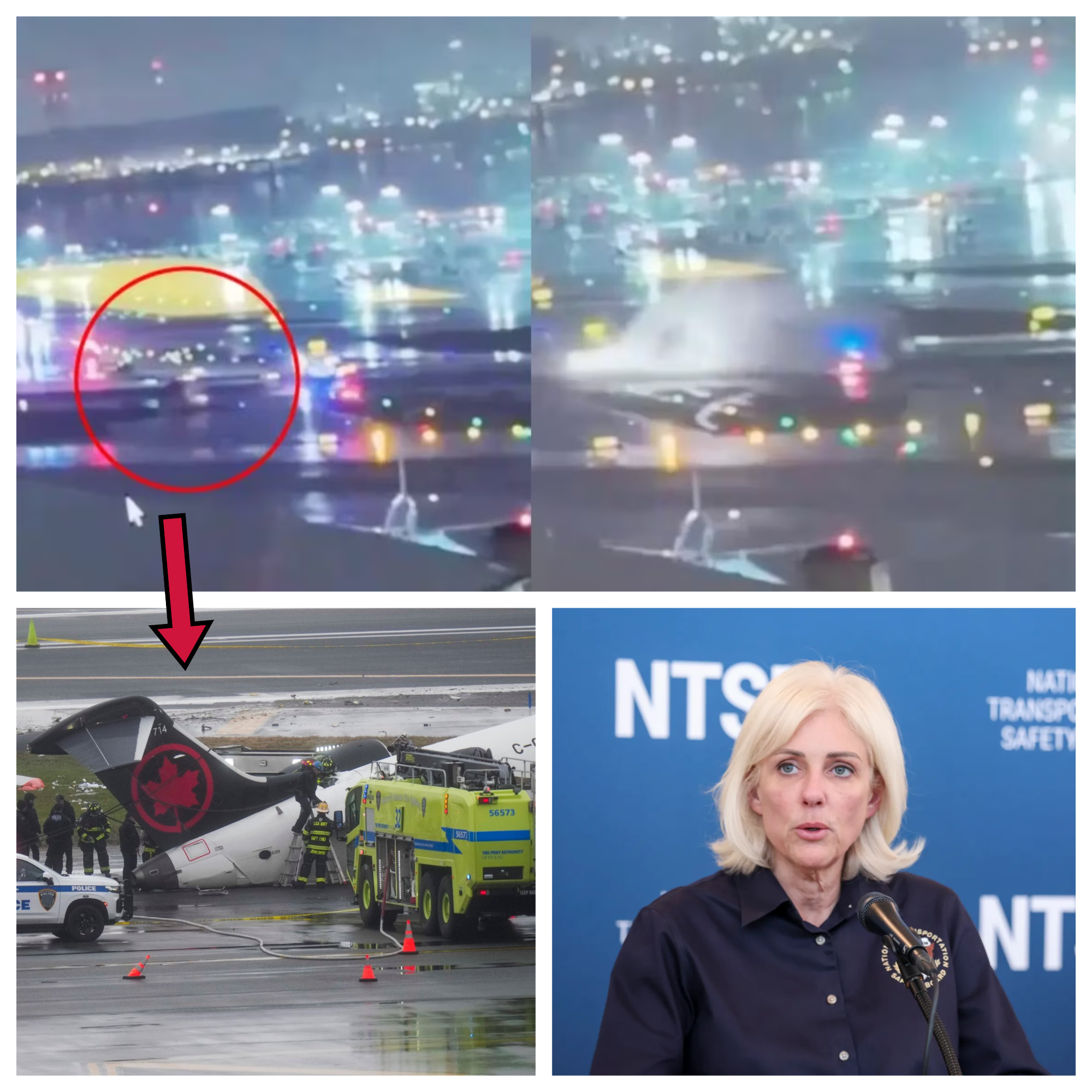
National Transportation Safety Board Chair Jennifer Homendy disclosed on March 24, 2026, that one of LaGuardia Airport’s primary runway safety systems did not alert air traffic controllers to the presence and movement of the Port Authority fire truck involved in the fatal collision with Air Canada Express Flight 8646 the previous night. The revelation adds a new layer of complexity to an already harrowing investigation into the runway incursion that claimed the lives of both pilots and injured dozens more.
The Bombardier CRJ-900, operating as Air Canada Express Flight 8646 from Montreal and flown by Jazz Aviation, touched down on Runway 4 shortly before midnight on March 22, 2026. Moments later, it slammed into the fire truck that had been cleared to cross the active runway while responding to a separate odor emergency aboard a United Airlines flight. Captain Antoine Forest and First Officer Mackenzie Gunther were killed instantly when the impact destroyed the cockpit section. Forty-one people, including passengers, crew, and firefighters, were hospitalized, though many were later released.
During a press conference at the crash site, Homendy confirmed that the airport’s surface movement detection system — designed to track aircraft and vehicles on the ground and issue automated warnings for potential conflicts — failed to generate an alert for controllers. She explained that the system relies heavily on transponders installed on vehicles to create reliable “tracks” with high confidence. The fire truck in question lacked such a transponder, unlike many similar emergency vehicles at other U.S. airports. Without it, the system could not reliably distinguish or track the truck amid other ground movements near the runway.
Homendy further detailed that analysis of the system’s performance showed it struggled due to “the close proximity of vehicles merging and unmerging near the runway, resulting in the inability to create a track of high confidence.” This technical limitation meant no visual or audible warning sounded in the control tower to highlight the dangerous overlap between the arriving jet and the crossing truck. Controllers only realized the peril in the final seconds, issuing frantic “stop” commands that came too late.
The NTSB chair emphasized that investigators are still piecing together the full sequence. They have recovered the cockpit voice recorder and flight data recorder by cutting a hole in the aircraft’s roof, though it remains unclear whether the recorders will yield usable data due to the severe damage to the front of the plane. Surveillance video from the airport has been reviewed, but interviews with the firefighters, controllers, and other personnel are ongoing. Homendy noted there were two controllers in the tower cab at the time: the local controller handling the runway and the controller-in-charge.
Questions also linger about whether the pilots saw the fire truck before impact. Preliminary analysis suggests the jet was traveling at reduced speed thanks to the pilots’ quick braking, but no definitive indication has emerged yet from the cockpit voice recorder review. The fire truck itself was responding to the United Airlines incident, and the same controller who cleared the truck for crossing had been managing that concurrent emergency, raising concerns about workload and distraction during the overnight shift.
LaGuardia’s runway safety infrastructure includes the ASDE-X (Airport Surface Detection Equipment, Model X), a ground radar system present at 35 major U.S. airports, including LaGuardia. It is intended to prevent precisely these kinds of runway incursions by providing controllers with real-time tracking and conflict alerts. However, experts have long warned that the system’s effectiveness depends on all vehicles being properly equipped with transponders or tags. The absence of one on this fire truck appears to have created a critical blind spot.
Homendy stressed that it is still “too early” to assign fault. The investigation remains broad, examining human factors, technology performance, emergency vehicle protocols, staffing levels, and potential fatigue. The runway where the collision occurred will stay closed for several days as teams sift through a “tremendous amount” of debris. Wreckage from both the mangled CRJ-900 and the overturned fire truck remains in place, complicating airport operations and causing ongoing flight cancellations and delays.
This tragedy marks the first fatal runway collision at LaGuardia in 34 years. It has reignited debates about runway safety in an era of high traffic volumes and aging infrastructure. Aviation advocates are calling for mandatory transponders on all emergency and ground vehicles at major airports, improved integration between tower systems and emergency response teams, and stricter protocols for allowing vehicles onto active runways during arrivals or departures.
For the families of the two Canadian pilots, the news brings little comfort. Forest and Gunther have been hailed as heroes for their final actions that likely prevented an even greater loss of life among the 72 passengers and four crew members. Survivors have described the sudden violent impact followed by rapid evacuation from the intact rear of the aircraft. One flight attendant, ejected while still strapped to her jump seat, survived after being thrown hundreds of feet down the runway.
Air Canada and Jazz Aviation expressed profound sorrow while cooperating fully with investigators. The Port Authority of New York and New Jersey, which operates LaGuardia, has also pledged transparency. Flights have resumed on the airport’s other runway, but the disruption continues to ripple through the Northeast air travel network.
As the NTSB digs deeper, Homendy and her team are expected to provide further updates in the coming days. Key questions remain: Why didn’t the fire truck have a transponder? Could better real-time communication between emergency responders and the tower have prevented the clearance? And how can similar silent failures be eliminated across the national airspace system?
The silent runway safety system at LaGuardia has now become a focal point in a tragedy that should never have happened. Technology meant to protect lives stayed quiet at the worst possible moment. While the full report may take months, the preliminary findings already underscore a sobering truth: even advanced warning systems are only as reliable as the equipment and procedures supporting them.
In the aftermath, the aviation community mourns two dedicated pilots and reflects on how a single undetected movement on a busy runway can end lives in an instant. The hope is that the lessons from this heartbreaking night — including the failure of a key alert system — will drive meaningful changes so that no controller, pilot, or passenger ever has to face such silence again.