In a stunning development that has breathed new life into a case many believed was destined for a tragic conclusion, divers investigating an underwater signal in the Gulf of Mexico have surfaced with no bodies discovered on the seabed. This revelation comes just weeks after the disappearance of Fort Myers attorney Randall “Randy” Spivey, 57, and his nephew Brandon Billmaier, 33, from Boca Raton, during a deep-sea fishing excursion on December 19, 2025. The U.S. Coast Guard, which had suspended its initial search on December 22, resumed operations following the detection of a mysterious pinging signal on January 14, 2026. As of January 15, after exhaustive dives, no human remains were located, ending what families described as a “nightmare fear” of recovering loved ones from the ocean floor. This twist has sparked renewed hope, rampant speculation, and calls for expanded searches, while highlighting the unpredictable nature of maritime mysteries in one of America’s busiest waterways.
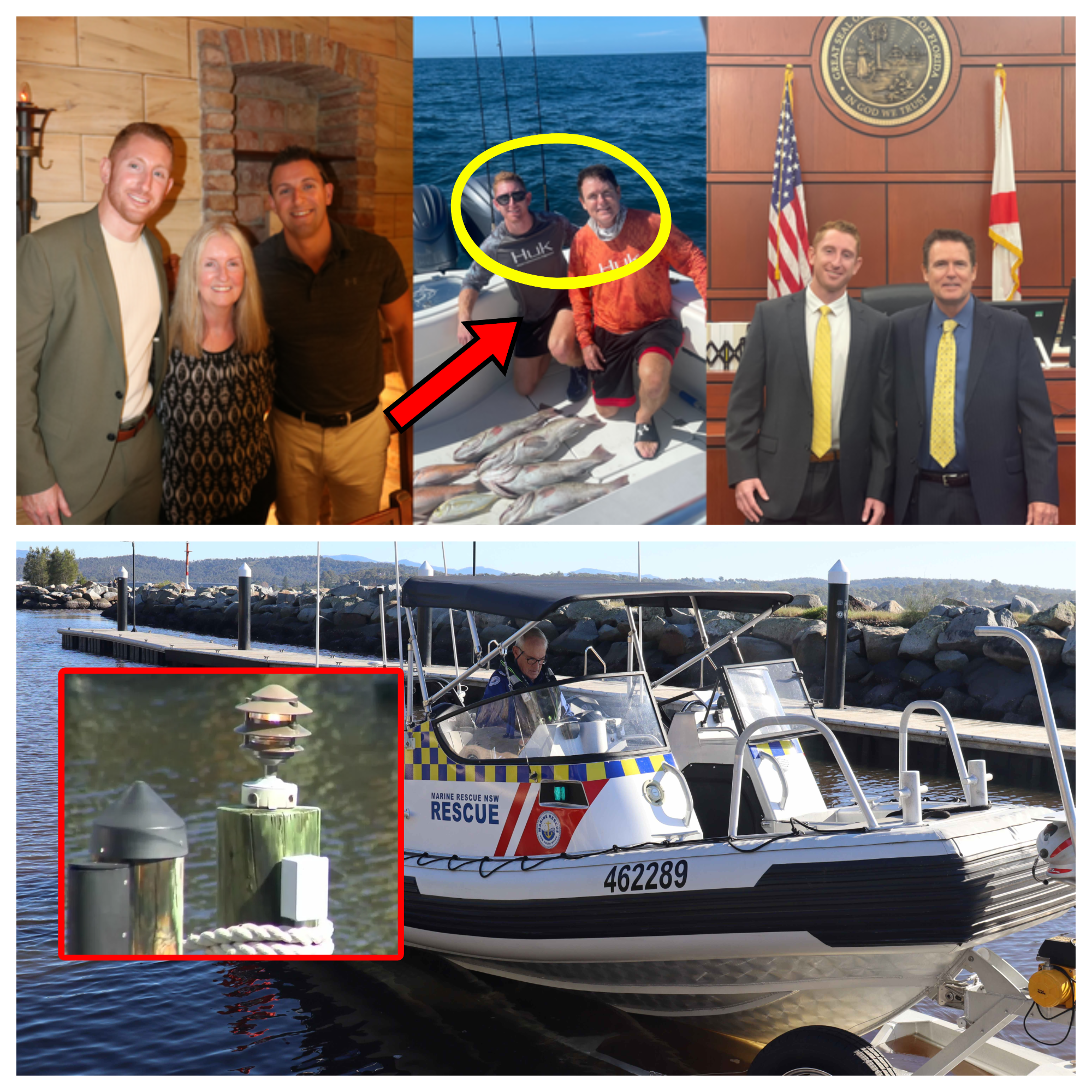
The ordeal began under clear skies on a Friday morning when Spivey and Billmaier launched from Fort Myers Beach aboard Spivey’s 42-foot Freeman catamaran, “Unstopp-A-Bull.” The vessel, equipped for offshore adventures, carried the duo—both avid fishermen and attorneys—approximately 100 miles into the Gulf, where they planned to reel in grouper and other species. Family members, accustomed to their routine returns, grew concerned when the pair failed to dock by sunset. By 9 p.m., alerts were issued, triggering an immediate response from Coast Guard Sector St. Petersburg.
Early the next morning, on December 20, a helicopter crew spotted the boat adrift 70 miles west of Naples. The scene was baffling: engines idling in gear, fishing lines extended, but no occupants. Two life jackets were absent, suggesting possible use in an emergency, while a third remained stowed. No distress beacon was triggered, and the boat showed no signs of damage or foul play. Towed back for analysis, it became the centerpiece of an investigation involving the Coast Guard, Lee County Sheriff’s Office, Florida Fish and Wildlife Conservation Commission (FWC), and eventually the FBI.
A grueling three-day search ensued, spanning over 6,700 square miles with aircraft, vessels, and drones. Despite favorable conditions initially, no traces emerged—no debris, no sightings. On December 22, the active search was halted, a decision Lt. Cmdr. Amy Harrison called “heartbreaking but necessary,” given survival probabilities in 68°F waters. Families were left in limbo, with Spivey’s wife Tricia and Billmaier’s wife Deborah issuing pleas for information. Vigils along the beach drew hundreds, and crowdfunding efforts surged past $250,000 for private searches.
As weeks dragged on, the case evolved into a full-scale probe. Theories abounded: accidental overboard falls, medical emergencies, or even piracy in the Gulf’s remote expanses. Spivey’s legal background—handling high-stakes personal injury cases at his Fort Myers firm—prompted whispers of professional enemies, though authorities found no evidence. Billmaier, a trial attorney at Shiner Law Group, was remembered as a family man whose last text to his wife read, “Fish are biting—love you!” Marine experts like Dr. Elena Ramirez from the University of Miami attributed potential drifts to the Loop Current, a swift eddy capable of carrying objects miles away.
Hope flickered on January 14 when acoustic equipment, deployed in a joint Coast Guard-NOAA operation, detected an intermittent signal from 200 feet below, 12 miles from the boat’s recovery site. Described as a “chilling ping” akin to a beacon, it galvanized action. By January 15, specialized divers from the Coast Guard’s Mobile Dive Locker plunged in, using remotely operated vehicles (ROVs) and saturation gear to navigate murky depths, strong currents, and limited visibility.
After hours of methodical exploration, teams reported no bodies on the seabed. “This is a significant development,” Capt. Mark Fedor announced at a Clearwater press briefing. “While we didn’t find what we feared, the absence opens doors to other possibilities.” The signal’s source was identified as a malfunctioning commercial buoy, unrelated to the boaters, but the thorough sweep ruled out the immediate area as a grave site. Families, gathered nearby, reacted with a mix of relief and renewed determination. “No bodies means no closure, but also no end,” Tricia Spivey told reporters, her voice steady despite tears. “This miracle from the depths gives us strength to keep searching.”
The announcement has ignited a firestorm of speculation. Social media platforms exploded with hashtags like #GulfMiracle and #SpiveyBillmaierAlive, where users theorize survival scenarios—perhaps the men reached a remote island or were picked up by a passing vessel. Conservative commentators on Fox News, including host Sean Hannity, praised the divers’ efforts while critiquing initial search suspensions: “This shows why we can’t give up on Americans lost at sea.” The New York Post splashed headlines like “Ocean’s Mercy: No Bodies in Boaters’ Abyss,” emphasizing the emotional rollercoaster for families.
Experts caution against over-optimism. “Absence of evidence isn’t evidence of absence,” Dr. Ramirez noted, explaining that bodies can sink, drift, or be scavenged by marine life. Survival at sea beyond days is rare, but precedents exist: In 2019, three men survived 11 days adrift off New Zealand. The Gulf’s vastness—over 600,000 square miles—complicates matters, with currents potentially dispersing remains far afield. Still, the lack of findings has prompted expanded efforts. Private sonar teams, funded by donations, are scanning wider radii, while the FBI reviews digital forensics from the boat’s GPS and phones.
Community response has been overwhelming. In Fort Myers, a “Hope on the Horizon” rally drew thousands, with speakers including Sheriff Carmine Marceno, who vowed continued support. “This twist changes everything,” he said. GoFundMe totals now exceed $400,000, aiding aerial surveys and family counseling. Billmaier’s sister, in a FOX 4 interview, shared, “Brandon’s a fighter; this news feels like a sign from above.”
The case underscores maritime safety gaps. The U.S. Coast Guard reports over 5,000 boating incidents annually, with 600+ fatalities in 2025 alone. Advocacy groups like BoatUS push for mandatory EPIRBs and float plans, noting that 80% of deaths involve non-life-jacket wearers. In Florida, where boating is a $23 billion industry, legislators are eyeing reforms, including enhanced tracking for offshore vessels.
Broader implications touch on mental health for families enduring uncertainty. Support organizations like the National Center for Missing & Exploited Adults offer resources, while psychologists warn of “ambiguous loss”—grief without resolution. For the Spiveys and Billmaiers, this twist alleviates the dread of seabed recovery but prolongs agony. “It’s a miracle we didn’t find them down there,” Deborah Billmaier posted on Facebook. “But where are they?”
As investigations pivot to land-based leads—possible sightings in Mexico or Cuba—the Gulf remains silent. If Spivey and Billmaier are alive, this undersea non-discovery could be the break needed. If not, it spares families one horror while inviting others. Authorities urge tips via the Coast Guard hotline, emphasizing that “every detail counts.” In this shocking twist, the ocean has yielded no bodies, but perhaps, just perhaps, it’s holding onto hope instead.