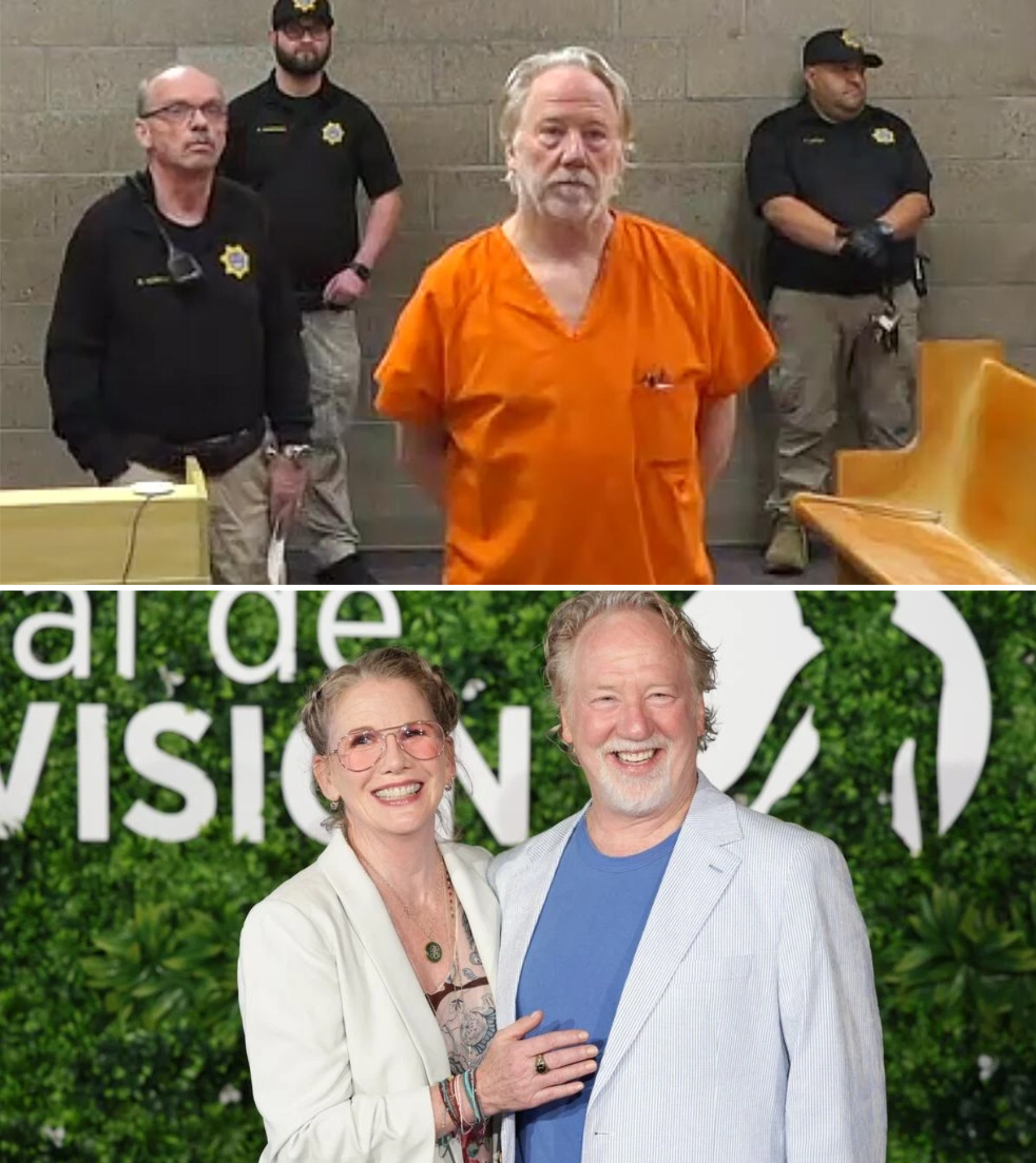
A dramatic twist has emerged in the high-profile child sex abuse case against Emmy-winning actor and director Timothy Busfield, best known for roles in “The West Wing,” “Field of Dreams,” and “Thirtysomething.” Newly released audio recordings from police interviews with his two young accusers reveal that the 11-year-old twin boys initially denied any inappropriate touching by Busfield, contradicting later allegations that form the basis of the criminal charges against him.
The accusations stem from Busfield’s time directing and producing episodes of the Fox crime drama “The Cleaning Lady,” filmed in Albuquerque, New Mexico. According to a criminal complaint filed by Albuquerque police, one of the boys—identified only by initials V.L. and S.L.—reported to a therapist that Busfield touched his penis and bottom over clothing on multiple occasions when he was 7 and 8 years old, spanning from November 2022 to spring 2024. The mother of the twins reported the claims to authorities after the therapist’s disclosure, prompting a 2024 investigation. The second boy allegedly told police he was also touched but did not specify where, explaining his silence as fear of getting in trouble.
Busfield, 68, surrendered to authorities on January 13, 2026, after an arrest warrant was issued days earlier. He faces two counts of criminal sexual contact of a minor and one count of child abuse. In his first court appearance on January 14, he was ordered held without bond pending further hearings, including a preliminary hearing set for January 29. Prosecutors cited flight risk and danger to the community, while additional allegations surfaced the same day he turned himself in: a father claimed Busfield sexually abused his then-16-year-old daughter years earlier during an audition at B Street Theatre in Sacramento, California—a venue Busfield co-founded with his brother but from which he has been disassociated since 2001.
The theater released a statement clarifying that the New Mexico allegations did not involve their organization, staff, or programs, and Busfield holds no current role there. Prosecutors referenced older, unprosecuted claims in filings seeking detention: a 1994 allegation of sexual assault against a 17-year-old extra on the set of “Little Big League” that ended in a private settlement (later dismissed after Busfield’s countersuit for defamation), and a 2012 sexual battery report at a Los Angeles movie theater involving a 28-year-old woman that did not lead to charges due to insufficient evidence.
The latest development centers on audio from November 2024 police interviews with the twins, first obtained and published by TMZ and referenced in New York Post reporting on January 19, 2026. In the recordings, officers questioned the boys about inappropriate contact. When asked if anyone could touch their private areas, the children affirmed understanding that no one should. Direct questions about Busfield yielded clear denials:
An officer asked if Busfield ever touched their private parts.
Both boys responded negatively.
One boy, S.L., stated, “But he didn’t touch that part.”
The other, V.L., added, “No, he’s never touched me.”
Busfield’s defense team presented the audio in court on January 19, describing the statements as “unequivocal denials” that undermine the prosecution’s case. Attorneys argued the recordings show an “absence of genuine evidence,” suggested the boys’ parents may have motives tied to their children being replaced on the series, and noted Busfield passed a polygraph test. They pushed for his release on bail ahead of a January 21 hearing to revisit detention status.
Prosecutors countered that the initial interviews reflected the boys’ failure to disclose abuse at that moment rather than outright refutation, possibly due to fear, grooming dynamics, or the power imbalance with Busfield as director. Child abuse experts often note that victims, especially young ones, may initially deny abuse out of shame, loyalty, confusion, or intimidation—particularly when the perpetrator holds authority. The later disclosure to the therapist, reportedly prompted by ongoing distress, formed the core of the complaint.
Busfield has vehemently denied all allegations. In a video statement to TMZ upon surrender, he called the claims “horrible lies” and vowed to fight them, insisting, “I did not do anything to those little boys.” During police questioning last fall, he acknowledged a playful set environment where he might have tickled the children but rejected any sexual intent, suggesting the mother’s accusations stemmed from resentment over her sons’ recasting.
The case has drawn intense media scrutiny given Busfield’s long career and marriage to actress Melissa Gilbert. Supporters point to his professional reputation and lack of prior convictions, while advocates for abuse survivors emphasize the challenges in prosecuting such cases involving minors, where delayed reporting and inconsistent initial statements are common. The emergence of the audio has fueled debate: defense views it as exculpatory evidence exposing fabrication or coaching, while others see it as consistent with trauma responses in child victims.
As proceedings continue in Bernalillo County Metropolitan Court, the bail hearing and preliminary examination loom large. Prosecutors must establish probable cause for the charges to proceed to trial, where the audio’s weight—and any expert testimony on child disclosure patterns—could prove pivotal. Additional allegations, including the B Street Theatre claim, may influence perceptions of pattern or character, though they remain uncharged.
For the twins and their family, the ordeal involves navigating trauma amid public exposure. The boys’ identities remain protected, underscoring efforts to shield child victims. Busfield remains in custody at the Metropolitan Detention Center, with his team arguing the evidence falls short of justifying pretrial detention.
This evolving case highlights broader issues in entertainment industry accountability, child protection on sets, and the complexities of prosecuting historical or delayed-abuse allegations. Whether the audio proves a game-changer or merely a snapshot of early confusion, it has injected fresh uncertainty into what was already a deeply troubling saga. As more details emerge, the pursuit of truth for all involved continues in the courtroom and beyond.