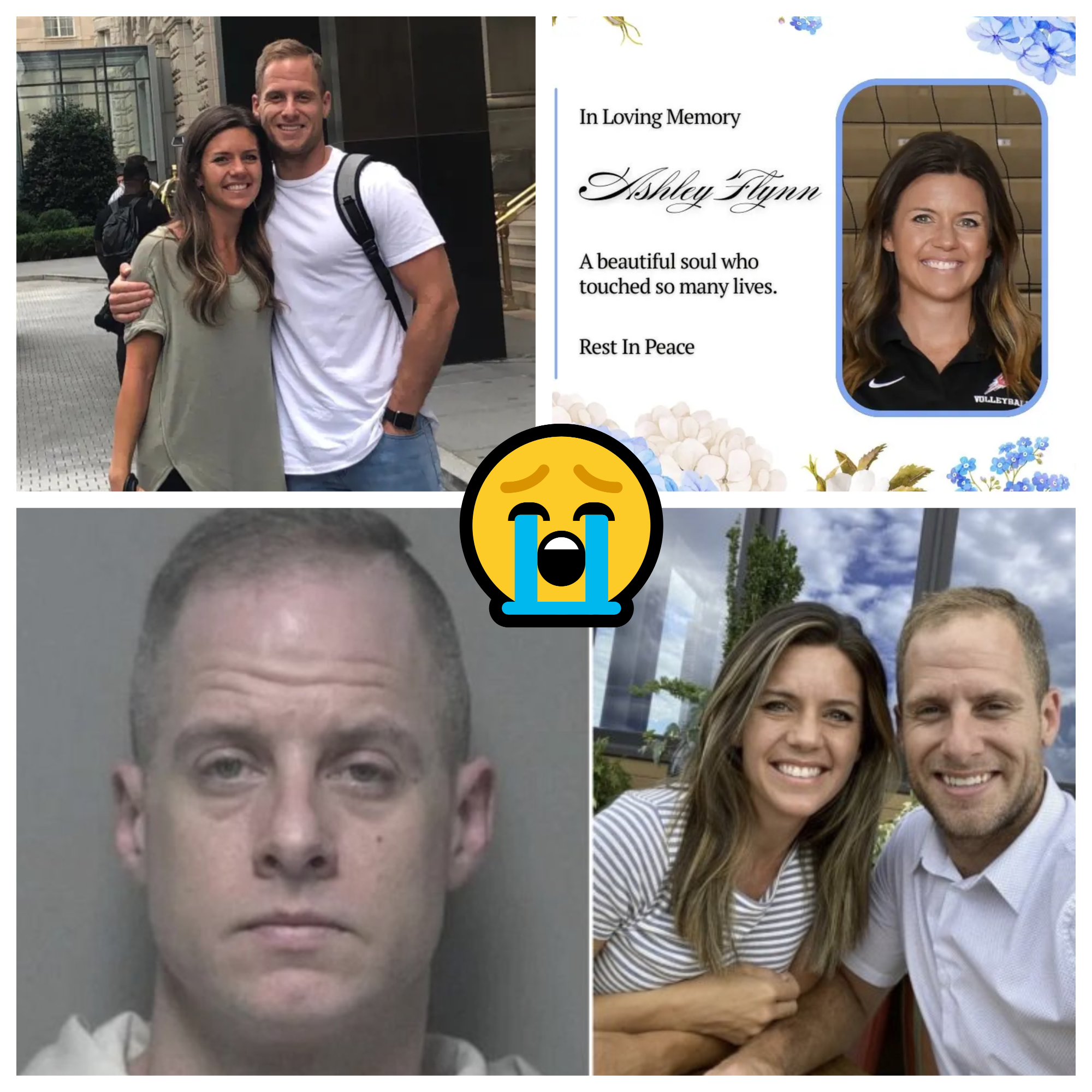
The release of raw 911 dispatch logs has cast new light on the final moments before 37-year-old Ashley Flynn was fatally shot in her Tipp City, Ohio home on February 16, 2026, revealing a husband’s desperate, breathless call as he discovered his wife unresponsive from a gunshot wound to the head. The audio—obtained by News Center 7 through a public records request—captures the chaotic early-morning response, transforming what police initially described as a possible burglary into what investigators now firmly classify as a targeted, premeditated killing.
At 2:31 a.m., Caleb Flynn’s call connected with Miami Valley Regional Dispatch. His voice is strained, words tumbling out in panic: “Someone broke into the house… I heard a gunshot… my wife—she’s shot in the head. She’s not responding. There’s blood everywhere.” The dispatcher, calm but urgent, asked clarifying questions while dispatching units: “Garage door is open… unknown if they’re still there… female shot in the head… not responding currently.” Within minutes, Tipp City police and medics arrived to find Ashley already deceased from a single, precise gunshot. Her husband and their two young children—sleeping in nearby bedrooms—were physically unharmed.
Chief Greg Adkins addressed the media February 19, confirming the investigation’s direction had shifted decisively: “This was not a random act of violence or a burglary gone wrong. The evidence overwhelmingly points to a targeted attack directed solely at Mrs. Flynn. The suspect had prior knowledge of the residence and displayed intent to kill her specifically while deliberately sparing other occupants.” Authorities cited several factors: no items stolen, minimal disturbance beyond the entry path, the execution-style wound with no defensive marks, and most critically—signs the home had been under surveillance for at least two weeks.
Neighborhood residents reported an unfamiliar dark sedan lingering on the street or circling the cul-de-sac on multiple nights. Footprints appeared in mulch beds beneath rear windows—prints too large for family members. One neighbor recalled a figure standing near the property line around 11 p.m. one evening the week before the murder. Police believe these were deliberate reconnaissance efforts to establish routines: when lights went out, when the garage opened, when the family dog was let outside. The precision of the attack—striking when Ashley was momentarily alone while her husband and children slept—further supports pre-planning.
Flynn was a cherished figure in Tipp City Schools. After years as a full-time teacher, she transitioned to substitute teaching while coaching seventh-grade volleyball at Tippecanoe Middle School. Colleagues described her as warm, encouraging, and deeply committed to students’ emotional as well as athletic growth. The district called her “a light whose impact will endure.” She was active in her church, volunteered at school events, and lived a faith-centered life with no known public conflicts or threats. Yet investigators are now scrutinizing her private sphere: past relationships, social media interactions, financial dealings, coaching-related tensions, or any perceived slights that may have festered into lethal obsession.
The decision to spare the family while eliminating only Ashley is a central puzzle. Behavioral analysts consulted by the multi-agency task force (including FBI and Ohio BCI) note this pattern often appears in revenge-motivated killings tied to personal betrayal, romantic rejection, professional sabotage, or perceived humiliation. The assailant’s knowledge of household dynamics—possibly recent illnesses affecting sleeping arrangements, or exact timing when Ashley might be briefly isolated—suggests either personal acquaintance or extensive prior observation.
The 911 call itself has become a haunting artifact. Caleb’s voice cracks with disbelief and terror as he tries to follow the dispatcher’s instructions: “I need to check if she’s breathing… oh God, there’s so much blood.” The dispatcher’s steady questions—“Is she conscious? Can you see the wound?”—contrast sharply with his rising panic. Within seconds of officers arriving, the scene was secured and medics pronounced Ashley dead. No signs indicated the intruder entered other bedrooms or attempted to harm additional occupants.
Tipp City, a small community north of Dayton with historically low violent crime, has been deeply shaken. Residents report heightened vigilance—porch lights left on all night, doors double-checked, children kept indoors after dark. Neighborhood watch groups expanded patrols; police increased evening visibility. Tipp City Schools brought in extra counselors; blue-and-white ribbons (school colors) appeared on fences, mailboxes, and vehicles as symbols of remembrance.
The case exposes suburban vulnerabilities. Prolonged surveillance often leaves subtle traces—unfamiliar vehicles, odd noises, misplaced items—dismissed until tragedy strikes. Authorities renewed pleas: report suspicious activity immediately and consider security upgrades (motion lights, cameras, smart doorbells). Mental health and domestic violence advocates note targeted attacks can mask deeper interpersonal conflicts, though no evidence currently points to domestic issues here.
As the investigation presses forward, detectives review digital records, witness statements, and potential grudges. No arrests have been announced; no suspect description released—indicating authorities are protecting leads. The FBI’s role focuses on behavioral profiling: constructing an offender portrait capable of patient stalking followed by a swift, surgical strike without collateral harm.
Ashley’s husband, Caleb Flynn, has requested privacy during mourning. Friends organized meal trains, childcare help, and a memorial fund in her name. Her legacy endures through students and athletes she coached—each carrying forward the encouragement she gave freely.
This is no longer a burglary story. It is the hunt for someone who watched a family’s life for weeks, waited for the perfect moment, and acted with chilling precision—all because of a grudge only they understand. In a town where safety once felt assured, trust has fractured. Candles burn on porches, ribbons flutter in the wind, and Tipp City waits—hoping the next update brings justice before fear settles permanently.