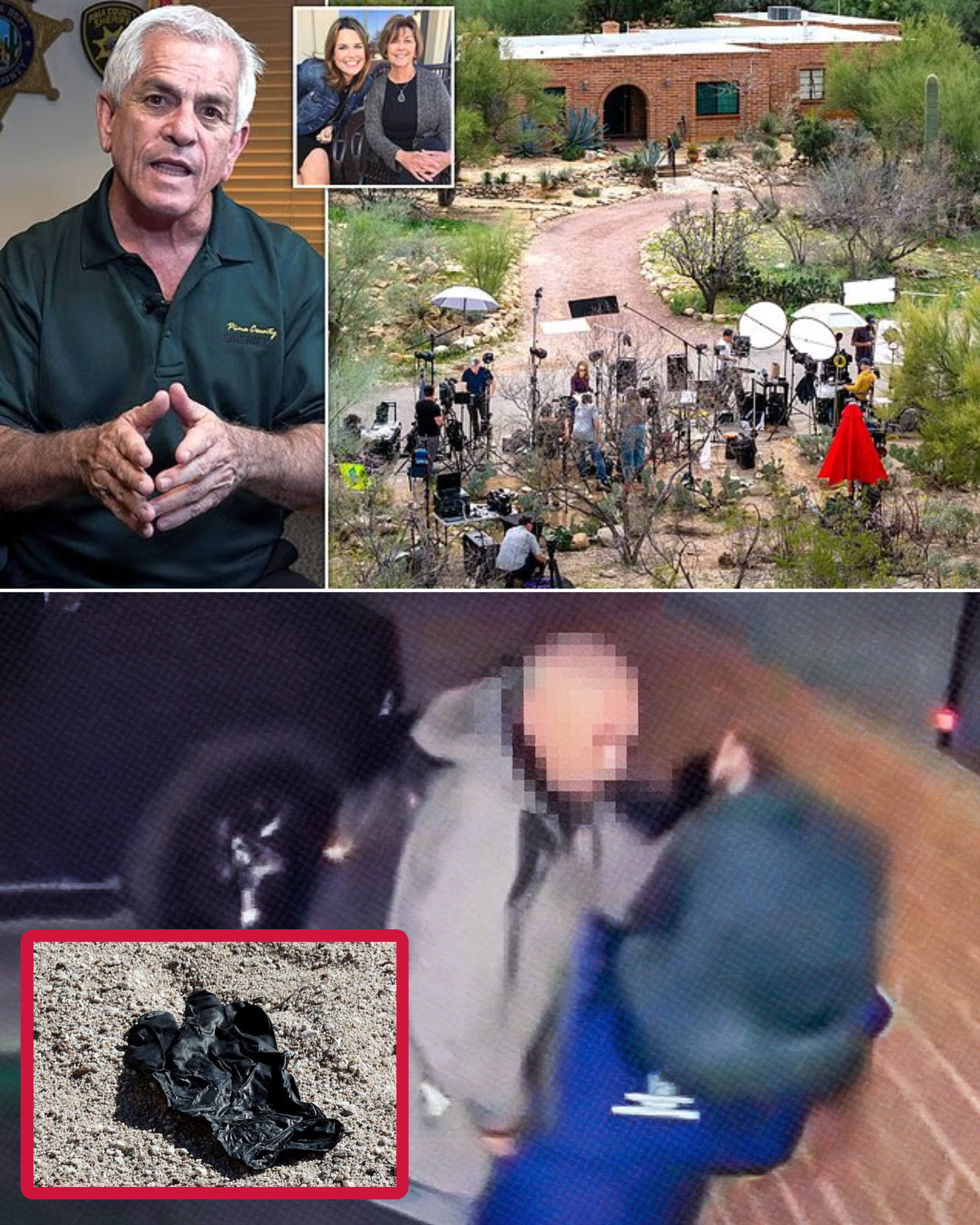
In a raw, unscripted press conference on February 18, 2026, Pima County Sheriff Chris Nanos did something almost unheard of for a law-enforcement leader in a high-profile active case: he publicly apologized for the shortcomings of his own investigation into the disappearance of 84-year-old Nancy Guthrie, describing it at times as “shambolic,” “too slow,” and “not good enough for a grandmother who needed us.” Yet in the same breath, he revealed what he called “the single most important piece of physical evidence we have recovered so far” — a potential smoking gun that investigators now believe could identify the kidnapper and lead to Nancy’s location.
Nancy Guthrie vanished from her Catalina Foothills home in Tucson between the late evening of January 31 and early morning of February 1. Family members had dropped her off after a gathering; she failed to attend church the next morning. A welfare check around noon on February 1 discovered blood on the front porch — later confirmed as hers through DNA — triggering an immediate kidnapping classification. FBI-enhanced footage from her Nest doorbell camera shows a masked male suspect, approximately 5’9″–5’10” with an average build, wearing dark clothing and black gloves, deliberately disabling the camera at 1:47 a.m. and disconnecting her pacemaker monitoring app at 2:28 a.m.
For nearly three weeks the case has drawn fierce criticism: delayed release of key video, slow turnaround on forensic items, conflicting public statements about detained individuals, and no confirmed sightings or verified ransom contact despite several Bitcoin-demand notes sent to media outlets. Frustration peaked after the February 13 SWAT operation near East Orange Grove Road — which saw a silver Range Rover towed and three people briefly detained and released — produced no arrests and minimal explanation.
Sheriff Nanos opened the press conference with an extraordinary admission. “I’m not going to stand here and sugarcoat it,” he said. “This investigation has had serious stumbles. Evidence sat too long in labs, inter-agency communication broke down more than once, and we didn’t move with the speed Nancy deserved. The public has every right to be upset — I’m upset. She is someone’s mother, someone’s grandmother, and we have not served her the way we should have. For that, I am sorry.”
He then pivoted to the breakthrough. On February 17, forensic examiners finished processing a small plastic evidence bag recovered from the same drainage wash where the incriminating black gloves were found 1.5 miles from Nancy’s residence. The bag — hastily discarded and lightly covered with loose soil — contained a blood-stained cloth fragment, believed to be torn from clothing or a towel. DNA testing confirmed one profile as Nancy Guthrie’s. Critically, a second male profile — previously unknown and not matching any elimination samples from the scene or family — was also present, deposited through direct contact (sweat, skin cells, or saliva).
“This is the smoking gun we’ve been searching for,” Nanos stated. “The second DNA profile gives us a direct genetic fingerprint of the person who handled this cloth during or immediately after the abduction. We are now running it against every available database, re-testing prior elimination samples, and preparing to compare it to any future suspect. This is the break we needed — and we should have moved faster to get it.”
The sheriff attributed the delay to an overwhelmed regional crime lab dealing with multiple major cases, compounded by the need for specialized mitochondrial DNA sequencing to cleanly separate the two profiles from the small sample. “That’s no excuse,” he added. “We own the timeline. We’re fixing it now.”
Nanos also addressed the silver Range Rover seized during the February 13 operation. While declining to name the registered owner or previously detained individuals, he confirmed the vehicle remains in evidence and is undergoing exhaustive forensic examination — including trace DNA sweeps, hair and fiber analysis, soil particulates, and interior vacuuming for biological material. Phone records, financial documents, and digital communications tied to the vehicle’s owner are under active scrutiny.
Nancy’s medical condition continues to make every hour critical. She relies on daily heart medications and a pacemaker; prolonged absence without access to care drastically reduces survival odds. Savannah Guthrie has refused to negotiate ransom demands without verifiable proof of life, repeatedly stating: “We will not play games with my mother’s life. If you have information — any information — come forward now.”
The sheriff renewed the FBI’s $100,000 reward for information leading to Nancy’s location or the arrest and conviction of those responsible, and promised more frequent public updates — even when there is no major news — to rebuild trust. He also appealed directly to the public: “If you saw something unusual in the Catalina Foothills between January 31 and February 1 — a vehicle, a person, anything — call us. No detail is too small.”
The press conference drew immediate reactions. Online communities expressed a mix of cautious optimism over the DNA breakthrough and lingering anger over earlier delays. Supporters of the Guthrie family praised the sheriff’s accountability, while critics questioned why such a potentially case-breaking item took over two weeks for full analysis. Forensic experts noted that dual-source DNA on a discarded item is among the strongest possible leads in a kidnapping without recovered remains or eyewitnesses.
For Savannah, Camron, and Annie Guthrie, the revelation offers fragile hope amid unrelenting grief. Each new development reopens the wound of waiting, yet also fuels determination. Camron has privately thanked the public for continued attention while pleading for only verified information.
As the investigation enters its third week, the blood-stained cloth and its unknown male DNA profile stand as the most direct physical link to Nancy’s abductor yet recovered. Whether it leads to an arrest, a rescue, or another dead end remains uncertain. What is clear is that time is running out — and a sheriff who once defended every step has now publicly admitted the case has been far from perfect, but insists the most critical piece of evidence is finally in hand.