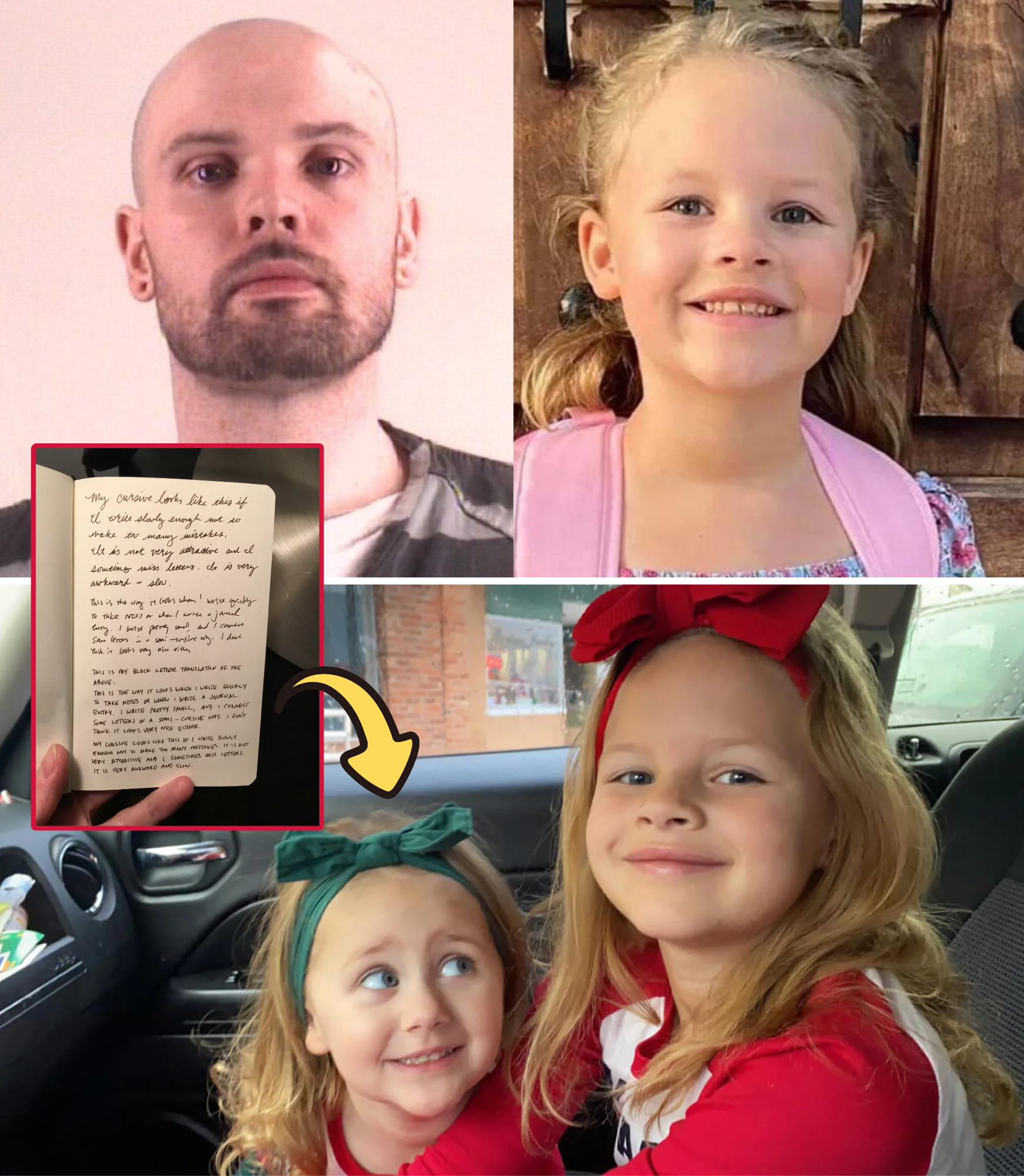
The abduction and murder of 7-year-old Athena Strand in November 2022 shocked the nation, leaving a family forever changed and a community demanding justice. What has emerged in the years since is a quiet, deeply moving act of love from Athena’s younger sister — a little girl who, even now, continues to write letters to her big sister every year.
Athena Strand was playing near her father’s home in Paradise, Texas, when former FedEx contract driver Tanner Horner arrived to deliver a Christmas package containing Barbie dolls intended for her. Instead of simply dropping off the gift, Horner allegedly abducted the bright, bubbly first-grader. He later confessed to kidnapping her, attempting to strangle her after she fought back, and ultimately killing her before disposing of her body. Horner pleaded guilty to capital murder and aggravated kidnapping, and his sentencing phase, which could result in the death penalty or life without parole, has brought the case back into the spotlight.
Amid the horror and courtroom proceedings, Athena’s mother, Maitlyn Gandy, has shared glimpses into the family’s ongoing grief. One of the most poignant revelations is how Athena’s little sister — one of her three younger siblings — has never stopped reaching out to the sister she lost. Every year since Athena was taken, the young girl sits down to write letters to “Sissy.” These annual letters represent a child’s way of keeping the bond alive, processing unimaginable loss, and refusing to let go of the big sister who loved her fiercely.
Gandy has spoken openly about the “firsts” the family faces without Athena: the first birthdays, the first Christmases, the first moments of silence where Athena’s laughter should be. She described Athena as her “first baby, my first true love,” a kind, intelligent, and happy child who adored drawing, animals, and the color pink. The little sister’s letters capture that same innocent love — messages filled with drawings, stories of daily life, and simple declarations of missing her big sister.
In the days immediately after Athena’s disappearance, the family was already witnessing the younger sister’s deep attachment. A heartbreaking video shared by Gandy showed the little girl sobbing uncontrollably, begging “Can I come with Sis, Mom?” because she hated being separated even for a short visit. That moment, captured before anyone knew the tragedy that would unfold, now feels prophetic. The annual letters are an extension of that bond — a ritual that helps the surviving sister navigate a world without her protector and playmate.
Athena’s former teacher, Lindsey Thompson, also testified about the impact on the school community. In the aftermath, Thompson and her husband set up a special mailbox so students could write letters and draw pictures for Athena as a way to process their emotions. Hundreds of letters poured in, showing how Athena touched many lives in her short time. For Athena’s little sister at home, that need to communicate never faded; it simply became a private yearly tradition.
The case itself remains raw. Horner initially claimed he accidentally struck Athena with his delivery van and panicked. He later admitted to a far more sinister sequence: abducting her, struggling to control her as she fought “with the strength of 100 men,” strangling her, and then “kind of tossing” her body in the woods. Interrogation videos shown in court have horrified jurors and the public alike. Athena’s stepmother, who first reported her missing after a minor argument, has also spoken of the lasting trauma, noting that one of the younger daughters still hides or has nightmares at the sight of delivery drivers.
Gandy has channeled her pain into advocacy. She has called for stricter screening of delivery drivers, pushed for the death penalty in Horner’s case, and vowed to keep Athena’s story alive so no other child suffers the same fate. “I want everyone to know Athena for Athena,” she said in early statements, “not what someone tried to make her out to be.” She dyed her hair pink in tribute and encouraged the community to hold their children tighter.
The little sister’s letters add a layer of profound tenderness to the tragedy. They remind us that grief for children is often expressed through simple, persistent acts of love — writing to someone who can no longer reply, yet whose presence is still felt. These annual messages likely include updates about school, favorite colors, new drawings, and quiet wishes that Sissy could come back. They are a testament to the unbreakable sibling bond and the way young hearts try to make sense of permanent loss.
Years later, as the trial continues and sentencing looms, the family’s healing remains incomplete. Athena’s sisters are growing up without their big sister’s guidance, laughter, and protection. The youngest ones were toddlers when she was taken; the one who writes the letters carries memories that are both precious and painful. Gandy has shared that the family faces ongoing “firsts” — milestones where Athena’s absence is felt most acutely.
This story highlights the ripple effects of violent crime on entire families, especially the youngest survivors. Child psychologists often note that siblings of murdered children may develop rituals like letter-writing as a healthy coping mechanism, a way to maintain connection and express emotions that words spoken aloud cannot capture. For Athena’s sister, each letter is both a goodbye and a promise: “I haven’t forgotten you.”
As the court weighs Horner’s fate, Athena’s memory lives on through her family’s strength and her little sister’s quiet dedication. Pink ribbons, community vigils, and now these private letters keep her spirit close. Gandy’s openness about the letters has touched countless people online, many of whom have shared their own stories of sibling loss or encouraged others to cherish family bonds.
In a world quick to move on from headlines, the image of a little girl carefully folding another letter to her murdered sister cuts through the noise. It speaks to resilience, love that death cannot erase, and the long road of healing after unimaginable trauma. Athena Strand was a “brightest, happiest soul” who loved life fully in her seven years. Her little sister’s yearly letters ensure that soul is never truly gone.
The family continues to face the legal battle and daily reminders of their loss. Yet in those handwritten pages, there is also hope — hope that one day the pain will soften, and the letters will feel more like celebration than sorrow. Until then, a little sister writes on, year after year, keeping her big sister’s memory alive in the most innocent and powerful way possible.
Athena would be proud of her. The world, reading these accounts, feels the weight of that love and the depth of that loss. May the letters bring comfort, and may justice bring some measure of peace to a family that has endured far too much.
News
Parents Break Silence After Family Pit Bull Kills 7-Month-Old Elizah Turner.
On the morning of April 9, 2025, in a home on the 3700 block of South Champion Avenue in south Columbus, Ohio, a routine day turned into every parent’s worst…
From Barbie Delivery to Heartbreak: How a 7-Year-Old’s Doorstep Encounter Led to a Capital Murder Trial That Shocked Texas.
On November 30, 2022, in the quiet small town of Paradise, Texas, 7-year-old Athena Strand was doing what any typical little girl might do on a crisp fall afternoon —…
SWAT Storms Annie Guthrie’s Backyard: Why Hostage Rescue Teams Won’t Leave in the Nancy Guthrie Investigation.
Armored vehicles rolled up. Tactical officers in full gear surrounded the property. Hours passed, and law enforcement showed no signs of leaving. In a dramatic new development in the disappearance…
Desert Drop Shocks Investigators: Brian Entin’s Chilling Find in Nancy Guthrie Case Points to Calculated Abduction.
In the vast, unforgiving Sonoran Desert near Tucson, Arizona, a single discovery has sent ripples through the ongoing investigation into the disappearance of 84-year-old Nancy Guthrie. Journalist Brian Entin, who…
FBI Makes Second Arrest in Nancy Guthrie Kidnapping: Tunnel Discovery and DNA Evidence Point to Coordinated Plot.
Federal agents executed a high-profile SWAT operation on April 10, 2026, detaining a second suspect in the disappearance of Nancy Guthrie — a convicted felon whose residence placed him in…
After the Verdict: How Ginny & Georgia Season 4 Turns Acquittal Into a New Kind of Hell for the Miller Family.
The courtroom doors swing shut. Georgia Miller walks free after being acquitted for the murder of Tom Fuller, but freedom has never felt more dangerous. Netflix’s addictive mother-daughter drama Ginny…
End of content
No more pages to load