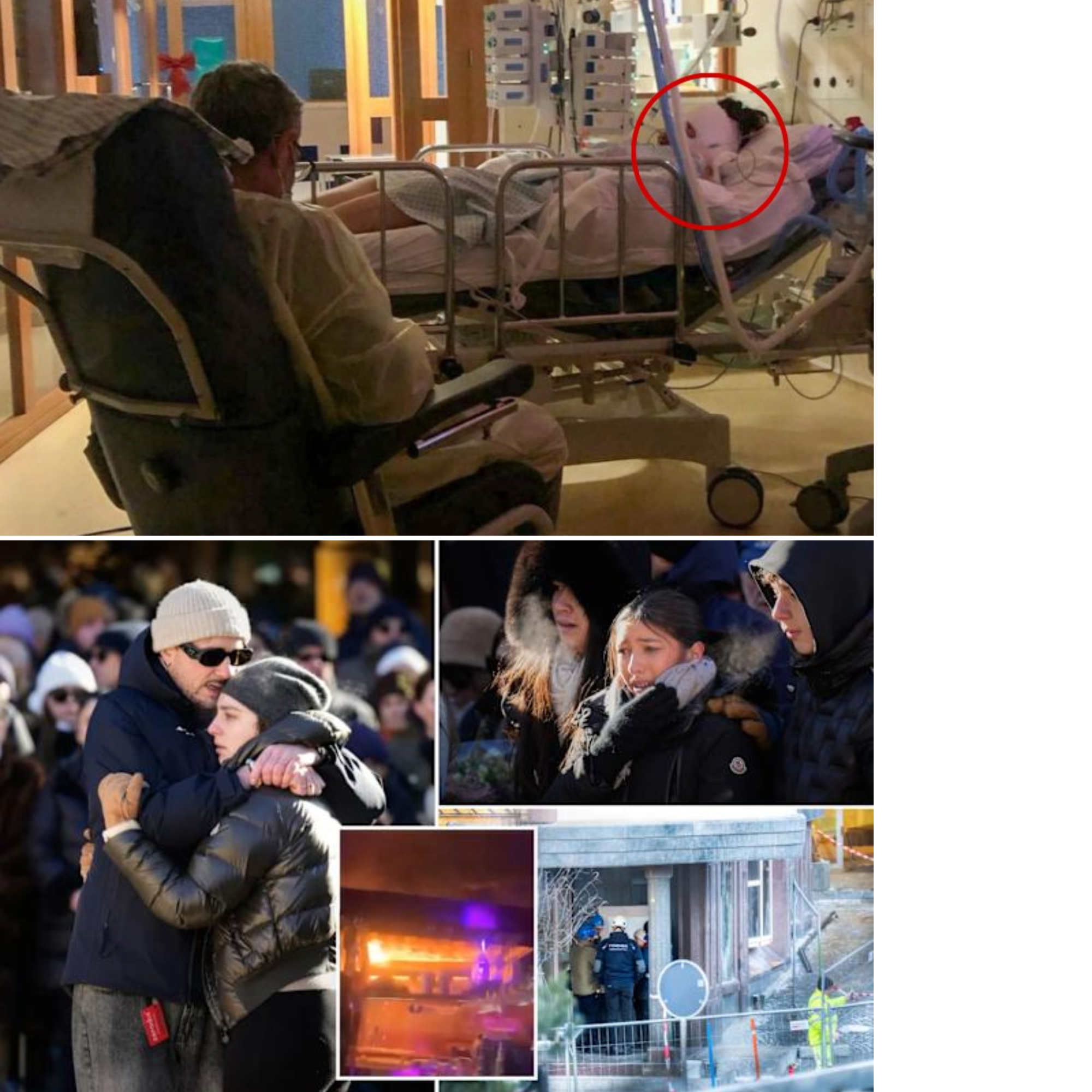
Roze, an 18-year-old from Switzerland, emerged as one of the most poignant symbols of courage amid the devastating New Year’s Eve fire at Le Constellation bar in Crans-Montana. On January 1, 2026, the upscale ski resort venue turned deadly when sparklers on champagne bottles ignited acoustic foam ceiling panels, triggering a rapid flashover that engulfed the crowded space in seconds. Forty young lives were lost, and over 116 suffered injuries, many with severe burns that overwhelmed regional hospitals.
Roze had been celebrating with friends when chaos erupted around 1:30 a.m. Witnesses described panic as patrons rushed narrow exits, bodies piling in bottlenecks amid thick black smoke and screaming. Roze reached safety outside but realized a close friend remained trapped inside. Without hesitation, she re-entered the inferno, driven by instinct to save them. The decision proved catastrophic: flames and heat inflicted devastating third-degree burns across her face, scalp, and hands—areas critical for identity, sensation, and daily function.
Rescuers pulled her out again, but the damage was extensive. Emergency teams stabilized her at a local facility before transferring her to a specialized burn unit in Belgium, where advanced care for severe thermal injuries is available. She arrived intubated and placed in a medically induced coma to manage pain, reduce metabolic demand, and prevent further complications like infection or organ failure. Doctors report her condition remains critical, with the next 72 hours—and indeed weeks—pivotal for survival. Third-degree burns destroy all skin layers, requiring grafts, intensive wound care, and long rehabilitation; recovery, if achieved, often spans months or years, involving multiple surgeries, physical therapy, and psychological support.
The fire’s origin—waitstaff waving bottles with sparklers overhead—has drawn intense scrutiny. Valais prosecutors charged bar co-owner Jacques Moretti with negligent homicide, bodily harm, and arson, citing a locked service door that trapped victims and flammable materials that accelerated spread. Investigations continue into age verification, crowd capacity, and prior inspections, as many victims were teenagers.
Roze’s story echoes other acts of heroism that night. A 19-year-old man re-entered twice to rescue friends, describing smoke so thick he “couldn’t breathe” and finding one victim so burned only teeth were visible. Another survivor recounted shielding friends while smashing windows for escape. These accounts highlight split-second choices amid terror, where bravery often came at immense personal cost.
Hospitals across Switzerland, France, Germany, Italy, and Belgium received transfers, with 83 suffering severe burns over large body areas. UZ Leuven in Belgium, a leading burn center, noted recovery for such injuries could take “months or years,” involving skin reconstruction, scar management, and emotional healing. Roze’s transfer there underscores the gravity of her wounds and hope in specialized treatment.
Community response has been overwhelming. Memorials in Crans-Montana and Martigny drew hundreds laying flowers, lighting candles, and sharing stories. Church bells rang in solemn tribute, while vigils honored the lost and prayed for survivors. Social media tributes to Roze surged, with hashtags like #PrayForRoze and #CransMontanaHero amplifying calls for support. Funds and messages pour in, recognizing her selflessness in risking everything for another.
Her act resonates deeply in a tragedy defined by youth and promise extinguished too soon. Half the victims were under 18, internationals among them, amplifying global grief. Families endured agonizing waits for identifications via DNA and forensics. Roze’s survival—fragile as it is—offers a thread of hope amid sorrow, a reminder that even in horror, human connection drives extraordinary sacrifice.
As she fights in induced coma, sedated to endure the pain of burns and procedures, medical teams monitor vital signs closely. Infections pose constant threats, while grafts and debridement loom. Long-term, she faces reconstructive challenges: facial burns may require multiple operations for function and appearance, hand injuries could impact dexterity, and scalp damage affects hair regrowth and sensation.
Roze’s story transcends statistics, embodying the best and worst of that night—selfless love confronting senseless loss. In Belgium’s burn unit, amid beeping monitors and careful hands, a young woman battles on, her courage etched in scars yet to heal. The world watches, prays, and remembers: one girl went back into flames for a friend, trading safety for solidarity in humanity’s darkest moments. Her fight continues, a beacon of bravery in tragedy’s shadow.