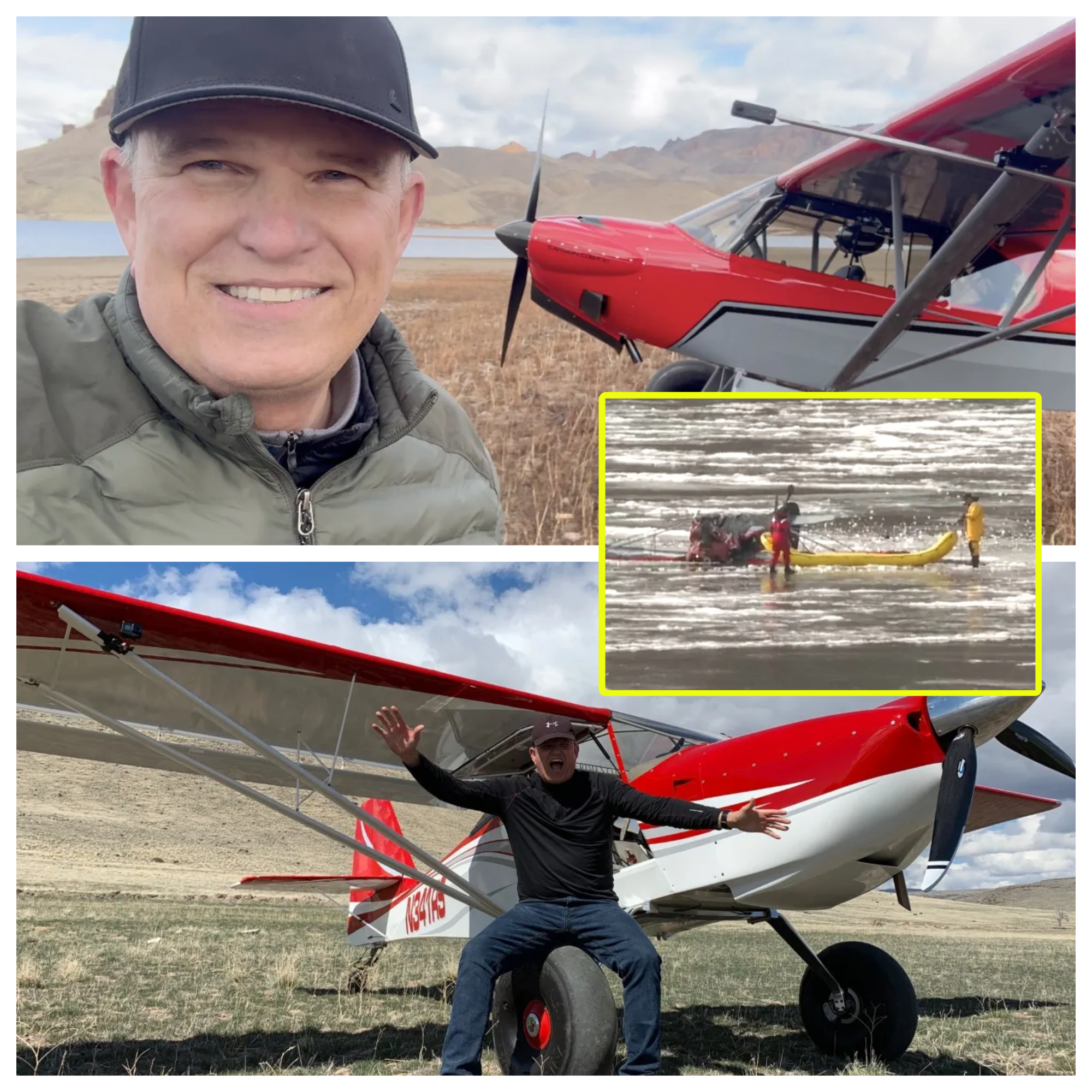
Roland Steadham, the charismatic television meteorologist who brought weather updates to living rooms across the region for more than two decades, was killed when the small plane he was piloting struck a high-voltage power line and crashed into the frigid waters of the Elk River on a cold January afternoon in 2026. The 58-year-old broadcaster, known for his calm demeanor during severe weather events and his genuine connection with viewers, was pronounced dead at the scene after emergency responders battled icy conditions to reach the wreckage.
The single-engine Cessna 172 took off from a small regional airport just outside Charleston, West Virginia, shortly after 2 p.m. on January 28. Federal Aviation Administration preliminary reports indicate Steadham was on a personal flight—likely a recreational or short cross-country trip—when the aircraft encountered difficulties approximately 12 miles from the departure point. Witnesses on the ground reported hearing a loud metallic snap followed by the sound of the engine cutting out. The plane then descended rapidly, clipping one of the thick cables strung across the river valley before plunging nose-first into the Elk River.
Water temperatures at the time hovered just above freezing, with air temperatures in the low 30s Fahrenheit (around 0°C). First responders from local fire departments, sheriff’s offices, and the West Virginia State Police arrived within minutes but faced immediate challenges. The current was swift, the riverbanks steep and slippery, and visibility was reduced by low clouds and light snow. Divers entered the water despite the dangerous conditions and located the submerged aircraft within 30 minutes. Steadham was found unresponsive inside the cockpit; efforts to revive him were unsuccessful.
Steadham had been a fixture on local news station WCHS-TV since the early 2000s, where he earned a reputation not just for accurate forecasting but for his approachable, down-to-earth style. Viewers often commented on his ability to explain complex weather systems in simple terms, his reassuring presence during hurricanes, tornado warnings, and winter storms, and his habit of sharing personal anecdotes that made him feel like a trusted neighbor. Colleagues remembered him as the first to arrive during overnight severe weather coverage and the last to leave, always checking on staff and offering encouragement.
Beyond the screen, Steadham was a licensed private pilot with over 1,200 hours of flight time. Friends said flying was his passion outside of work—he often took short hops to visit family or simply enjoy the view from above. He had completed his most recent flight review and medical certificate without issue, and the Cessna he was flying was registered to a local flying club of which he was a member. No mechanical problems had been reported prior to the flight, though investigators are examining maintenance logs, weather briefings, and any possible pilot error or environmental factors.
The National Transportation Safety Board (NTSB) and FAA launched a joint investigation immediately. Preliminary findings point to the power line strike as the primary cause of the crash. The lines, part of a regional grid crossing a narrow section of the river, are marked with orange balls for visibility from the air, but low visibility and possible spatial disorientation may have contributed. The aircraft sustained catastrophic damage upon impact with the cable, severing a wing and causing immediate loss of control. The river depth at the crash site—approximately 15–20 feet—combined with the swift current complicated recovery efforts.
Tributes poured in within hours of the news breaking. Current and former colleagues at WCHS-TV shared memories on social media, describing Steadham as a mentor, friend, and the heart of the weather team. Station management released a statement calling him “a beloved member of our family and our community,” noting that his forecasts had guided countless people through dangerous weather. Viewers flooded comment sections with stories of how his calm voice had eased their fears during storms, how he had personally responded to emails asking about school closures or travel safety, and how his smile brightened otherwise gloomy mornings.
Community leaders also weighed in. The mayor of Charleston issued a proclamation recognizing Steadham’s service, and local schools—many of which relied on his updates during winter weather—observed moments of silence. A makeshift memorial grew outside the television station, with flowers, handwritten notes, and small umbrellas placed by residents. Colleagues organized a blood drive in his honor, knowing Steadham had been a longtime donor.
The tragedy has renewed discussions about small-plane safety, particularly in regions with challenging terrain and overhead obstacles. Aviation experts note that wire strikes remain one of the leading causes of fatal general aviation accidents, often occurring during low-level flight in poor visibility. The incident also highlighted the risks pilots face when flying in winter conditions, even on seemingly routine trips.
Steadham is survived by his wife of 32 years, two adult children, and three grandchildren. His family released a brief statement thanking the community for their outpouring of support and asking for privacy as they grieve. Funeral arrangements are pending, with plans for a public memorial service to allow viewers and colleagues to pay their respects.
Roland Steadham’s death leaves a void in the newsroom and in the homes of thousands who welcomed him into their daily lives. He was more than a weatherman—he was a steady voice in uncertain times, a pilot who loved the sky, and a man who cared deeply about the people he served. As investigators piece together the final moments of his flight, the community continues to remember the warmth and reliability he brought to every forecast, and the quiet heroism of a life dedicated to informing and comforting others.
News
Driver Breaks Silence on Deep River Crash — Claims “Short Argument” with Rico Montes Caused the Truck to Flip.
The driver of the black pickup truck involved in the fatal Deep River crash has finally spoken publicly for the first time since the March 2026 incident that claimed the…
Phone Recovered from Deep River Still Trying to Send Final Location — The Last Desperate Act of Rodrigo “Rico” Montes.
In the early hours of March 23, 2026, 18-year-old high school senior Rodrigo “Rico” Montes made one final, heartbreaking attempt to reach his family. As police divers searched the murky…
“Mom, I’m Riding Home With a Friend, See You Soon” — The Final Text Before Rodrigo “Rico” Montes Was Found in the Overturned Truck in Deep River.
On a quiet Sunday night in March 2026, 18-year-old Rodrigo “Rico” Montes sent his mother a simple, reassuring text that would become the last words she ever received from her…
The Black Bag in the Ravine: Chilling Discovery in the Death of American Airlines Flight Attendant Eric Gutierrez.
The tragic case of 32-year-old American Airlines flight attendant Eric Fernando Gutierrez Molina took an even darker turn as investigators in Colombia recovered a black bag linked to the missing…
The Secret Weekend Pattern: How the FBI’s Latest Breakthrough May Finally Trap Nancy Guthrie’s Abductor.
As March 2026 draws to a close, the disappearance of 84-year-old Nancy Guthrie from her home in Tucson’s Catalina Foothills has entered its 55th day with no arrest and no…
The Insider Who May Have Opened the Door: FBI Hunts for the Person Who Knew Nancy Guthrie’s Home Too Well.
In the affluent Catalina Foothills neighborhood of Tucson, Arizona, where residents often leave garage doors open and security feels routine, the abduction of 84-year-old Nancy Guthrie on the night of…
End of content
No more pages to load