REPEATED WORDS: Inside the Desperate ATC Pleas That Failed to Save Lives at LaGuardia.
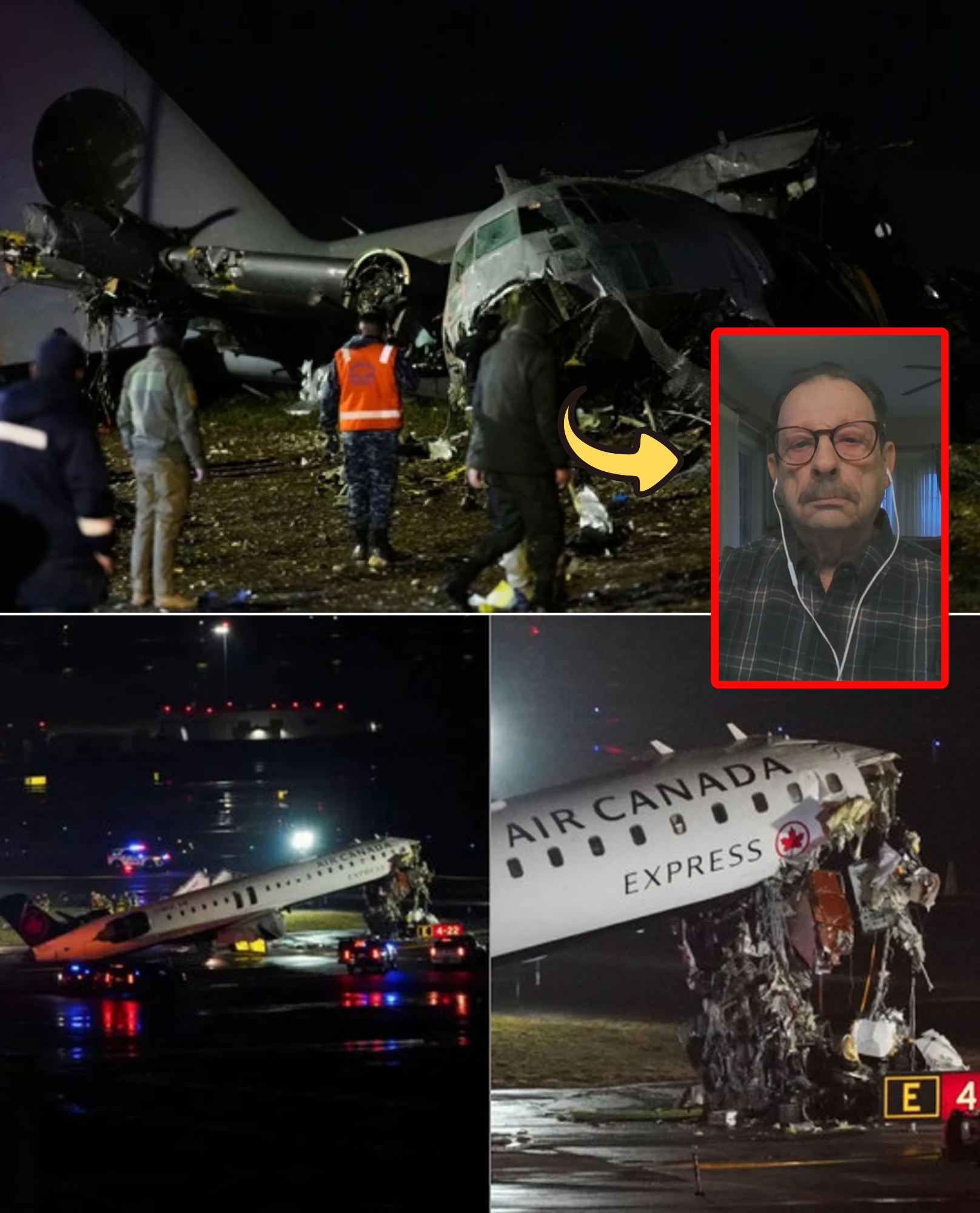
The air traffic control tape from LaGuardia Airport has become the defining sound of a tragedy that unfolded in mere seconds. Repeated cries of “Stop, stop, stop” – uttered at least a dozen times in rapid, escalating desperation – fill the recording as a controller tries in vain to halt a Port Authority fire truck crossing Runway 4 directly in the path of an incoming Air Canada Express CRJ-900. The words, raw and urgent, echo through the tower and now across the internet, capturing the exact instant when routine operations spiraled into irreversible disaster on the night of March 22, 2026.
Flight AC8646, a scheduled service from Montreal operated by Jazz Aviation for Air Canada Express, carried 76 souls—72 passengers and four crew. The aircraft touched down on Runway 4 shortly before midnight under clear skies and favorable winds. Nothing about the approach suggested danger until the final phase. Earlier that evening, a United Airlines flight had declared an in-flight emergency due to a persistent unusual odor in the cabin, triggering standard protocol: fire rescue vehicles were mobilized to meet the aircraft upon landing.
“Truck 1,” the designated fire engine, received clearance to cross the active Runway 4 at taxiway Delta to position itself for the United arrival. The instruction appeared routine in the moment. But as the Air Canada jet descended through final approach, the controller spotted the developing conflict. Panic flooded the frequency: “Stop, stop, stop, Truck 1, stop!” The command repeated frantically—”Stop, stop, stop, stop, Truck 1, stop”—layered over itself as the controller attempted to recall the vehicle. Additional urgent transmissions ordered nearby aircraft to hold or go around, but the window had already closed.
Radar and flight data show the jet crossing the threshold at approximately 140 knots before the catastrophic impact. The collision was violent and immediate: the cockpit structure disintegrated on contact, Engine 2 detached, landing gear components sheared away, and debris sprayed across hundreds of feet of pavement. Both pilots died instantly from massive blunt force trauma to the forward fuselage. Forty-one survivors among passengers and crew suffered injuries—broken bones, head trauma, deep cuts, and shock—while the two firefighters aboard the truck sustained serious but survivable wounds. Flight attendants executed a textbook rapid evacuation down slides, preventing further loss of life despite the aircraft’s mangled state.
The post-impact audio adds a layer of profound human sorrow. Roughly twenty minutes after the crash, amid the stunned silence of the tower dealing with the aftermath, one controller’s voice breaks through: “I messed up.” Another responds quietly, “Nah man, you did the best you could.” The exchange, brief and unscripted, reveals the crushing weight borne by those in the tower—individuals managing dozens of lives through voice alone in a high-pressure, multitasking environment.
LaGuardia’s layout has long been recognized as one of the most challenging in the National Airspace System. Hemmed in by Flushing Bay on one side and dense urban development on the other, the airport offers limited options for physically separating aircraft and ground vehicle movements. Surface Detection Equipment (ASDE-X) and Airport Surface Surveillance Capability provide visual and audible alerts, yet they rely on human interpretation and response. In this case, questions center on why the truck proceeded after initial clearance, whether the read-back was acknowledged clearly, and if workload—potentially a single controller handling multiple frequencies during a busy arrival window—contributed to the delayed recognition of the conflict.
The NTSB, FAA, Transport Canada, and Canadian Transportation Safety Board assembled swiftly at the scene. Flight data and cockpit voice recorders were recovered intact, tower tapes preserved, and radar tracks reconstructed. Investigators are examining every link in the chain: emergency vehicle movement protocols during active runway operations, real-time alerting effectiveness, controller staffing levels at the critical time, and possible fatigue or distraction factors common in late-night shifts. Runway incursion prevention remains a top priority on the NTSB Most Wanted List, yet fatal ground collisions, while rare, continue to expose gaps between technology and human performance.
Public fascination with the audio has been intense. Clips focusing on the repeated “stop stop stop” have circulated millions of times, often paired with captions emphasizing the helplessness in the controller’s voice. Listeners describe the sound as “gut-wrenching,” “haunting,” and “impossible to unhear.” The repetition—urgent, overlapping, increasingly strained—conveys a visceral sense of someone fighting against time itself, knowing seconds separate normalcy from catastrophe. Many online reactions express sympathy for the controller while demanding accountability and systemic change: mandatory automated stop-bar enforcement, stricter ground vehicle hold-short rules, and real-time conflict prediction software upgrades.
Air Canada Express and Jazz Aviation moved quickly to support those affected. Crisis response teams deployed to assist families of the deceased pilots, injured passengers, and crew. Both carriers reiterated unwavering commitment to safety and promised full transparency during the investigation. LaGuardia Airport remained closed for hours after the incident, with all operations suspended until debris clearance, runway inspections, and safety verification allowed partial reopening the following morning. Thousands of travelers faced cancellations and diversions, underscoring how one ground event can cascade through the entire Northeast corridor.
This collision joins a short but sobering list of fatal runway incursions in modern commercial aviation. Each has prompted incremental safety improvements—better signage, enhanced lighting, mandatory read-backs for critical clearances—yet the core challenge persists: coordinating dynamic, high-speed aircraft with slower-moving emergency vehicles on shared surfaces. The repeated cries of “stop” serve as a stark auditory monument to that enduring tension.
As facts emerge from wreckage analysis, simulator recreations, and human factors interviews, the industry will confront hard questions. Could voice-recognition alerts or AI-assisted conflict detection have intervened faster? Should emergency crossings require physical barriers or automated gate systems? How can tower workload be better distributed during peak or emergency periods? The answers will likely influence global procedures, from major hubs to regional fields.
For the moment, though, the sound remains the most powerful evidence. Those two words, shouted again and again into the night, carry the full weight of what was at stake: 76 lives hanging on precise communication and perfect timing. When that chain broke—even by seconds—the result was irreversible. The haunting loop of “stop stop stop” stands not just as a record of failure, but as a desperate, human plea that history will not let be forgotten.