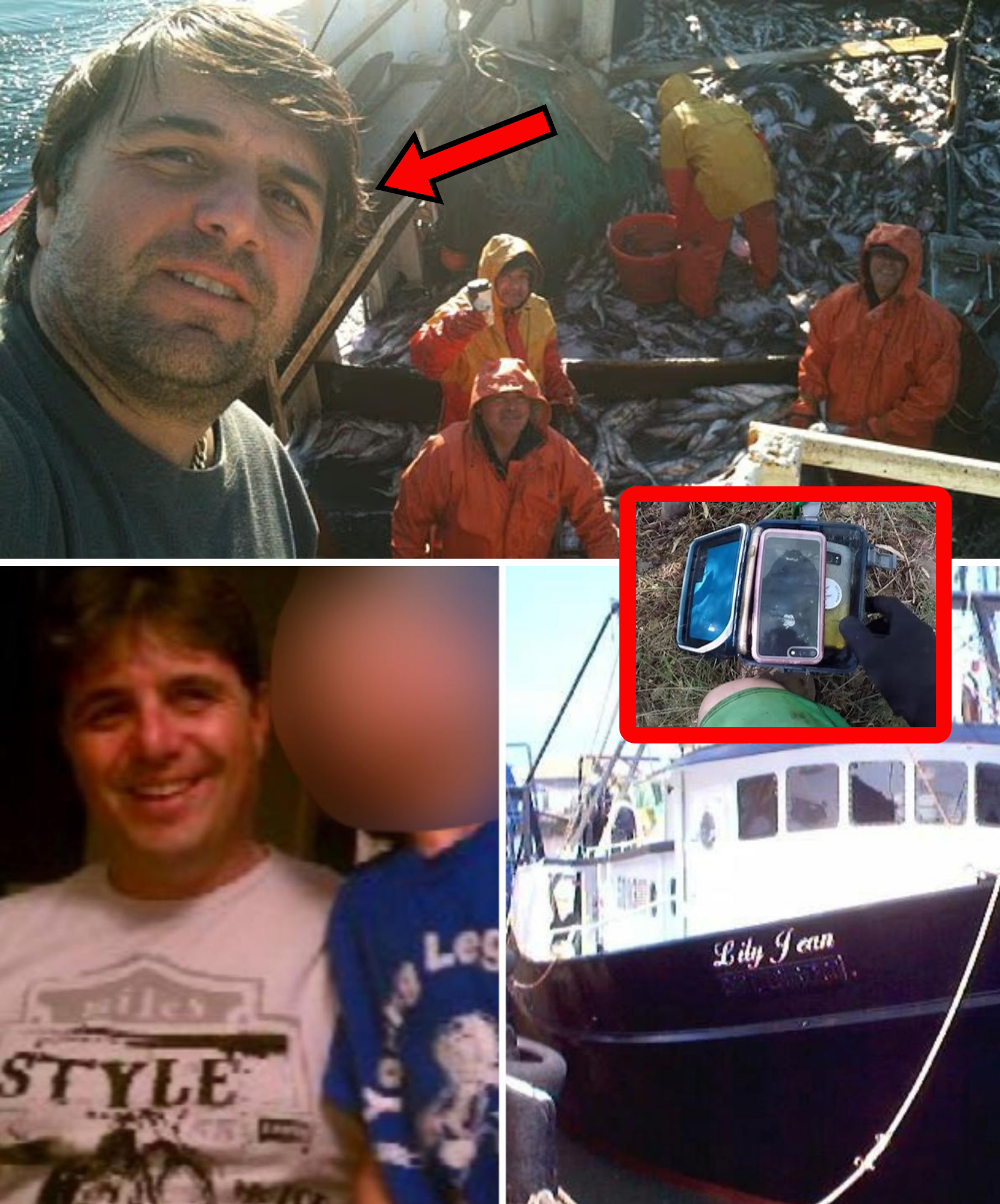
The fishing vessel Lily Jean sent its final automated distress signal at 6:50 a.m. on January 30, 2026, triggering one of the most heartbreaking maritime responses in recent New England history. The 72-foot groundfish trawler, heavily laden with catch and returning to Gloucester after a routine winter trip, vanished without a single voice transmission or mayday call. The emergency position-indicating radio beacon (EPIRB)—a device designed to activate upon submersion or manual trigger—pinged its last known location approximately 25 miles off Cape Ann, Massachusetts, in waters where air temperatures hovered near 6°F (-14°C) and sea temperatures around 40°F (4°C). That solitary ping became the radar’s eerie final warning, revealing a catastrophic event so rapid it left no time for the seven crew members to alert anyone.
Captain Accursio “Gus” Sanfilippo, a 55-year-old fifth-generation fisherman and former cast member on the History Channel’s 2012 “Nor’Easter Men” episode, commanded the vessel. Known for his steady hand, mentorship of younger deckhands, and deep roots in Gloucester’s fishing heritage—he had named the boat after his daughter Lily Jean—Sanfilippo was respected as a skilled skipper who prioritized safety amid brutal conditions. The crew included deckhands Paul Beal Sr. and his son Paul Beal Jr., John Paul Rousanidis (33), Freeman Short (31), Sean Therrien, and 22-year-old NOAA fisheries observer Jada Samitt from Virginia. The father-son duo added layers of personal devastation, as families grieved intertwined generations lost to the sea.
The EPIRB activation at 6:50 a.m. prompted immediate U.S. Coast Guard action. Watchstanders at Sector Boston received the automated alert and attempted radio contact with no response, leading to an urgent marine information broadcast. An MH-60 Jayhawk helicopter from Air Station Cape Cod, a small boat from Station Gloucester, and the cutter Thunder Bay were dispatched. Search teams located a debris field near the ping’s coordinates, an unoccupied life raft that had deployed automatically, and one body floating nearby. Despite covering over 1,047 square miles in 24 hours under punishing cold and icing conditions, no further survivors or remains were recovered. The search was suspended on January 31 after exhausting reasonable efforts, with all seven presumed lost to hypothermia in minutes without immersion protection.
The bizarre nature of the last ping lies in its suddenness and silence. No mayday call, no radar contact indicating distress maneuvers, no VHF transmission—only the beacon’s automatic cry for help when the vessel submerged or capsized. Investigators speculate a rapid, overwhelming event: possibly severe icing from freezing spray shifting the center of gravity on a fish-heavy boat, a rogue wave, or structural failure exacerbated by extreme cold. The Lily Jean was returning to port for gear repairs, not battling a historic storm, making the abrupt doom even more perplexing. Early theories point to spray-induced icing—a known hazard for New England trawlers—potentially accumulating fast enough to destabilize the loaded vessel without warning.
Rear Adm. Michael Platt of the Coast Guard’s Northeast District launched a formal investigation shortly after, examining vessel stability records, maintenance logs, weather data, and potential contributing factors like ice buildup or equipment issues. The absence of verbal distress signals suggests the crew had no opportunity to react—perhaps the event unfolded in seconds, trapping them below or overwhelming the deck instantly. The deployed but empty life raft indicates automatic release upon sinking, yet no one reached it amid the chaos and freezing spray.
This tragedy echoes Gloucester’s storied but sorrowful history, where thousands of fishermen’s names grace memorials for losses to the Atlantic’s indifference. Unlike “The Perfect Storm” or other gale-driven disasters, the Lily Jean’s end came quietly in routine conditions, amplifying the shock. Sanfilippo’s final known communication—a casual 3 a.m. phone call to friend Captain Sebastian Noto—complained of extreme cold freezing air vents and holes, with a half-joking “I quit. It’s too cold.” He sounded calm, not panicked, underscoring the unforeseen nature of what followed hours later.
Samitt’s presence highlighted risks to fisheries observers, young professionals gathering essential data for sustainable management. NOAA expressed profound sorrow, pausing deployments temporarily. Her family’s tribute emphasized her bravery and belief in protecting the seas—a role cut tragically short.
Gloucester responded with unity: vigils at the Fisherman’s Memorial and St. Ann’s Church, flowers accumulating under the bronze skipper statue, and fundraisers through Fishing Partnership Support Services and the Gloucester Fishing Community Preservation Fund (bolstered by Cape Ann Savings Bank’s contributions). Senator Bruce Tarr, a longtime acquaintance of Sanfilippo, called him a “good skipper” and harbor pillar, voicing the community’s struggle to comprehend the loss so close to shore. Governor Maura Healey mourned the “brave individuals” who fed families nationwide.
The investigation continues, likely spanning months without definitive answers—many sinkings leave mysteries due to no survivors or wreckage equivalents. Yet the EPIRB’s final ping stands as a haunting marker: the moment radar captured the Lily Jean’s sudden doom, a loaded boat almost home, swallowed by icy Atlantic hell in silence. It reminds the world of commercial fishing’s perils—one of America’s deadliest jobs—where even skilled captains and solid vessels can vanish without warning. In Gloucester, resilience endures, but the sea’s toll lingers, etched in memory and memorials forever.