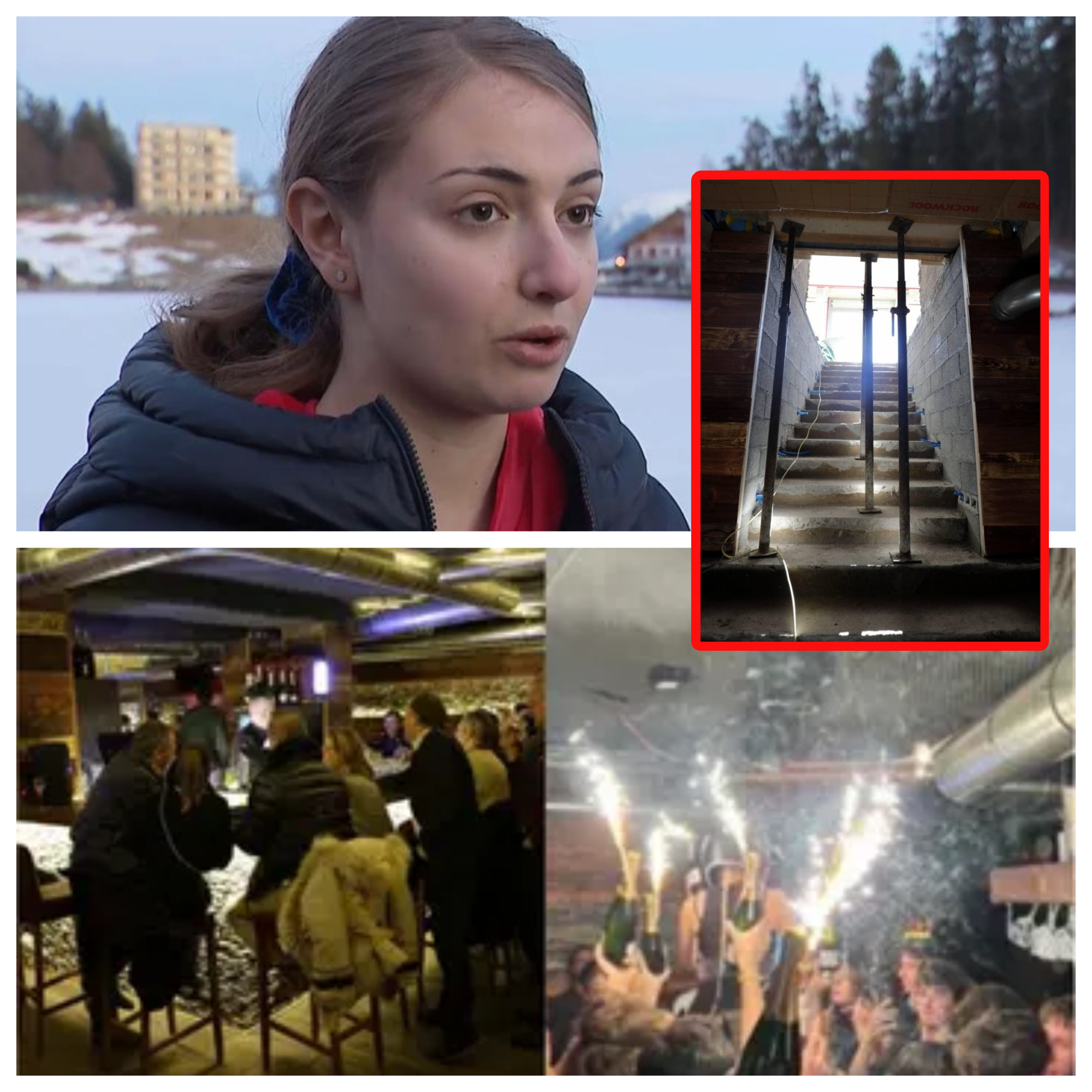
Laeticia Plass had come to Crans-Montana for a dream New Year’s escape—snow-covered peaks, luxury chalets, and a glittering party at Le Constellation, one of the Swiss Alps’ most exclusive après-ski venues. Instead, the night of January 1, 2026, became the defining trauma of her life. At 1:26 a.m., as champagne corks popped and sparklers lit up the ceiling, a spark ignited soundproofing foam overhead. Within seconds the blaze turned the packed bar into a death trap, claiming 41 lives—mostly young tourists and locals in their teens and twenties—and injuring 116 others.
Plass, 28, from Lyon, France, was standing near the rear wall when the first flicker appeared. “Everyone was laughing, raising bottles with sparklers attached,” she told RTS and swissinfo.ch in her first detailed interview. “Then I heard a crackle, like fireworks indoors. The next second the ceiling was on fire.” Black smoke billowed down instantly, so dense it blocked all light. “I couldn’t see my own hands,” she said. “My throat closed, eyes burned like acid. I started coughing uncontrollably.”
The crowd surged toward the main exit, a single wide door that quickly became jammed with bodies. Plass tried to push forward but was knocked down in the stampede. “People were climbing over each other,” she recalled. “I fell and felt feet on my back, my ribs. I thought I would be trampled to death.” The air grew hotter, the screams louder. She crawled, groping blindly, lungs screaming for oxygen.
Then a strong hand gripped her wrist. “A man’s voice shouted ‘Hold on!’ in French,” Plass said. “He pulled me up like I weighed nothing.” The stranger—tall, broad-shouldered, perhaps in his thirties—shielded her with his body as they fought through the crush toward a side corridor she hadn’t noticed before. “He kept saying ‘Don’t stop, keep moving.’ I could feel the heat on my face, hear things collapsing behind us.” At the narrow service door—unlocked but almost invisible in the smoke—he shoved her through first. “Go! Go!” he yelled, then turned back into the flames to grab someone else.
Plass stumbled into the snow outside, collapsing as fresh air hit her lungs. She coughed up black phlegm for minutes, shivering in her party dress. Paramedics found her moments later, treating her for severe smoke inhalation and minor burns to her arms and face. She was among the lucky ones. Inside, the fire spread so fast that many never reached any exit. Carbon monoxide and cyanide from burning plastics killed most victims before flames reached them. Firefighters arrived within minutes but struggled against the intensity; the blaze was under control only after several hours.
Investigators later determined the sparklers—illegal indoors under Swiss fire regulations—ignited acoustic foam that had not been properly fire-retarded. The venue, renovated in 2018, had passed inspections in 2019 but none since, despite legal requirements. A secondary exit had been blocked by stored furniture, and the main door’s panic bar failed under pressure, turning it into a choke point. Prosecutors charged owners Jacques Moretti and his wife with multiple counts of manslaughter by negligence, serious bodily harm by negligence, and negligent arson. Both were arrested, questioned, and released on bail pending trial.
The aftermath saw Switzerland declare five days of national mourning. Crans-Montana, usually synonymous with glamour and winter sports, became a place of grief. Makeshift memorials of candles and photos lined the streets until one caught fire on February 8—believed to be from unattended tribute flames—adding a haunting echo to the original disaster. The final death toll reached 41 when an 18-year-old succumbed to burns and lung damage in hospital.
Plass suffered psychologically as much as physically. Nightmares replay the darkness, the weight of bodies, the stranger’s voice fading into screams. She has since joined a survivors’ group pushing for nationwide reforms: mandatory annual fire inspections for entertainment venues, bans on indoor pyrotechnics, clearer exit signage, and staff training in crowd management and evacuation. “If one more person checks the foam, locks the doors properly, or trains the staff, maybe 41 families don’t lose someone,” she said.
She never learned the stranger’s name or fate. “I owe him my life,” Plass said quietly. “I hope he made it out. Every day I think about him going back in.” Her story has become a powerful symbol in Switzerland: one act of selfless courage amid unimaginable horror.
The Le Constellation fire exposed how quickly celebration can turn fatal when safety is neglected. For Plass, the scars—physical and emotional—will never fully fade. Yet she chooses to speak, to remember the 41 who didn’t escape, and to honor the unknown hero whose hand reached through the smoke and pulled her toward tomorrow.
In the quiet aftermath of Crans-Montana’s darkest night, Laeticia Plass’s survival is both a miracle and a warning: safety isn’t automatic, and sometimes the difference between life and death is the grip of a stranger in the dark.