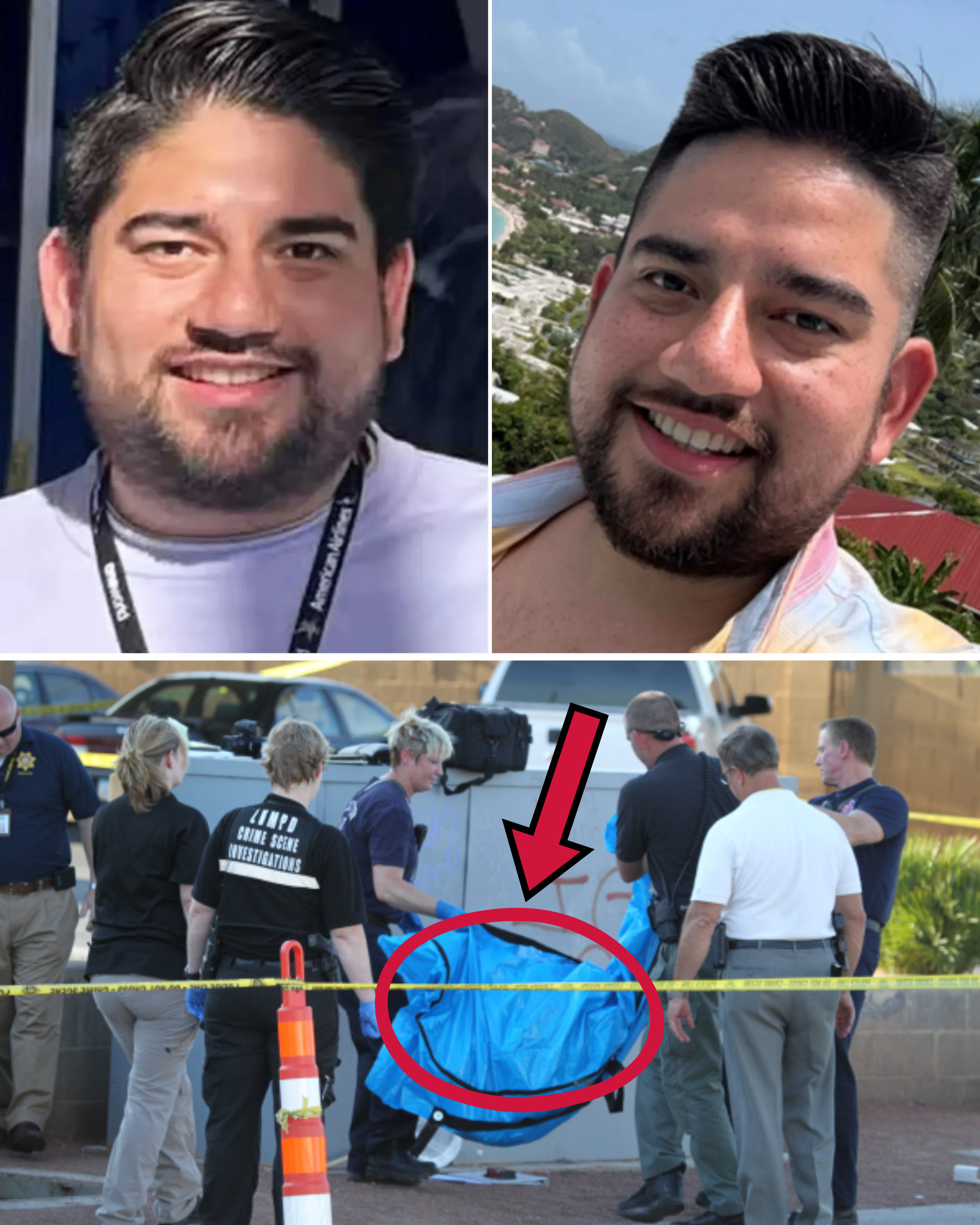
In a grim development that has gripped both the United States and Colombia, authorities have confirmed the discovery of a body believed to be that of 32-year-old American Airlines flight attendant Eric Fernando Gutiérrez Molina, who vanished during a routine layover in Medellín last month. The find, announced by Medellín Mayor Federico Gutiérrez on March 28, 2026, has left the victim’s family devastated while raising disturbing new questions about the circumstances surrounding his disappearance and death.
Gutiérrez Molina, a Dallas-based flight attendant, was last seen in the early hours of March 22 after going out with colleagues in the popular El Poblado neighborhood of Medellín. He had shared his location at an Airbnb earlier that night, but failed to board his scheduled return flight to Miami. Friends and family quickly raised the alarm, launching a desperate search that spanned several days and involved local authorities, the FBI, and American Airlines.
On Friday, a “lifeless body” was located in a remote area between the municipalities of Jericó and Puente Iglesias, roughly two hours southwest of Medellín. Mayor Gutiérrez stated there was a “very high probability” the remains belonged to the missing flight attendant, citing initial visual matches and the remote location. Formal identification was later confirmed through fingerprints in coordination with the FBI, bringing painful closure to the family while opening a new phase of the investigation.
What has authorities and the public particularly unsettled are the bizarre elements emerging from the discovery site and the broader circumstances of the case. The body was found in a rugged, rural area far from the bustling nightlife district where Gutiérrez Molina was last seen with colleagues. Reports suggest the scene raised immediate red flags — details that investigators have not fully disclosed but which have fueled speculation of foul play beyond a simple accident or robbery.
One chilling theory gaining traction involves “devil’s breath,” the street name for scopolamine, a powerful drug notorious in Colombia for its use in robberies and assaults. The substance can cause confusion, memory loss, impaired judgment, and unconsciousness, leaving victims vulnerable and unable to recall events. A colleague who was out with Gutiérrez Molina that night reportedly exhibited disoriented behavior and memory gaps, prompting concerns that both may have been targeted. Friends and family now fear the flight attendant could have been drugged, robbed, and then taken to a remote location.
Adding to the mystery, police have reportedly uncovered mysterious messages sent to Gutiérrez Molina’s MacBook during the critical hours after he went missing. Sources close to the investigation described the messages as “of unknown origin,” raising questions about who gained access to his devices and what they were attempting to communicate or conceal. These digital clues, combined with the remote body location, have sparked intense speculation about whether this was a targeted crime, a botched robbery gone wrong, or something even more sinister.
American Airlines issued a statement expressing heartbreak over the loss of their colleague and confirming full cooperation with authorities. “We are actively engaged with local law enforcement officials in their investigation and doing all we can to support our team member’s family during this time,” the airline said. The victim’s partner of nearly 10 years, Ernesto Carranza, and other loved ones have described Eric as a kind, vibrant person who loved his job and traveling the world. His sister and father, who traveled to Medellín, received the devastating news personally from the mayor.
The case has drawn international attention, highlighting the risks faced by airline crew during layovers in certain destinations. Colombian authorities, including Medellín’s security secretary, continue to investigate, with early focus on individuals last seen with Gutiérrez Molina. At least one coworker has been interviewed, and reports suggest police are examining possible links to local robbery rings known to use scopolamine.
As forensic teams complete their work at the discovery site and autopsy results are awaited, the bizarre elements — the remote location, the drugging theory, and the mysterious digital messages — continue to spark chilling questions. Was this a random opportunistic crime, or did something more calculated unfold that night in Medellín? How did a routine layover turn into a tragedy that has left a family shattered and a community demanding answers?
The investigation remains active, with Colombian and U.S. authorities working together to piece together the final hours of Gutiérrez Molina’s life. For now, the flight attendant’s loved ones are focused on bringing him home and honoring his memory, while the broader aviation community mourns the loss of one of their own under such mysterious circumstances.
This case serves as a sobering reminder of the vulnerabilities that can exist even in seemingly safe travel scenarios. As more details emerge from the body discovery site and the digital trail, the hope remains that justice will be served and the full truth behind this tragic disappearance will come to light.
News
Bridgerton Season 5 Official Trailer Unveils Time Jump, Francesca’s New Romance & Groundbreaking Same-Sex Storyline for 2026.
Bridgerton Season 5 is officially on the way, and the newly released trailer has sent the internet into a frenzy with its bold narrative choices, emotional depth, and a groundbreaking…
Maxton Hall Season 3 Trailer and First Look Set Up Emotional Final Chapter with High Stakes for Ruby and James.
Maxton Hall – The World Between Us is returning for its highly anticipated third and reportedly final season on Prime Video, and the first official trailer and leaked first-look footage…
Maleficent 3 Trailer and Leaked Scenes Fuel Excitement as Angelina Jolie Returns in 2027 Dark Fantasy Sequel.
Disney is bringing back one of its most iconic villain-turned-anti-hero characters with Maleficent 3 officially in development and slated for a 2027 release. Angelina Jolie is set to reprise her…
Virgin River Season 8 Trailer Update Delivers First Look at Mel and Jack as Parents, Brady’s Life-or-Death Fight & More Emotional Twists Ahead.
Virgin River is returning for Season 8 on Netflix, and the latest trailer update has fans both excited and emotionally prepared for another intense ride through the small town’s signature…
My Life with the Walter Boys Season 3 Trailer Teases Messier Love Triangle, George’s Health Crisis & New Romantic Distraction for Jackie.
Netflix’s heartfelt teen drama My Life with the Walter Boys is returning for Season 3, and the first-look trailer has fans buzzing with excitement and speculation after the emotional rollercoaster…
Ginny & Georgia Season 4 Begins Filming in Toronto — Georgia’s Mystery Pregnancy and “Cycles & Origins” Theme Set Up Explosive New Chapter.
Ginny & Georgia Season 4 is officially in production, with filming kicking off on October 7, 2025, in Toronto and the main cast — including Brianne Howey as Georgia Miller…
End of content
No more pages to load