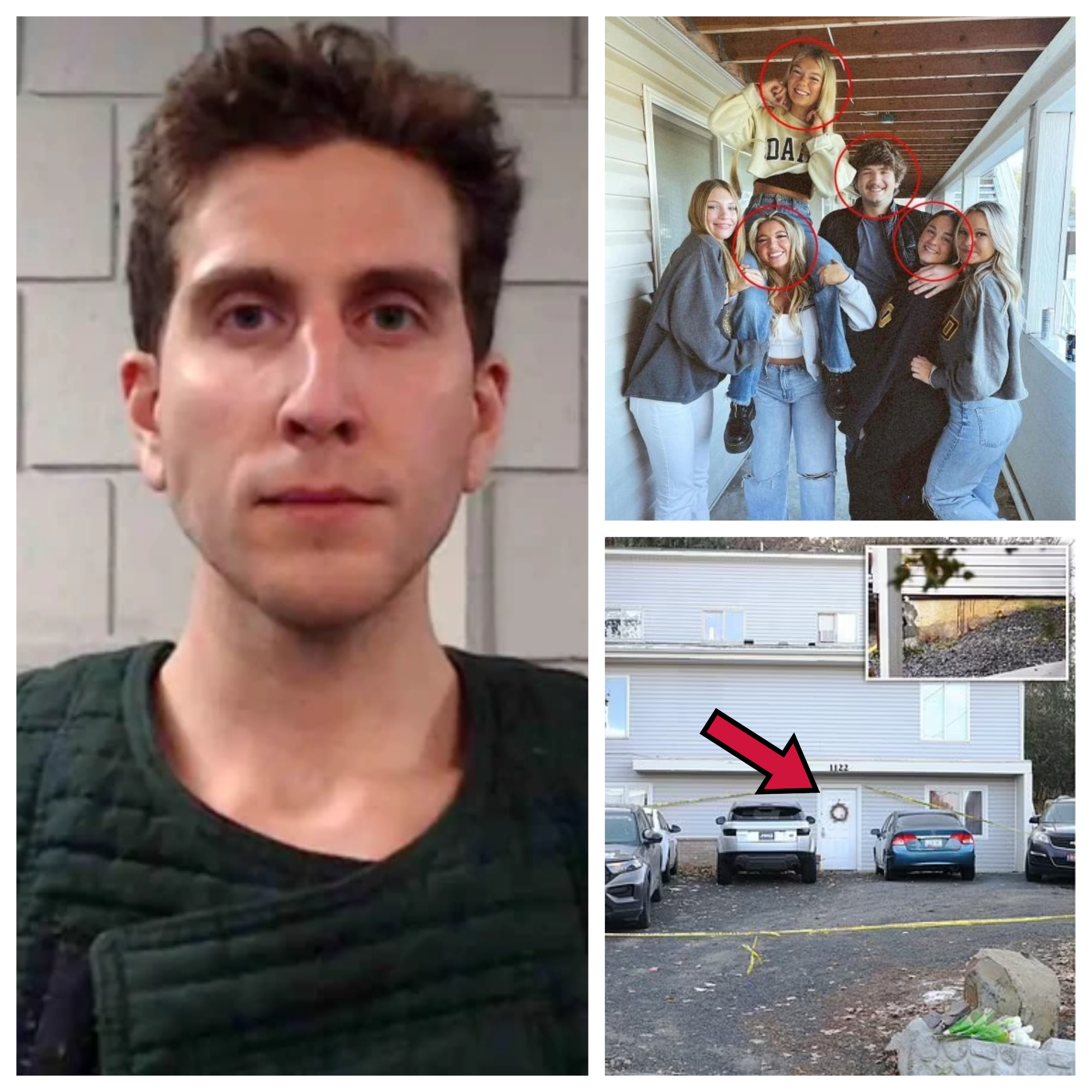
Newly unsealed court records have brought fresh, disturbing clarity to the brutal murders of four University of Idaho students in November 2022. The autopsy findings, detailed in a supplemental prosecutorial filing obtained by PEOPLE magazine on January 26, 2026, paint a grim picture of the victims’ last moments at the hands of Bryan Kohberger. The 31-year-old former criminology Ph.D. student pleaded guilty in July 2025 to four counts of first-degree murder and one count of burglary, accepting a plea deal that spared him the death penalty in exchange for four consecutive life sentences without parole. Kohberger confessed in court to killing each victim: Kaylee Goncalves (21), Madison Mogen (21), Xana Kernodle (20), and Ethan Chapin (20). The revelations underscore the savagery of the attack, which occurred in the early hours of November 13, 2022, at an off-campus home on King Road in Moscow, Idaho.
The autopsies confirm that all four died from multiple sharp force injuries inflicted by a large knife, likely a KA-Bar style blade whose sheath—bearing Kohberger’s trace DNA—was left at the scene and proved pivotal in linking him to the crime. Collectively, the victims suffered at least 150 stab and incised wounds, a staggering tally that highlights the ferocity and duration of the assault, estimated to have lasted around 15 minutes. The records, summarized from expert testimony rather than full reports, detail the extent of the trauma while noting contributing factors like blunt force and asphyxiation in some cases.
Kaylee Goncalves endured at least 38 stab wounds, accompanied by blunt force injuries to the head and signs of asphyxial trauma. Her injuries included at least 24 stab and incised wounds to the scalp, face, and neck; 11 to the chest; and three to the upper extremities. The report noted punctures on the outer table of her skull, damage to her teeth and tongue, and hemorrhage into the chest cavities. Blunt force elements featured scalp lacerations, brain bleeding, a nasal fracture, eye bruising, and patterned bruising across her lower face. Goncalves and her best friend Madison Mogen were found together in Mogen’s second-floor bedroom, suggesting they were likely asleep or resting when the attacker struck.
Madison Mogen suffered 28 stab wounds, with 13 to the scalp, face, and neck; five to the chest; and 10 incised wounds to the upper extremities. Her injuries perforated the lung and liver, damaged major blood vessels including the subclavian vein and artery, and incised the nasal septum. Like Goncalves, Mogen showed no signs of defensive wounds or movement after the initial attack, indicating she was probably asleep.
Xana Kernodle, attacked in her second-floor bedroom, received the most wounds—67 in total—reflecting a fierce struggle. Evidence of resistance included abrasions and contusions on her head, torso, and extremities; 23 stab and incised wounds to the scalp, face, and neck; seven to the chest; four to the abdomen; three incised and puncture wounds to the back; 25 incised wounds to the upper extremities; and five to the lower extremities. Punctures marked the outer table of her skull, and perforations affected the jugular vein, heart, lung, and pulmonary vessels, with extensive hemorrhage into the chest cavities. Wounds extended into the bones of her right hand, and scrapes, bruises, and blood on the soles of her feet indicated she moved around during the assault. Prosecutors believe Kernodle was awake and fought back, possibly after encountering Kohberger in the hallway or her room—potentially explaining why the attack escalated beyond the initial plan.
Ethan Chapin, found in Kernodle’s bed, sustained 17 stab wounds: one to the upper chest; four stab and incised to the scalp, face, and neck; six incised to the upper extremities; and six stab and incised to the lower extremities. Perforations hit the jugular vein, subclavian vein, and subclavian artery. Like Goncalves and Mogen, Chapin showed no defensive wounds, supporting the conclusion that he was asleep.
The sequence suggests Kohberger entered through a sliding glass door, moved upstairs, and began with Goncalves and Mogen in one bedroom before encountering Kernodle and Chapin in another. A surviving roommate, Dylan Mortensen, glimpsed the intruder—described as a masked figure in black—but was not harmed. The knife sheath, discarded near Mogen’s bed, contained male DNA matching Kohberger’s genetic profile with near certainty after familial genetic genealogy tracing.
Kohberger, a Washington State University graduate student at the time, had no known prior connection to the victims. His arrest in December 2022 followed cell phone data, vehicle sightings, and the DNA breakthrough. The plea deal in July 2025 resolved the case swiftly, waiving appeals and ensuring permanent incarceration at Idaho Maximum Security Institution. Recent developments include the release (and quick removal) of crime scene photos showing blood-soaked rooms, and lawsuits by victims’ families against Washington State University alleging failure to act on prior complaints about Kohberger’s alleged stalking behavior toward female students.
The autopsy details evoke profound sorrow, illustrating the terror and helplessness of the victims. Goncalves, Mogen, and Chapin likely never awoke to defend themselves, while Kernodle’s resistance speaks to her courage amid unimaginable horror. The findings reinforce the randomness and brutality of the crime, leaving communities grappling with how such violence could unfold in a college town. As Kohberger serves his sentences, these records serve as a final, haunting testament to the lives stolen too soon—lives remembered for their vibrancy, not their tragic ends.